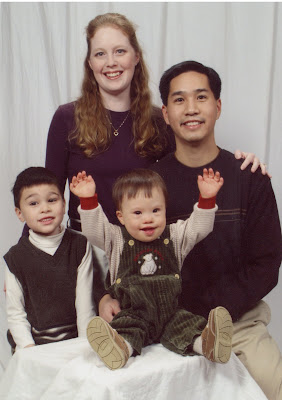
We often hear about the American dream, but the suburban dream? Is that an oxymoron? According to Hsu, more than half the American populace now lives in suburbia. There, he maintains, it offers a contemporary version of the huddled masses in search of a better life who populated modern America. A suburbanite himself, Hsu has a love-hate relationship with the suburban lifestyle. He easily lists the many negative aspects associated with suburban living: long commutes, anonymity and isolation, the generic nature of the housing, lack of true community. Is it possible, he asks, to live authentically Christian lives as suburbanites? Yes, he replies, and here discusses how suburbia can shape Christianity and vice versa. Making a well-meaning and honest appraisal of the way that many Americans live, Hsu offers suggestions on how suburbanites can become better Christians. He is an immensely appealing writer, and what he has to say, which includes practical and incremental steps to take, will resonate with many suburbanites and nonsuburbanites alike. June Sawyers Copyright © American Library Association. All rights reserved
Sunday, July 30, 2006
Booklist review of The Suburban Christian
I just saw on the Amazon.com page for my book that it has been reviewed by Booklist, the review magazine of the American Library Association:


Wednesday, July 26, 2006
Blogging and memoir
A comment on a previous post asked, "How is blogging (and reading blogs) like and unlike memoir or a collection of essays?" I started to write a comment in response, and it got long enough that I figured I'd just make this its own post.
We didn't discuss this question per se during our seminar, but the topic of blogging came up, especially in regards to how blogging is shaping how people read and write. Blogging certainly has stylistic commonalities with memoir, in terms of self-disclosure and self-reflection. I don't want to overgeneralize here, because blogs and memoirs both come in so many different styles and forms - some far more breezy and off-the-cuff, while others are more measured and reflective. I'd guess that a key distinction is that blogging is primarily addressing immediate, momentary issues and thoughts, whereas memoirs are at least intended to have a longer shelf life. To oversimplify, blogging tends to be timely but not timeless, while memoir, essay and other published work hopes to be both timely and timeless.
This of course affects the style, tone and quality of the writing. When I write a blog post, I'll look it over a few times and tweak it here or there, but I do far less revision than I do on writing intended for print publication. Blogs are meant to be much more immediate, so they have more of a "first draft" quality about them. This post is certainly different than what I might write if I were to develop a fuller journal article on the topic. And while the material that people write in blog form could be adapted or repurposed in memoir or other writing, I've told folks that writing for their blog is different enough a medium than writing for publication that they really shouldn't cut and paste blog posts into chapter drafts. Better to rewrite the material more thoroughly in long form, with the kind of care and attention that books and articles demand.
When blogging first started to emerge, some publishing houses offered book contracts to prominent bloggers. Some of those books by bloggers were little more than compliations of blog material, and it doesn't seem like those kinds of books have done very well. After all, little of the content is likely to have enduring value, especially given the time needed to publish a print book (often a year or so), and why pay for a physical book if the material is already online for free? On the other hand, some bloggers are good writers and thinkers whether they are writing for blogs, magazines or books, and publishing bloggers has been an opportunity for traditional publishers to find some fresh voices to contribute to cultural conversations.
There's also a new phenomenon called the "blook," in which books are written (in part or in whole) via blogging. For example, I recall seeing one where a woman was contracted to write a travelogue/pilgrimage book, and as she traveled from site to site, she would post sections of what would become chapters on her blog. This provides the opportunity to have immediate interactive feedback from readers during the writing process, and the comments that are posted shape the material in revision. So blooks could be a public way of writing a book in (virtual) community.
It has also occurred to me that blogging may well be a contemporary form of public spiritual journals and diaries, like those of David Brainerd or Richard Baxter. I could be wrong on this, but my understanding is that while they were certainly personal in nature, they were also circulated publicly to edify others. There has been some discussion about whether blogs are inherently narcissistic or whatnot, and I'd say that like all writing, everything depends on the writer. If a writer is self-absorbed and unreflective, that'll be true of his or her writing whether it's a blog or a book. But good writers will transcend the limitations of whatever genre or medium they're working in. And so I'm optimistic that the best Christian bloggers will stand in the tradition of Augustine, David Brainerd and other Christian journalers and memoirists.
As far as how reading blogs differs from reading (book-length, print) memoir, well, I'm not sure that can be answered apart from the larger questions of how we read a book differently than how we read online or onscreen. Too big a topic to get into here. But the ability to link to and from other sources is perhaps blogging's most significant distinctive, but it naturally has its pros and cons. I love being able to connect to interesting sites, articles and other blogs, but I have burned up so many hours of surfing the blogosphere just wandering from one thing to the next to the next. For a personality like mine (ENFP, described as a frisky puppy that wants to have his nose into everything, and Enneagram Seven, which takes joy in everything about the world and doesn't want to miss out on anything), the never-ending infinite nature of the blogosphere and the internet in general means that I waste a lot of time online when I should be doing something more productive.
Well, this has turned into a post more about blogging in general rather than blogging and memoir in particular. But on the whole, from a writing perspective, I think blogging has been helpful in that it has provided an opportunity for many to write, to learn to make careful observations about life and culture, to share their thoughts and tell their stories. I'm glad that the blogosphere is primarily a text-based, interactive culture rather than an image-based, passive medium (like television). Those of us in the publishing industry often bemoan the decline of reading and writing, but blogging may well herald a resurgence of love for the written word.
What is your suburb’s personality?
Back in college, one of the more influential textbooks I read was Ray Bakke’s now-classic urban ministry book The Urban Christian. It helped me and my predominantly rural classmates get a vision for God’s care for and call to the city. (I intentionally titled my book The Suburban Christian as an homage and tribute to Bakke’s book, and I see them as companions in metropolitan continuity.)
One insight from Bakke’s book that has always stuck with me is the notion that every city has a distinct personality and identity, usually shaped by that city’s particular history and geography. Bakke observed that some cities are industrial cities, like Chicago or Detroit. Other cities are financial or commercial cities, like New York. He also identified some cities as cultural cities, like Paris or Los Angeles. And others are administrative or bureaucratic cities, like Washington, D.C.
Of course, he’s making some fairly broad generalizations, and every city overlaps many of these categories, but some trait or another often does emerge as predominant. This is why some cities have reputations as working-class cities, cosmopolitan cities, intellectual cities or whatnot. The personality of a Berkeley or Cambridge is certainly distinct from a Tucson or Seattle. In a city like Chicago that has a history of multiple ethnic and cultural enclaves, this applies on a local neighborhood level as well; Lawndale is a different kind of Chicago neighborhood than the Gold Coast, Hyde Park or Chinatown. The better we understand our city’s history and identity and befriend our city’s unique personality, the better we will be able to minister to our city and seek the welfare of the city.
I would suggest that Bakke’s concept applies on the suburban level as well. Suburbia is often critiqued as the geography of nowhere, a place of cookie-cutter uniformity where every suburb feels much the same. But when we examine the suburban landscape more closely, we also find particularity and uniqueness from suburb to suburb even in the midst of general similarity. Some suburbs are historically residential bedroom communities, some are technological suburbs, some are more liberal, others more conservative. Some suburbs have a more established feel, with a sense of permanence and history, while others are more recent and have a more transient population. Often suburbs are shaped by the character of a prominent local industry or institution, like a company, hospital or liberal arts college.
One key to this that’s especially noticeable in the summer is how suburbs often have distinct themes for their local community festivals. Whether a community celebrates Heritage Festival, Railroad Days, Strawberry Fest or whatever, the traditions and emphases of individual suburban communities are clues to a suburb’s historic personality and identity. We who are suburban Christians ought to befriend our local suburb and get to know its distinctive personality, just as we would befriend and get to know our individual neighbors.
Sunday, July 23, 2006
Calvin seminar: Writing as Christian Proclamation
I'm halfway through a two-week seminar on writing as Christian proclamation in Calvin College's Seminars in Christian Scholarship program. (I blogged earlier about some of the preparatory reading for the seminar.) There's about fifteen of us participating, including authors, editors, journalists, pastors, professors and other educators. We've been discussing the pros and cons of various recent Christian books and authors of note, such as Kathleen Norris, Anne Lamott, Patton Dodd, Brian McLaren, Rob Bell, Donald Miller and others. Thus far, we've focused on a few particular genres and categories, especially memoir and apologetics.
What's been interesting is the mix of perspectives on how effective an author or book might be. What struck some of us as authentic and honest struck others as contrived or artificial; some satirical or sarcastic passages seemed appropriately incisive to some of us but felt merely angry or cynical to others. It's been a reminder to me that just as each of us have different first impressions of the people we meet, depending on our personality or temperament or common interests or whatnot, we likewise all have different impressions of the authors and books we read. Books are an opportunity to befriend authors we might never tolerate at a dinner party, but the idiosyncratic nature of personal voice means that no matter how excellent the writing, no author or book will please everyone. Every book will naturally attract certain kinds of readers and repel others.
A few important distinctions came up - for instance, the nuance of difference between Christian proclamation and Christian witness. Proclamation, as in apologetic or evangelistic books, is intended to persuade or convince, and usually a particular reader is targeted by the author, with the hopes of helping the reader to "cross the line" or "pray the prayer," as in many traditional apologetics, or to simply bring the reader farther along on the journey, as in many more recent apologetic works. Witness, on the other hand, does not necessarily aim to persuade the reader but mainly just seeks to testify to what one has seen and experienced. Memoir is often witness but not necessarily apologetic, though of course, depending on the reader's location, it can serve as both. That was another point of discussion, the blurring of categories between apologetic and catechetical books. More often than not, books that are supposedly written with the intent of explaining the faith to outsiders have more significant usage and readership among insiders who are seeking to understand better the Christian life they have already committed themselves to.
Beyond the content, style and effectiveness of the writing itself, we've also been talking about the Christian publishing industry and marketplace. On Friday several of us "publishing industry professionals" talked about the business realities of Christian publishing. A guest speaker mentioned that "most of the time, spiritual memoir just doesn't work." Deb Rienstra (the convener of the seminar) asked in clarification, "When you say 'doesn't work,' do you mean 'doesn't sell'?" And the guest confirmed, yes, that's right - while a few spiritual memoirs have done very well, many, many more have completely tanked. One book that the group praised for its literary merit, creative originality and allusions to Flannery O'Connor was also a book that has not sold well at all.
Often we have no idea why one book sells while another doesn't. I cited something that my company's publisher has mentioned before: "Publishing is like shooting a gun in the air and hoping a duck flies by." I'm glad we're not just looking at bestsellers during this seminar, but also books that have performed poorly in terms of sales, despite their literary and editorial merit. I've been thinking in terms of what transferable principles we can learn from the books we've been studying. It's not enough for books to "be honest like Blue Like Jazz" or for authors to pitch themselves as the next Anne Lamott. Editors and publishers get hundreds of proposals every day that claim to be these things, but rarely has the writer honed his or her craft. I don't want new writers to copycat Anne Lamott's style; I want them to read these kinds of books, learn from them, but ultimately to find their own unique, compelling and distinct voice.
We've talked a lot about Brian McLaren and Rob Bell, both of whom have plenty of critics but also have legions of devotees. In a moment of convergence, this morning McLaren happened to be speaking at Rob Bell's church, Mars Hill Bible Church here in the Grand Rapids area, while Bell was out of town. Several of us from the seminar visited Mars Hill to hear McLaren, who spoke on themes from his new book, The Secret Message of Jesus, which I just started reading. Good material on the kingdom of God and the call to rebuild, restore and renew that which is broken in this world, not merely dream of escape from this world. Not particularly new, but McLaren is a compelling champion of his cause, just as other folks have championed their causes for years, like Richard Foster for spiritual formation or Ron Sider for social justice. An image McLaren used that captured my imagination was his description of a Christian as "a secret agent for the kingdom of God." My wife said that that was a particularly guy way of thinking about it. I said, "Sydney Bristow on Alias is a secret agent, too. We can all be secret agents!" Anyway . . . a lot to think about this week. More later.
P.S. The seminar is sponsored by the Calvin Institute of Christian Worship, and their site and blog has some further thoughts and notes on the seminar here.
Thursday, July 20, 2006
Superheroes in the suburbs?
Saw the new Superman Returns movie last week, and while it had some good sequences, on the whole I was somewhat disappointed. Maybe two stars out of four. The actors felt too young to be plausible for the story. It would have been better if they had rebooted it entirely, like Batman Begins, rather than try to have the story in continuity with the first two Christopher Reeve movies.It seems that most superhero comic book stories take place in urban centers, not suburbs or rural areas. Superman is in Metropolis, Batman is in Gotham City, and most of the heroes of the Marvel universe, from Spider-Man and Daredevil to the Fantastic Four and the Avengers, all live in a hero-overcrowded New York City. And there's a strong East Coast bias; very few heroes are based in the west. Of course, this reflects the fact that both DC Comics and Marvel Comics are headquartered in New York. And Superman and Batman were created in the 1930s before suburbia really came to the fore.The reason I’m thinking about this is because I just read the trade paperback for the first collected volume of a new DC character, Manhunter, who by day is a district attorney in Los Angeles and by night is a costumed vigilante that uses weaponry confiscated from captured supervillains. There’s a sequence where the protagonist, Kate Spencer, is standing beneath the “H” of the Hollywood sign (the closest thing Los Angeles has to an iconic landmark like the Statue of Liberty), and she muses to herself, “Now I know why there are so few active metahumans in L.A. Everything is so spread out. It’s not like I can swing from skyscraper to skyscraper.” Then she starts to follow a supervillain using a tracking device. Because she can’t fly, she gets in her car and drives to follow him. She thinks to herself, “This is pathetic. I need a jetpack or something.” Unlike older East Coast urban centers, Los Angeles and other newer cities in the south and west are decentralized, multicentered metropolises that are suburban in form. As folks in LA know, you need to drive to get anywhere. (One of the improbabilities of 24 is that it seems to only take Jack Bauer twenty minutes to get places. If 24 really reflected LA, an episode would feature Jack stuck in traffic for the full hour.) I find it interesting that Manhunter’s writer, Marc Andreyko, acknowledges the geographic challenges of urban/suburban sprawl. It always seemed kind of unlikely that Batman or Spider-Man could travel great distances across a city simply by swinging from webs or bat-lines. Or that the Batmobile never gets stuck in traffic. Now I’m trying to remember if any major superheroes are set in suburban contexts. Nothing really comes to mind. Green Lantern was set in Coast City (an LA doppleganger), the Flash takes place in Central City/Keystone City, which are Midwestern cities like St. Louis, and Hawkman and Hawkgirl patrol St. Roch, which is the equivalent of New Orleans. For a while, Wonder Woman was based in Gateway City, which I think was supposed to be San Francisco. I think Green Arrow’s Star City is somewhere in the Pacific Northwest, like Seattle or Portland, but I’m not sure. Superman, of course, hails from Smallville and moved to Metropolis, signifying the American historical shift from rural to urban areas. (Sometimes Metropolis is written as an East Coast city, perhaps in Rhode Island, while other times, as in Smallville on TV, Metropolis is in Kansas, the big city closest to Smallville, like a Wichita, about three hours away. The best quote I’ve heard is from comic book writer Frank Miller, who says that Metropolis is New York during the day, and Gotham City is New York at night.) If any suburban superheroes come to mind, let me know. And if you’re a comic book fan, check out the blogs Loud Time and Strangely Dim by my pal Dave Zimmerman, author of Comic Book Character.
Monday, July 17, 2006
Links: Burb, a theology of suburbia and suburban dreams
I’m now in Grand Rapids, Michigan, at Calvin College, for one of their Seminars in Christian Scholarship. What’s great is that the SCS program “welcomes scholars as whole persons—as embodied creatures with spouses and children, hobbies and interests, passions and pastimes.” So Ellen and the boys are here with me for the next two weeks; they’ll get to do some kid programs while I’m in seminar discussions and meetings, and we should have free time and evenings together to play. We packed up the minivan yesterday with clothes and kitchen gear and linens and toys and whatnot (ironically, the sermon at church was on Mark 6, where Jesus sends out the disciples and tells them not to bring a bag or anything), drove to Michigan, and found our way to our campus apartment to move in. Josiah was pretty excited about the adventure at first and was thrilled to run around the campus and explore, though by evening he was getting a little nervous about being here and said, “Let’s go home now.”
The seminar officially starts today, and I haven’t done anything yet except the precourse reading, so in the meantime, I’ll post some links to other blogs and resources about suburbia that I’ve been meaning to highlight. Here are a few I’ve come across recently that are quite helpful. First of all, Burb: Where You Live is a magazine that tracks news about all things suburban, relating to demographics, architecture, housing trends, public policy and much, much more. Just about every news item Burb posts and links to has implications for suburban Christians interested in understanding and ministering to our suburban context. Next, a suburban seminary student, Scott Berkheimer of Theopraxis has a multi-part theology of suburbia here.
I also recently came across Simply Simon’s blog – Simon is in Australia, and I’m particularly interested in hearing about how suburbs look in other countries, how they differ from or are similar to American suburbs. Simon, a theology professor interested in urban planning, has some thoughtful reviews and analysis of recent suburban-related books, including Death by Suburb, Sidewalks in the Kingdom and The Good Life.
Thursday, July 13, 2006
Books, books and more books
A postscript to my last post - besides the ECPA book awards, other Christian organizations have their own awards as well. The Logos bookstore chain has their Logos Book Awards, and I was thrilled to find out this week that two of IVP's books won Logos awards this year - God in the Flesh by Don Everts in the Christianity/Culture category, and Sacred Rhythms by Ruth Haley Barton in the Spirituality/Devotional category.
Don is one of my authors, and Ellen and I had a great dinner with him last night. Don is best known for his book Jesus with Dirty Feet, and he's one of the key people in IVP's new Likewise line of books. He's an area director with InterVarsity Christian Fellowship here in Colorado, and he drove in to the convention center to discuss various editorial issues and to just catch up and hang out. I was very happy to be able to inform him of his Logos award, since I worked with him to develop God in the Flesh. It's a great book, and I'm glad it was recognized.
I've had a good week at the convention both as an editor and as an author. As an editor, I've met with various folks, some of whom are already IVP authors, others who are potential authors. As an author, I did a booksigning for my book and did some media interviews with print and radio. I even had my first podcast interview. The ICRS convention is also fun for me because I get to see a lot of publishing industry friends, especially fellow Gen Xers and twenty/thirtysomethings in the business. We catch up, compare notes, talk about trends and funny things other publishers are doing. Book geeks hanging out with other book geeks - this is my tribe.
Part of the convention experience is seeing what new titles and authors are being featured for this next season. A lot of stuff doesn't interest me or intersect with me; for example, I don't edit fiction or children's books, so I mostly ignore those displays unless I see something that would be fun for Ellen or the kids. But there are some books that warrant notice. Some of the recent and new books that caught my eye here include:
The Great Omission, Dallas Willard's new book on discipleship from HarperSanFrancisco
Eat This Book, the next volume in Eugene Peterson's spiritual theology series from Eerdmans
The Missing Gospels, by Darrell Bock (Thomas Nelson) and What Have They Done with Jesus? by Ben Witherington (HarperSanFrancisco), both of which are responses to Bart Ehrman's Misquoting Jesus, Elaine Pagels, Dan Brown and other recent authors and books touting alternative gospels and early Christianities (IVP's own book in this vein is the forthcoming Fabricating Jesus by Craig Evans)
I also picked up a copy of Brian McLaren's The Secret Message of Jesus (W Publishing), which came out a couple of months ago, and Celtic Treasure by J. Philip Newell (Eerdmans), which came out last year. There's many more books that could be listed, but these are some of the highlights, the one's I'm excited enough to bring with me on the plane home this afternoon.
It's been a good week, but it's also been almost five days away from our kids. This is the first trip where both Ellen and I have been away from the boys since Elijah was born, and we're eager to get back to them. Heading home soon.
Wednesday, July 12, 2006
The Christian Book of the Year is . . .
On Monday night, the Evangelical Christian Publishers Association had its annual Christian Book Awards ceremony. They award the best book in various categories (fiction, children, Christian life, etc.), and they also name a single Book of the Year overall. Previous winners have been books by Philip Yancey, Max Lucado, and for the last two years running, The Purpose-Driven Life by Rick Warren.
This year, they cut the categories down from twenty categories to six, and they changed the judging so that of the six category winners, the one with the highest overall ranking score becomes the book of the year. (A full list of the nominees and winners is available here.) So - guess what was this year's winner?
The Dictionary for Theological Interpretation of the Bible, edited by Kevin Vanhoozer, published by Baker Academic.
Shock and scandal! A 900-page, $55 academic theological reference work is the Christian publishing industry's 2006 book of the year! Wow. I was bummed that it beat out our nominee in the Bible Reference & Study category (IVP's Dictionary of Old Testament: Historical Books), but I'm thrilled that such a weighty, substantive book was honored for its significance in scholarship.
The funny thing is that the industry had all these big plans to promote the book of the year with big endcap displays in stores and to try to get major media coverage and whatnot. Well, I'm not sure that Vanhoozer's dictionary is going to be a stocking stuffer that everyday folks will pick up at Wal-Mart. It may be the lowest-selling, highest-priced book of the year ever. But kudos to Baker Academic. It's a sea change in what is recognized as an award-winning Christian book.
Tuesday, July 11, 2006
Dispatches from the International Christian Retail Show
This week Ellen and I are in Denver for the International Christian Retail Show, formerly known as CBA International, the annual convention of the Christian Booksellers Association. Something like 10,000+ Christian industry professionals - publishers, retailers, authors, editors, agents, sales reps, journalists, etc. - gather for a week of promoting and selling new Christian books, music, videos and gifts. I've been attending CBA/ICRS shows since 1998, and this year I'm wearing two hats - I'm here as an IVP editor, and I'm here as an IVP author. So I'm networking with my authors and industry contacts, and I'm also promoting my new book.
It's always interesting to see what big new books or authors are being promoted. It seems like every year there's a new trend - a few years ago it was Jabez stuff (including a Jesus fish that said "JABEZ" in it instead of "Jesus"), and more recently, it's been Tolkien tie-ins, Da Vinci Code critiques and Narnia spinoffs. This year there are a few Superman-related things, but not a whole lot. I saw one booth with a "Christian Pirates" theme, and I don't know if that was supposed to tie in to the Pirates of the Caribbean movie or what.
The Christian publishing industry is an interesting world. Lots of money goes into creating and promoting authors, artists and brand identities. Publishers sponsor all sorts of things here to get their message out - the keycard for our hotel room featured a publisher's new logo, as part of their branding efforts. General market publishers have been increasingly getting into Christian publishing because it's quite profitable; Christians are a big market and audience. AOL Time Warner's book division started Warner Faith a few years ago, which has had megasellers by Joel Osteen, T. D. Jakes, Joyce Meyer and the like, and just recently the book division was purchased by a French company called Hachette International, I think. So they renamed the division Hachette Book Group USA, and Warner Faith is now FaithWords. Too bad they didn't go with something like Hachette Faith. "Hatchet Faith - Christian books that cut to the heart." (The cheesy pun is a staple of the Christian industry - I saw a booth here for some Noah's Ark company that bills itself as "State of the Ark.")
Ownership and financial backing of Christian media is interesting. Zondervan is owned by HarperCollins, which is owned by Rupert Murdoch. I'm surprised that they haven't been rebranded as HarperGrandRapids, to parallel their other religious imprint, HarperSanFrancisco. Thomas Nelson used to be publicly traded on the New York Stock Exchange, but it was recently purchased by a group of private investors for something like half a billion dollars. I just heard yesterday that Multnomah Publishers (which was family-owned, I think), has just been purchased by somebody, but further details were not available.
At any convention or trade show, the cost of stuff is unbelievable. It would have cost us $600 to have internet access in our booth. It's often cheaper for exhibitors to buy stuff onsite (like tables, shelves, even TVs or DVD players) and leave them behind than to ship their own down or to rent materials from the convention center. At my hotel, bottled water is $3.00 in the snack shop and $5.00 in the rooms. A 20 oz. Coke is $3.00. I can't even begin to estimate how much money goes into one of these conventions, how much it costs individual bookstore managers and buyers to fly out, stay in hotels, pay for meals, etc.
And I happened to watch Rob Bell's latest Nooma video, Rich, on the hotel channel the other day. He talked about how all of us as North American Christians are rich. If we have clean drinking water, we are rich. If we've eaten today, we're rich. A billion people have not had a meal today. If we have a car, we are rich. 92% of the people in the world do not own a car. The video is quite well done and convicting, challenging affluent American Christians to be more generous and globally aware, to be better stewards and sacrificial in our giving. It's an important message.
And yet there's an irony in such a video being produced and promoted with tens of thousands, maybe hundreds of thousands of dollars. I hope Zondervan/HarperCollins/News Corp./Murdoch is also using its wealth and resources toward global justice issues, health care, etc. I'm encouraged that Bono, the Gates Foundation, Warren Buffett and others are championing philanthropy at really high profiles. I heard something on the radio from a philanthropic organization that talked about how when these media personalities give such large amounts, it encourages ordinary people to give as well. I know that a lot of Christian companies give a lot of their profits directly to various ministries; I think some might even tithe in some form or another. So while the commercial environment of the Christian retail industry is inescapable, I'm hopeful that the powers-that-be wield their influence and resources wisely and Christianly.
Well, I was going to say more about the actual books, but that will have to wait for another post.
Wednesday, July 05, 2006
On the radio
Last week I had a bunch of radio interviews relating to my book, and it was fun to interact with the hosts about the content. I've done a few dozen interviews in the past for my previous books, and you never really know what's going to happen. Some interviewers have not read the book and just ask questions from a pre-scripted list, while others have read the book and interact deeply with the content. (Those are the most satisfying, needless to say.) Some interviews are taped for later rebroadcast, and they can edit out all the "ummms" and "uhhhhs," but most are live, and it's a little freaky to think that what I say into the phone is being heard by thousands of people at that very instant. I have to fight off the occasional temptation to say something wholly inappropriate. The scariest interviews are the ones where the show is open to live callers - you have absolutely no idea where folks are coming from, and they could ask absolutely anything. When I did interviews for my book Grieving a Suicide, I got some heartrending calls from folks who had recently lost a loved one to suicide, and it's quite challenging to try to provide some degree of personal pastoral care over the radio.
This last wave of interviews for the suburban book went pretty well. While a few stuck to the script, the rest had either read the book or at least had acquainted themselves with the themes of several chapters, so they interacted with the content and asked their own questions. It's interesting to see what different hosts want to talk about. One fellow mostly asked questions about suburbia's consumer culture, while another show focused on the issues related to commuting. One host asked about racial diversity in churches, which relates to part of my topic but I wasn't sure that I could speak authoritatively on the issue, so I sort of punted and referred listeners to another IVP book.
The neatest thing about the interviews is that one host had been on a brief mission trip a few days before my interview with him, and he had not yet received a copy of the book before he left. His trip was with several other radio hosts, and on the plane one of them said something like, "Have you seen this book? You should have this guy on your show." And the book she pulled out of her bag was The Suburban Christian! So he read her copy on the plane and was prepared for the interview. How cool. Sure feels like a God thing to me.
Friday, June 30, 2006
How then shall we eat?
One kind of consumption that is unavoidable is the consumption of food. What does it mean to eat more Christianly? Various possible answers abound: eat more healthy foods, eat less pre-processed foods, avoid fast food, eat organic foods, eat meals communally, share food with those who don't have it. All of the above? A mix? Whatever we can manage?
Our friend Cindy Crosby has a great article reviewing Michael Pollan's The Omnivore's Dilemma: A Natural History of Four Meals, which "traces the path of four meals through their various systems: organic food, alternative food, industrial food (such as fast food), and food we forage for ourselves. Each system exploration results in a meal: cheap fast-food take-out from McDonalds eaten in the car; a pricey repast from Whole Foods consumed at the dinner table; a grilled chicken and a chocolate soufflé made from sustainable farm animals and local ingredients; and a meal he foraged and hunted and ate with some help from friends, right down to mushrooms and wild pig." Here's an excerpt from Cindy's article:
Our friend Cindy Crosby has a great article reviewing Michael Pollan's The Omnivore's Dilemma: A Natural History of Four Meals, which "traces the path of four meals through their various systems: organic food, alternative food, industrial food (such as fast food), and food we forage for ourselves. Each system exploration results in a meal: cheap fast-food take-out from McDonalds eaten in the car; a pricey repast from Whole Foods consumed at the dinner table; a grilled chicken and a chocolate soufflé made from sustainable farm animals and local ingredients; and a meal he foraged and hunted and ate with some help from friends, right down to mushrooms and wild pig." Here's an excerpt from Cindy's article:
Pollan tackles some daunting questions. What ethics are involved in our food choices? What impact do they have on the environment? And who or what are we subsidizing with our food choices?
What about the ethics of trucking "organically grown asparagus from Argentina" to America's suburbs in January? What are the economics of fuel and the cost to the people of Argentina, whose land is feeding Americans? The food industry, Pollan points out, burns nearly a fifth of all the petroleum consumed in the United States. And most "organic farming" is done on organic industrial farms, a contradiction in terms that Pollan explores at length in the fields of California. "Is there anything wrong with this picture? I'm not sure, frankly," Pollan concludes. What he finds is "a much greener machine, but a machine, nonetheless."
Perhaps, as Pollan writes, the best way to fight industrial eating is to recall people to the superior pleasure of traditional foods enjoyed communally. Then, our eating contributes to the survival of landscapes and species and traditional foods that would otherwise succumb to the "one world, one taste" fast food ideal. Having a diversified food economy where consumers have access to thriving alternative food sources, he concludes, allows us to withstand shocks to the system: outbreaks of mad cow disease, petroleum running out, pesticides that quit working.
It's possible to live with contradictions in how we eat, Pollan believes, but important that we face up to our compromises. For me, this means planting a little more garden to offset my occasional golden arches French fry consumption; thinking more seriously about taking out that local farm share at the cooperative down the road; and inviting friends over for "slow" dinners and conversation more often. In a fallen world, we take baby steps on the journey back to wholeness.
I'm reading this over my lunch, and I'm noticing how non-communal my work lunches tend to be. I'm often eating at my desk. I would have eaten with my wife, but she has a business lunch today. I probably need to eat in the lunchroom more often. But we did have a company lunch yesterday for our annual inventory, and tonight is our company picnic, followed by Shakespeare in the park. So I'm grateful for the times our corporate community has meals together. It's the difference between merely eating and truly breaking bread together.
Wednesday, June 28, 2006
Being kingdom citizens in a consumer culture
My wife sent me a link to this column on urbana.org by Carolyn Carney, who asks, "Are we citizens of God's kingdom, striving for that kingdom, or merely consumers?" Good stuff, so here's an excerpt:
Last year, I was frequently jarred by the television commercials CNN ran during breaks in the Tsunami coverage. While watching horrendous pictures of Indonesia’s poor fighting tooth and nail just to survive, it seemed so frivolous to hawk things such as dishwashers, new cars, beer, and every pharmaceutical product you could name from acne creams to wart removers, and depression medication to ED pills. How could anyone be convinced at this moment in time that the proper use of money was to indulge in something to meet a personal need? But we often go shopping to feel better, don’t we? When we do so, we retreat into our personal world of consumerism and forsake the call of God to be a citizen.
Do we see ourselves as autonomous, free, unattached beings who of course, as Christians, seek obedience in matters of piety, but see little connection or calling to serve brothers/sisters/neighbors around the corner or around the world? We have failed to understand the gospel’s message when we sacrifice becoming a Godly Citizen seeking to bring restoration to all the world for the cheap substitute of being a Morally Good Consumer.
So the next time you are seeking to upgrade your computer or cell phone or iPod or house or car, first ask “Can I live without this?” Then ask, “Why am I seeking an upgrade? Is there something missing in who I view myself to be that I believe will be filled if I have this?”
Consumer culture may well be our generation's biggest challenge to Christian faith. The late Pope John Paul II said that consumerism was an ideology "no less pernicious" than other ideologies like Marxism, Nazism and fascism.
It's interesting how much consumer culture shapes our vocabulary and mental categories. At a publishing consultation a few weeks ago, one of the participants mentioned how Christian publishers have fallen into the habit of talking in terms of "consumers" and "products" rather than "readers" and "books." I'm an editor working with authors, not someone who does "product development" with "content providers." So maybe one way of countering our consumer culture is to recover a sense of personhood - we are not merely consumers, we are people. And our fellow human beings are not merely consumers or target markets or demographic audiences - they are our neighbors, whom God has called us to love.
Monday, June 26, 2006
Suburban population growth trends continue
A colleague sent me a link to a news article about the latest Census Bureau estimates, which confirm recent ongoing trends of suburban population growth and urban plateauing. The fastest-growing city in America is Elk Grove, California, a suburb of Sacramento that wasn't even incorporated six years ago:
This corroborates data I found in my research that while metropolitan areas as a whole are growing, the majority of the growth is in suburban and exurban areas, not the urban cores. For example, in the last decade, the city of Atlanta gained 23,000 people, while the surrounding suburbs grew by 1.1 million.
The sheer numbers reinforce what has been increasingly true for several decades. Suburbia is significant, and is likely the dominant landscape of the 21st century. For more than half of the population, it's a suburban world.
Americans have been moving west and south for decades, and last year was no different. All but three of the 50 fastest-growing cities from 2004 to 2005 were in those regions of the country, with many in California and Florida, according to Census Bureau estimates Wednesday. The estimates were for cities with populations of 100,000 or more.The article goes on to note that major cities continue to lose residents. Since 2000, Detroit has lost 65,000 people, Philadelphia 50,000, and San Francisco 37,000. While New York has had net gains of 135,000 people since 2000, it has lost 21,500 in just the period from 2004 to 2005.
Elk Grove was followed in the top five by North Las Vegas, Nevada; Port St. Lucie, Florida; Gilbert, Arizona, and Cape Coral, Florida.
All five are suburban, and all have fewer than 200,000 residents.
This corroborates data I found in my research that while metropolitan areas as a whole are growing, the majority of the growth is in suburban and exurban areas, not the urban cores. For example, in the last decade, the city of Atlanta gained 23,000 people, while the surrounding suburbs grew by 1.1 million.
The sheer numbers reinforce what has been increasingly true for several decades. Suburbia is significant, and is likely the dominant landscape of the 21st century. For more than half of the population, it's a suburban world.
Thursday, June 22, 2006
Lost at Target
No, this is not a TV show about survivors whose plane crashed into a retail store - it's a post from my wife, Ellen, from our family blog about losing our son Josiah at Target.
-----
We lost Josiah at Target. He was only lost for five or ten minutes (if even that), but it was frightening. Al took Josiah to the bathroom and when they came out Josiah said, "I'll find Mommy!" and ran off. Al found me and we looked around the area we were in for a few minutes without any luck. After what was probably about two minutes, but felt longer, I rushed to the customer service desk while Al kept looking in another part of the store.
I was embarrassed to tell the clerk that we had lost our four-year old, but I reasoned that if someone kidnapped him I would spend the rest of my life wondering why I didn't tell the customer service representative sooner. So they announced a missing child alert over their walky-talkies and I had to tell a security guard what Josiah was wearing. As the guard was in the process of notifying store personnel that a child with a blue Mickey Mouse shirt and black and white shoes that light up was missing, Al walked over holding Josiah.
I was relieved to have found Josiah, but I worried about future incidents. So I tried to tell Josiah what he should do when he is lost. "Don't wander around looking for Mommy or Papa. Stay in one place. Find someone behind a counter or who is wearing a name tag." Josiah listened for a minute and looked at the people behind the counter. Then he said, "Mommy, I have a question," (which is Josiah's way of saying, "Can I talk now?"). "I wasn't lost. You were lost, Mommy. I could not find you!"
Josiah says the same thing each time we talk about being lost. "But Mommy, I wasn't lost. You were lost." It's cute, but it's also very frustrating. I want to make sure he knows what to do if he ever gets lost again, but if he can't even admit or understand that he is lost, will he do the things he knows lost people should do?
I wonder how often I say the same thing to God, "I'm not lost, God. You're lost. I can't find you!" Perhaps God smiles and says, "No, I'm not lost. I know where I am and I even know where you are. But because you cannot admit that you are lost and won't do the things I've taught you, it is hard for you to find me."
I hope we never lose either of our children again, but if we do (and somehow I think it is almost certain that we will), I hope they will admit they are lost and remember what we have taught them to do. Similarly, I hope that when I am feeling lost and alone, that I will remember seek God instead of blaming him. And its possible that the best way to for me to seek God will be to rest in one spot awhile and maybe even look for someone who works for God ("behind the counter") to ask for help.
Monday, June 19, 2006
A theology of Lost, Rent, Les Miz and suburbia
I’m always fascinated by the spiritual and theological themes that emerge from pop culture. Last week Ellen and I finished watching season one of Lost on DVD, and one of the main themes is “Everybody gets a new life on this island.” I think this may partly explain the appeal of the show – it’s a theology of rebirth and redemption. The intrigue is seeing to what extent characters can reinvent themselves. More often than not, much of their present is still shaped and determined by their past. But the hope for the new life remains.
This theme jumped out at me because my theory is that suburbia represents much of the same inherent yearning – the fresh start, the second chance, the new life. This is especially true for people moving into new suburban developments where communities do not yet exist. People move there not for what is, but their hopes of what is yet to be. It fits the narrative of the American frontier, of leaving what is behind and forging new lives, writing new stories.
This also says something about the insufficiency of the “no day but today” perspective of Rent. As my last post mentioned, I like Rent a lot, but I need to critique it even as I appreciate it. One of Rent’s themes is “There is no future / There is no past . . . There’s only us / There’s only this / Forget regret or life is yours to miss.” The worldview of Rent is “There’s only now / There’s only here.” Today is the only day that really matters, because we don’t know what tomorrow will bring; there is no confidence or hope in the future. The “there is no past” belief echoes the yearning for the new life, but it’s patently false – we all have a past, and while the past can be reinterpreted or redeemed, it can’t be denied.
Les Miserables, on the other hand, is a musical of hope. Its conclusion points to a future certainty – “For the wretched of the earth / There is a flame that never dies / Even the darkest night will end and the sun will rise / They will live again in freedom in the garden of the Lord / They will walk behind the plowshare / They will put away the sword / The chain will be broken and all men will have their reward.” Though that last phrase could be interpreted as a universalist statement, more significantly, the overall ethos is one of transcendent hope, where God is at work to redeem and rescue his people. It’s eschatological – there is a future, and theologians like Jurgen Moltmann and Wolfhart Pannenberg have emphasized that God stands at the future and draws history toward himself and his kingdom purposes.
Thursday, June 15, 2006
The Suburban Renthead
I’ve always loved musical theatre, and a few weeks ago my wife and I watched the DVD of the movie version of Rent. I’d never seen Rent on stage, but I’d heard a lot of buzz about it back in the 90s. It was mentioned in the book Virtual Faith as a religious experience for many Gen X attendees. I felt that way when I first saw Les Misérables, so I was curious about seeing Rent.
I was disturbed by it and loved it at the same time. Rent highlights both the worst and the best of human experience, from self-destructive behavior and hedonistic worldviews to real community, relationships and love. I don’t always watch DVD bonus features, but we watched the full two-hour behind-the-scenes documentary. I was haunted by Rent’s anthems and melodies, so I checked out the soundtrack, a memoir by a cast member, the coffee table book/libretto and sheet music from the library. Even just reading the lyrics of the finale continues to move me to tears.
Interestingly, even though the play takes place in the urban setting of New York City’s East Village, the librettist/composer, Jonathan Larson, grew up in middle-class suburbia, in White Plains, thirty-five minutes north of New York City. He first discovered his talent and love for theatre in his junior high and high school plays and musicals. Ironically, Rent, a celebration of bohemian urban artistic experience, is partially indebted to suburban school systems’ championing of theatre and the arts.
It seems that our culture often holds either an urban or a rural ideal, to the exclusion of the suburban, and the theatre world reflects this. There have been musicals in urban settings from West Side Story to Rent, and musicals set in rural small-town settings like Oklahoma! and The Music Man. But suburbia? Nothing comes to mind. Someday, perhaps, a daring, creative playwright will focus his or her talents into a dramatic, Tony-award-winning musical set in the world of suburbia. Somebody should go for it. And more significantly, we who live in suburbia could live as compellingly and intentionally as the characters in these narratives. No day but today!
Tuesday, June 13, 2006
Demographic tools for learning about your neighborhood
I don't remember how I came across this, but if you click on this link, you'll find a neat little tool that combines Google maps and Census Bureau data. You plug in any address, like your home address, and it will not only map your neighborhood, but also tell you who lives within a one-mile, three-mile and five-mile radius of your home. It gives population data with a few demographic breakdowns like age, gender, income, race/ethnicity and housing.
For example, within one mile of my home live 15,056 people in 5309 households, with a median income of $66,508 and median age of 36. The median housing value is $185,219, median cash rent is $647, and each household has an average of 1.80 vehicles available to them. You can also find demographic and population information directly from the Census Bureau, such as this tool here that gives fact sheets on local communities.
These two tools used in conjunction turn up some interesting data. For example, the fact sheet for my suburb of Downers Grove says that 90.1 percent of the residents are white, while 80 percent of people living in my one-mile radius are white, suggesting that my local neighborhood has more racial/ethnic diversity than the suburb as a whole. The median value of single-family homes for the overall suburb is $205,900, meaning that my immediate neighborhood is a little less expensive than the rest of the suburb. I also notice that the average travel time to work is 29.1 minutes for residents of my suburb, so I feel fortunate that my job is only about 15 minutes away in good traffic. Anyway, I find it fascinating and fun to use tools like these and find out actual data about who lives in our communities.
Friday, June 09, 2006
Books on my nightstand
Js on the Myers-Briggs tend to read books one at a time, straight through, while Ps tend to read multiple books simultaneously, flipping back and forth between titles. I’m definitely a P – there are currently over two dozen books on my nightstand (and on the floor), most with a bookmark stuck in it a few chapters in.
Part of this is because I’m participating in a seminar at Calvin College next month on writing as Christian proclamation, and the syllabus has about twenty books on it. Fortunately, I’ve already read more than half the list – Lauren Winner’s Girl Meets God and Real Sex, Kathleen Norris’s The Cloister Walk, Anne Lamott’s Traveling Mercies and Plan B, Brian McLaren’s A New Kind of Christian and A Generous Orthodoxy, Rob Bell’s Velvet Elvis, Donald Miller’s Blue Like Jazz, Debra Rienstra’s So Much More, Patton Dodd’s My Faith So Far and Marilynne Robinson’s Gilead. As you might guess, we’re reviewing many recent books and discussing their significance and effectiveness.
So here are the books that are on the syllabus and on my nightstand that I’m currently reading:
Debra Rienstra’s Great with Child: Reflections on Faith, Fullness, and Becoming a Mother. My wife read this a few years ago and found it very profoundly insightful. Rienstra is an English professor at Calvin, and she’s the one convening this seminar. It’s beautiful writing – a theologically and spiritually sensitive literary memoir.
Donald Miller’s Searching for God Knows What. If you liked Blue Like Jazz, you’ll like this; if you didn’t, you won’t. Miller has a lot of distinctive, fresh takes on the Christian faith, and this is something of a postmodern (un)systematic theology. The particularity of his voice seems to be attractive to many but off-putting to others.
Donna Freitas’s Becoming a Goddess of Inner Poise: Spirituality for the Bridget Jones in All of Us. I am so not the target audience of this book. It’s a chick-lit spirituality, and even though I’ve read some chick lit novels, they don’t speak to me in any spiritually significant way.
Garret Keizer’s The Enigma of Anger: Essays on a Sometimes Deadly Sin. This one is interesting, but again, not a book I’m really resonating with. Partly because anger isn’t generally one of my besetting sins. It’s a helpful exploration, though.
Vinita Hampton Wright’s novels Velma Still Cooks in Leeway and Dwelling Places. I’ve finished Velma, haven’t started Dwelling Places. Loved Velma – really captures small-town life and conservative fundamentalism. (I should also mention that I recently read Vinita’s IVP book The Soul Tells a Story, which is about spirituality and creativity in the writing life. It’s excellent.)
Stephen Prothero’s American Jesus: How the Son of God Became a National Icon. I love this book. It’s a wide-ranging blend of history, cultural analysis, theology, sociology and comparative religion, and it’s absolutely fascinating. Prothero documents the development of various American christologies across the centuries – Jesus as enlightened sage, sweet savior, manly redeemer, superstar and more.
Russell Rathbun’s Post-Rapture Radio: Lost Writings from a Failed Revolution. Just got this in the mail. I’m about fifty pages into it, and I still don’t know what to make of it. It’s something of experimental fiction/essays/sermons/random thoughts, mostly about the state of the evangelical church, but I’m not sure it’s working for me yet. Not that I mind quirky; I love Douglas Coupland’s Gen X novels. But something about this doesn’t quite click, and I’m not sure what it is.
Augustine’s Confessions. I’m embarrassed to say that I’ve never read this all the way through, though I’ve read portions and excerpts over the years. No time like the present to finally get to this.
Also on my nightstand, though not part of the reading for the Calvin seminar, is N. T. Wright’s new book Simply Christian, which is Wright’s attempt at a Mere Christianity kind of book. Only a few chapters into it, but it looks good so far. Also How Postmodernism Serves (My) Faith by Crystal Downing – there’s no shortage of books on postmodernism out there, but this one is quite engaging and helpful. A book I haven’t cracked open yet is The New Woman, Jon Hassler’s newest novel, which my wife gave me for our anniversary. Hassler is my favorite novelist; he’s a Minnesotan and has some of the most illuminating portraits of Midwestern life. And a few books I recently finished reading and returned to the library: Mark Pinsky’s The Gospel According to Disney, Jean Twenge’s Generation Me and Nicole Mazzarella’s award-winning novel This Heavy Silence, which was very impressive.
Okay, okay, I’m a book geek. I admit it. If I’m not engaging my suburban context more, it’s because I’m sitting at home reading all the time. (Or going to second-hand bookstores or the library.) What’s on your nightstand?
Wednesday, June 07, 2006
Books & Culture review
The Suburban Christian was reviewed in the May/June 2006 issue of Books & Culture, alongside Death by Suburb by David Goetz. The review, "God of the Latte," is now available online at their website. Here's an excerpt:
See the full review here.Albert Y. Hsu's The Suburban Christian finds in suburban living a deep spiritual longing. People come to the suburbs, Hsu says, because they are looking for something, a job or affordable housing or good public schools (or, less charitably, mostly white public schools). Like Goetz, Hsu insists that you don't need to live on a farm or in the inner city to live an authentically Christian life. Nevertheless, "the suburban Christian ought not uncritically absorb all the characteristics of the suburban world."
One excellent chapter teases out what follows from suburban reliance on cars. (Did you know that the average commuter spends three weeks a year commuting?) As a consequence of our driving dependence, says Hsu, the elderly who can't drive are marginalized. Policy makers don't prioritize public transportation. Indeed, we often don't build sidewalks; as Bill Bryson has observed, "In many places in America now, it is not actually possible to be a pedestrian, even if you want to be."
Friday, June 02, 2006
The Suburban Christian, the book - now in print!
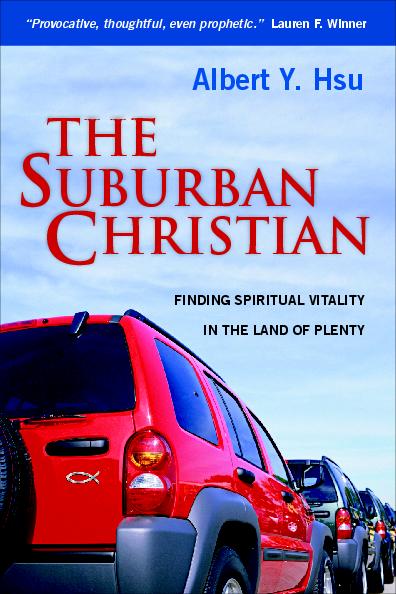
After about two years of research, writing and working through the editorial and publication process, I am pleased to announce that my new book, The Suburban Christian: Finding Spiritual Vitality in the Land of Plenty, is now officially in print! Here's the cover copy:
The book is available directly from IVP and can be ordered via IVP's website. Available on the book's webpage are free downloadable PDFs of the introduction and chapter 1. The book can also be ordered via online booksellers like Amazon or Christianbook.com. And if you want to support your local bricks-and-mortar bookstore, they should be able to order it for you - the ISBN is 0-8308-3334-X. Hope you enjoy it!Suburbia: Paradise or Wasteland?
Suburbia is a place of spiritual yearnings. People come to suburbia looking for a fresh start, the second chance, a new life. It embodies the hopes and longings of its residents, dreams for the future, safety and security for their children, and the search for meaningful community and relationships. Yet much in our suburban world militates against such aspirations, and people find themselves isolated and alienated, trapped by consumerism and materialism. Is there hope for a Christian vision for the suburbs?
Al Hsu unpacks the spiritual significance of suburbia and explores how suburban culture shapes how we live and practice our faith. With broad historical background and sociological analysis, Hsu offers practical insights for living Christianly in a suburban context. Probing such dynamics as commuting and consuming, he offers Christian alternatives for authentic spirituality, genuine community and relevant ministry. And he challenges suburban Christians to look beyond suburbia and marshal their resources toward urban and global justice.
Suburbia may be one of the most significant mission fields of the twenty-first century. Here is guidance and hope for all who would seek the welfare of the suburbs.
"Albert Hsu has written a readable and well-researched treatment of a key issue. I live and work in the exurb, and I am grateful for his wisdom."—John Ortberg, author of If You Want to Walk on Water, You've Got to Get Out of the Boat
"If, like me, you've ever stared at suburbia and wondered how it got this way, if you've ever wondered if there's any hope for radical discipleship here, then this book is for you."—Don Everts, author of Jesus with Dirty Feet and God in the Flesh
"A very important book for all of those who are seeking to faithfully follow Jesus in the suburbs. A candid grappling with both the challenges and the opportunities of suburban living. A great resource for church study groups."—Tom Sine, author of The Mustard Seed Conspiracy and Living on Purpose
"Urban cynics and suburban hermits rejoice--here is a refreshing invitation to find God at work in the margins, the same God who showed up in the unlikely badlands of Nazareth from which the world said nothing good could come."—Shane Claiborne, author of The Irresistible Revolution
"Provocative, thoughtful, even prophetic, The Suburban Christian is a book the church badly needs."—Lauren F. Winner, author of Girl Meets God and Real Sex
Wednesday, May 31, 2006
Community, geography and affinity
I found myself in a variety of social contexts over the last few days that made me think about the nature of community. Scenario one: This past weekend, after church, about a dozen of us went out to eat. We've come to be friends with two other couples in particular who are about our age and are both expecting their first child. So we naturally talked about baby stuff.
Scenario two: On Memorial Day, we had some friends over from our old church for a cookout. These were fellow Gen Xers, also about the same age as us, a mix of singles and marrieds, some of whom we haven't seen for almost two years since we changed churches. None of the others have any kids, and conversation mostly was about current movies and favorite childhood television shows from the 70s and 80s.
Scenario three: Last night, we were at an annual informal wing-ding of publishing industry professionals and friends, many of whom are in town for the Religious Book Trade Exhibit trade show. The attendees included editors, authors, agents, publicists, booksellers, reviewers, journalists, sales reps and other folks in Christian/religious book and magazine publishing. Sort of the Christian literati. Conversation, as you might expect, was about books and publishing and the like.
What strikes me about all these situations is that they are affinity-based communities. Fifty or a hundred years ago, the word "community" was understood in a geographic sense of local neighborhood. The word has shifted to be understood in terms of affinity groups that are not tied to physical geography - people can be part of the arts community or the Asian American community or the evangelical community or the gay/lesbian community or the Star Trek community without being in close geographic proximity to anybody. I am a valued member of the eBay community (or so they tell me), even though I have never physically met anybody I buy from or sell to. One of my authors, Andy Crouch, talks about how this is a significant departure from most of human history. He says that people in most centuries would be astonished to find out that he has more of a sense of community and affinity with people he sees at a conference once a year a thousand miles from his home than he does with the next-door neighbor who's a complete stranger to him.
So my church friends from scenario one all live in different suburbs from me, as do most of my friends from my former church in scenario two - several have a half hour commute to church and a forty-five minute or more commute to work. The publishing industry folks in scenario three are scattered across the country, but several of them I will see more frequently (at various conferences and trade shows through the year) and talk to more often than the neighbors across the street that moved in last year that I still have not said hi to.
I know that theoretically and theologically, community should be diverse and bring me into relationship with people unlike me. But in practice, most of the communities I belong to tend to be of people of similar age, life stage, demographic, vocational and/or personal interests as myself. There are occasions where proximity and geography put me in community with people I would otherwise never talk to, but this tends to be the exception to the rule.
It seems that in suburban contexts, community tends to be affinity-based and self-selecting. We "shop" for our communities and affinity groups just as we shop for consumer goods. So maybe a good spiritual discipline for suburban Christians would be to intentionally seek out relationships and communities beyond our normal affinity groups. Community is easier when there are life experiences or interests in common, but I forget that I already have something in common with every neighbor I have yet to meet - our common humanity.
Thursday, May 25, 2006
Publishers Weekly review of The Suburban Christian
The book publishing industry trade journal Publishers Weekly just ran a review of my forthcoming book The Suburban Christian. I think citations of their reviews are supposed to be limited to just twenty-five words, so here's an excerpt:
"[P]rovides a thoughtful critique of what living as a Christian in the suburbs should look like. . . . Every suburban pastor should read this book."
The full review is available here. I was quite pleased to see this review because I think it captures the purpose and flavor of the book quite well. And to provide some context, there are about 178,000 books published in the English language every year. Of those, something like 8,000 to 12,000 of those are religion books of some sort. Of those, PW only selects a couple of hundred religion books for review. So I feel quite honored to get a PW review, especially one as positive as this one.
Monday, May 22, 2006
Never Mind the Joneses!
This weekend was a Lost weekend - we got the first season of Lost from the library, but only had it for three days, so we watched three episodes Friday night, three episodes Saturday night and two episodes on Sunday before we returned it. Great show!
Also this weekend we were in various contexts with other people where I found myself inadvertently comparing our family with others. In one case, I was pleased to see that Josiah has better reading skills than a kid older than him, giving me reason to feel smug and superior. In another case, a baby the same age as Elijah is already walking (whereas Elijah isn't yet), and we heard about other kids who have many more activities and extracurriculars than our kids do. So this left me feeling inadequate and inferior. What to do?
As I was processing all of my thoughts and feelings, I was reminded of the book Never Mind the Joneses by Tim Stafford, who talks about how every family has its own distinct family culture. Some families have a sports culture, others have a musical culture, and so on. He describes how his family is a backpacking family, and some years ago during a rainy hike his daughter was having a miserable time and said, "I hate this! I hate it, I hate it, I hate it! And the thing I hate the most is that I know when I grow up I'm going to marry someone just like Dad, and we'll make our kids go backpacking!" Ten years later, while she's not married yet, she has come to love backpacking. It's part of her family's cultural DNA.
Stafford points out that families shouldn't compare themselves to other families' ideals of what a family should look like - they should discern their own particular family culture and seek to live faithfully and Christianly in whatever way God has wired them. So that frees us from comparing ourselves to other families that seem more perfect or more holy or whatnot - we can simply live the lives that we have been given to live, in our own distinct way.
On one level this is helpful to me, especially since suburbia is filled with opportunities to compare ourselves with people more affluent or socially active than us. I can think to myself, "Never mind the Joneses," and just focus on how our family seeks to live and parent and follow God in ways true to us - through frequent trips to the library and evenings on the reading couch (as book publishing professionals, our family culture is a bookish one).
But on the other hand, I'm also tempted to retreat from the world and ignore the Joneses. If hanging out with other families makes me feel envious or arrogant or insecure, then rather than trying to compete with them, I will tend to withdraw and disengage instead. So I end up not being motivated to be in community with others whose very presence or identity makes me feel inadequate. Perhaps this is a spiritual maturity issue on my part, and I just need to get over it. So the challenge is this - how do we "never mind the Joneses" in terms of trying to keep up or copy or compete with others, and yet stay engaged with the Joneses and build community and relationships with the Joneses?
I'd like to think that ideally, in the church, our Christian identity transcends differences in socioeconomic status or demographic differences, but in practice, it's often hard for stay-at-home moms and working moms to not feel threatened or criticized by one another's lifestyles, or for white-collar professionals and blue-collar workers to find common ground. I'm encouraged when I see relationships being built across these kinds of lines, and I'm hopeful that the church can be a place where we don't have to worry about comparing ourselves or competing with each other. But I'm still disturbed to find myself falling into these habits of comparison and competition, which tells me that status is probably still too much of an idolatry in my life.
Friday, May 19, 2006
Quality of community and subverting suburban transience
My friend Helen Lee, coeditor of Growing Healthy Asian American Churches, has a post on her blog describing her experience in suburbia. She notes that when her family moved to one particular suburb, they didn't get to know the neighbors there much at all. They recently moved to another suburb, and in contrast, they found themselves in a community that was very neighborly, rooted and interconnected. This is particularly interesting to me because the latter suburb has a bit of a reputation of being upscale and perhaps snobby/elitist, and if the stereotypes held true, I would have expected Helen to have had a more neighborly experience in the other suburb.
I guess it's a lot like local churches as expressions of larger denominations. Sometimes you think that a particular denomination is liberal or fundamentalist, but the specific local church down the block surprises you by being the opposite, whether evangelically conservative or progressively activist or whatnot. In churches, so much depends on local leadership. And in suburbia, so much depends on the local residents. It's certainly true that some neighborhoods have structural things that either facilitate or inhibit community, but we're called to bloom where we're planted, and a few key people in a neighborhood can make a huge difference in creating a neighborly environment.
Interestingly enough, Helen's post also mentions that she lived in a rural small town for a few years and was quite socially isolated. It's been said that small towns and urban communities have more in common than suburbs, because they maintain a sense of local neighborhood and aren't fragmented by suburban commuter culture and anonymity. On the other hand, it seems like it's often hard for newcomers to feel welcome in small towns, because the existing communities are well-established and transplants can be viewed as a threat to that stability.
This actually makes me wonder if suburban transience is a downside that can be subverted into an opportunity. Many suburbanites are transplants, and that means that communities may be more porous and easier for newcomers to break into, with less of an existing establishment. New residents might actually be more open to new connections and building community, especially in new developments and subdivisions where everybody is in the same boat. Again, to draw a church parallel, sometimes it's easier to start fresh church plants than to renew historic long-term congregations. Not that there aren't challenges either way. At any rate, I'm encouraged by Helen's post, that people are taking initiative and creating community here in suburban Chicagoland.
Wednesday, May 17, 2006
Suburban factoids
Here's a list of factoids I accumulated about suburbia during the research for my forthcoming book.
- More people live in suburbs than in cities and small towns combined.
- Americans are more likely to work in a suburb, shop in a suburb, and attend recreational events in a suburb than in central cities or rural towns.
- Suburbia is not just families with kids: According to the 2000 census, only 27 percent of suburban households were married couples with kids, outnumbered by young singles and the elderly living alone.
- Suburbia is diverse: The majority of Asian Americans, half of Hispanics and 40 percent of African Americans live in the suburbs. More new immigrants locate in suburbs than in cities.
- Most suburban commuting is not from suburb to city, but from suburb to suburb.
- The average suburban household generates thirteen car trips a day.
- The average American spends 1 hour, 41 minutes in their car each day—a total of more than three weeks a year.
- Each additional ten minutes in daily commuting time reduces community involvement by ten percent.
- The more spread out a suburb, the higher the rates of obesity, high-blood pressure and weight-related chronic illnesses, because we drive more and walk less.
- Big-box stores and national chains return only 13-14% of their dollars to the local community, while locally owned independent stores recirculate 45-58% to the local community.
- Thirty years ago Americans had friends over to their homes 15 times a year; today the figure is half that—just once every month and a half.
Subscribe to:
Posts (Atom)