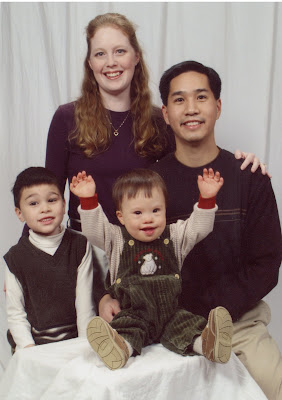
[I noticed yesterday that people were finding my blog through Google searches for "Christian meaning of Valentine's Day" or other similar searches, which led them to my post from last year's Valentine's Day. So I'm reposting it here today. Happy Valentine's Day!]
---------------
Yesterday on a Christian radio station the host was talking about things to do for Valentine's Day with your sweetie, and it just seemed like an extended commercial with specific brand-name product placements for this or that kind of candy or flowers or whatnot. And it struck me that while Christians have long bemoaned the commercialization and secularization of Christmas and Easter, we haven't had as much of an outcry against the commercialization and secularization of Valentine's Day.
I think this is probably because many of us haven't really seen it as a Christian holiday. But it really is. As I mention in my book Singles at the Crossroads, St. Valentine (or Valentinus) was a priest and physician in third-century Rome. According to church tradition, Valentine was known for doing good deeds, caring for the poor, healing the sick. He was arrested during a persecution of Christians, and the Roman emperor Claudius Gothicus handed him over to a magistrate. While in custody, Valentine healed the magistrate's blind, adopted daughter, and the entire family was converted to Christianity. Upon hearing this, the emperor had Valentine beheaded--on February 14th.
From then on, Christians have commemorated this day in memory of Valentine's life of selfless service and ministry. And note what is missing from this narrative - it's not all about romantic couple love. Rather, the emphasis is on love of neighbor, agape service love, not romantic love. The romantic emphasis didn't come until the Middle Ages, and then of course it was heightened by 18th-century Romanticism and now exacerbated by modern Hollywood mythology and Western consumer culture. I think Valentine's Day should be reclaimed by Christians with a more holistic, trinitarian, agape understanding of love, not this narrow emphasis on romantic couple love.
After all, in Christian tradition, romantic love is not the highest love. Greater love has no one than this, that we lay down our lives for our friends. For much of church history, friendship love was acknowledged as the highest form of Christian love and service. And actually, romantic love was viewed suspiciously because it tended to be overly emotive, irrational and could create an idolatry of the love interest. So while we certainly should love and honor our spouses and significant others on Valentine's Day, we should only see this as one particular expression of the greater love that is agape love of neighbor.
Last night my wife said that she hadn't gotten me anything for Valentine's Day, and I said, "Great! Don't get me anything." Don't buy into the commercialism of the secularized holiday. I told her that if she really wanted to get me something, she could make a contribution to Compassion International, World Vision, Samaritan's Purse or something else, or find some other creative way to share God's love with the world. And instead of spending lots of money on an expensive date out, we're exercising stewardship by having a quiet date night at home. Not to diss romance entirely (both of us are NF romantic saps on the Myers-Briggs), but this is our modest attempt to celebrate Valentine's Day more Christianly.
So commemorate Valentine's Day by being other-centered and honoring others in the spirit of Christian love. Get a pack of children's valentines and give them to your friends and coworkers. Use the day as an opportunity to call, write or e-mail someone you haven't heard from for a while. Honor Christ by serving him in the spirit of St. Valentine. Happy Valentine's Day!
Thursday, February 14, 2008


Wednesday, February 13, 2008
Juno and suburbia
Ellen and I don't get out to first-run movies much these days, especially now that tickets are $9.75 each. (DVDs free from the library: priceless.) But this week we braved the Chicagoland cold and snow to see Juno. And it was well worth it. We decided to see it because of some positive reviews we'd seen, and Christianity Today listed it as #1 in their top ten movies of 2007. It's been compared favorably with Napoleon Dynamite, so if you liked that movie, you'll probably like Juno.
It was quirky, clever, fun, sweet, romantic, realistic, hopeful and life-affirming. The lead character is delightful and winsome. Every cast member fits his or her role extremely well (though I kept expecting Jennifer Garner's character to catapault into Sydney Bristow combat mode and take out lurking SD-6 agents).
I was also pleasantly surprised to discover that the movie takes place in the suburbs of Minneapolis. There are references to Minnesotan cities like Stillwater and Mankato and locations like Ridgedale, a nearby shopping mall sister to my home mall of Southdale. Much of the movie takes place in St. Cloud, which is an hour away but apparently now is almost an outer suburb/exurb to the Twin Cities.
This made me nostalgic for Minnesota, as I have fond memories of my suburban Minnesotan upbringing. I posted a Facebook status about liking Juno and its suburban Minnesotan locale, and a friend commented, "What is the deal with you people from suburban MN? It's like you're all some species of salmon, with an innate desire to return to your ancestral breeding ground." I replied, "What can I say? Minnesota is awesome. I miss it lots, and since I have few occasions to go back and visit, I do so vicariously through the movies."
There are a few implausibilities in the movie (who drinks slushies in Minnesota winters?), such as when characters coincidentally run into each other at the mall. This doesn't seem very likely to me, especially since one character lives in St. Cloud and the other lives an hour away. For all that has been claimed about shopping malls being suburban gathering/meeting places, I don't think they're very conducive to chance meetings with people you know. I think malls are far more prone toward anonymity than community.
The movie also strikes an interesting contrast between old suburbia and new suburbia and the class differences between them. The physical geography of different kinds suburban neighborhoods is also significant. Juno's neighborhood, in old suburbia, is a walkable community, with Juno walking to the corner store and Bleeker's track team running along sidewalks. But Vanessa & Mark's new suburban subdivision, while more affluent with bigger houses and yards, never has anybody walking around or out in the community. Everybody has to drive to and from there.
The movie also made me wonder about implications for youth ministry. I will readily admit to having next to no expertise in this area, but it seems to me that this is a movie that youth groups or families could watch and discuss together. It's not just about teen sexuality or pregnancy issues - it's also about relationships with parents, responsibility and growing up (Juno isn't the only character who has growing up to do), the effects of divorce, and the nature of true love and commitment. It's all there. Lots of good grist for the mill. So check it out. It has been nominated for four Academy Awards, and as far as I'm concerned, Juno should win Best Picture.
It was quirky, clever, fun, sweet, romantic, realistic, hopeful and life-affirming. The lead character is delightful and winsome. Every cast member fits his or her role extremely well (though I kept expecting Jennifer Garner's character to catapault into Sydney Bristow combat mode and take out lurking SD-6 agents).
I was also pleasantly surprised to discover that the movie takes place in the suburbs of Minneapolis. There are references to Minnesotan cities like Stillwater and Mankato and locations like Ridgedale, a nearby shopping mall sister to my home mall of Southdale. Much of the movie takes place in St. Cloud, which is an hour away but apparently now is almost an outer suburb/exurb to the Twin Cities.
This made me nostalgic for Minnesota, as I have fond memories of my suburban Minnesotan upbringing. I posted a Facebook status about liking Juno and its suburban Minnesotan locale, and a friend commented, "What is the deal with you people from suburban MN? It's like you're all some species of salmon, with an innate desire to return to your ancestral breeding ground." I replied, "What can I say? Minnesota is awesome. I miss it lots, and since I have few occasions to go back and visit, I do so vicariously through the movies."
There are a few implausibilities in the movie (who drinks slushies in Minnesota winters?), such as when characters coincidentally run into each other at the mall. This doesn't seem very likely to me, especially since one character lives in St. Cloud and the other lives an hour away. For all that has been claimed about shopping malls being suburban gathering/meeting places, I don't think they're very conducive to chance meetings with people you know. I think malls are far more prone toward anonymity than community.
The movie also strikes an interesting contrast between old suburbia and new suburbia and the class differences between them. The physical geography of different kinds suburban neighborhoods is also significant. Juno's neighborhood, in old suburbia, is a walkable community, with Juno walking to the corner store and Bleeker's track team running along sidewalks. But Vanessa & Mark's new suburban subdivision, while more affluent with bigger houses and yards, never has anybody walking around or out in the community. Everybody has to drive to and from there.
The movie also made me wonder about implications for youth ministry. I will readily admit to having next to no expertise in this area, but it seems to me that this is a movie that youth groups or families could watch and discuss together. It's not just about teen sexuality or pregnancy issues - it's also about relationships with parents, responsibility and growing up (Juno isn't the only character who has growing up to do), the effects of divorce, and the nature of true love and commitment. It's all there. Lots of good grist for the mill. So check it out. It has been nominated for four Academy Awards, and as far as I'm concerned, Juno should win Best Picture.
Monday, February 11, 2008
Scot McKnight's A Community Called Atonement
I just finished reading Scot McKnight's book A Community Called Atonement, which is a balanced exposition of atonement not merely as a doctrine but as praxis and a way of life. He argues that too many Christians these days have narrowly focused on one approach to the atonement to the excusion of others, and he says this is rather like playing golf with only one golf club. But different clubs do different things; that's the whole point of having a bag with fourteen different clubs in it. (It occurs to me that the only time we use only one club is when we're playing mini golf - which might be what the Christian life is like when we only see the atonement one way!)
So McKnight takes us on a tour of the Christian story to unpack all the various metaphors and components to atonement: recapitulation, ransom, Christus Victor, satisfaction, substitution, representation, etc. He says, "What we are most in need of today is not a continuance of the atonement wars for a privileged metaphor, but a vigorous discussion of the value of each of the metaphors so that each image is invited to the table. . . . I'm arguing instead for an embracive category, one that includes each metaphor in a larger, rounded whole. We need to use all the clubs in our bag and we need a bag that can hold them all."
The golf bag, so to speak, is what he calls "identification for incorporation." Jesus, in the incarnation, identifies with us, becomes what we are, and experiences our humanity and suffering. And this identification has the purpose of incorporation, that we are incorporated into Christ, the second Adam. McKnight does a fantastic job of showing how all aspects of the atonement are wrapped up in being "in Christ." Justification is in Christ (Gal 2:17), sanctification is in Christ (1 Cor 1:2), redemption is in Christ (Rom 3:24), new creation is in Christ (2 Cor 5:19), freedom is in Christ (Gal 2:4), new life is in Christ (Rom 6:11) and on and on.
So it's more than a cognitive matter of getting the "right" atonement theory or doctrine down pat. It's rather that all of the different vocabulary sheds light on the lived reality of being in Christ. It's more than holding the "right" golf club; it's actually playing the game. Or, to change the analogy, McKnight says that it's like playing the violin:
There's much more that could be said, but I'll spare the details here and simply commend the book to you. It's quite accessible and doesn't get bogged down in theological jargon or minutiae. If you don't care to get into all the theological analysis and would prefer a treatment that simply probes each of the various images and metaphors, take a look at Neil Livingstone's Picturing the Gospel, which looks at images from redemption and ransom to justification and new life in a very practical way and spins out implications for ministry and witness.
So McKnight takes us on a tour of the Christian story to unpack all the various metaphors and components to atonement: recapitulation, ransom, Christus Victor, satisfaction, substitution, representation, etc. He says, "What we are most in need of today is not a continuance of the atonement wars for a privileged metaphor, but a vigorous discussion of the value of each of the metaphors so that each image is invited to the table. . . . I'm arguing instead for an embracive category, one that includes each metaphor in a larger, rounded whole. We need to use all the clubs in our bag and we need a bag that can hold them all."
The golf bag, so to speak, is what he calls "identification for incorporation." Jesus, in the incarnation, identifies with us, becomes what we are, and experiences our humanity and suffering. And this identification has the purpose of incorporation, that we are incorporated into Christ, the second Adam. McKnight does a fantastic job of showing how all aspects of the atonement are wrapped up in being "in Christ." Justification is in Christ (Gal 2:17), sanctification is in Christ (1 Cor 1:2), redemption is in Christ (Rom 3:24), new creation is in Christ (2 Cor 5:19), freedom is in Christ (Gal 2:4), new life is in Christ (Rom 6:11) and on and on.
So it's more than a cognitive matter of getting the "right" atonement theory or doctrine down pat. It's rather that all of the different vocabulary sheds light on the lived reality of being in Christ. It's more than holding the "right" golf club; it's actually playing the game. Or, to change the analogy, McKnight says that it's like playing the violin:
"The magic of a violin is the capacity for the violinist to make each string work in harmony with the others to create the appropriate sound. If a violinist somehow managed to play only one string on the violin, the sound could never be complete. Some theories of atonement ask violinists either to pluck all but one string or to play gospel music as though only one string really mattered. I want to contend that we need each of the strings, and that we need to seek for a violinist with a bow that can stroke the strings so well that the potency of each string creates a harmonious composition that puts our hearts at rest." (p. 114)And in case anybody's worried about McKnight denying substitutionary atonement or penal substitution, he's quite clear that he affirms these and that the Bible teaches that Jesus suffered death on our part. It's a reflection of his identification (he died our death) for the purpose of incorporation (so we might partake in his resurrection and be raised with him). McKnight also notes that "substitution" is not complete enough as a metaphor. He argues that "we ought to use the term representation more, for it is true that Jesus 'represents' us the way a priest represents the people before God."
There's much more that could be said, but I'll spare the details here and simply commend the book to you. It's quite accessible and doesn't get bogged down in theological jargon or minutiae. If you don't care to get into all the theological analysis and would prefer a treatment that simply probes each of the various images and metaphors, take a look at Neil Livingstone's Picturing the Gospel, which looks at images from redemption and ransom to justification and new life in a very practical way and spins out implications for ministry and witness.
Thursday, February 07, 2008
Happy Chinese New Year!
 Today is Chinese New Year, and as Google has commemorated, it's the Year of the Rat. This is my year, since I was born in Nov. 1972. A friend just posted on my Facebook wall that he came across this description: "Rats are said to be imaginative, charming and very generous to those they love - although they do have a tendency to be quick-tempered and over-critical. They are supposed to make good writers, critics and publicists."
I've seen that description before (probably on a restaurant placemat), and it's funny because I've been a writer/author, a book critic/reviewer, and a publicist. The Wikipedia entry says that rats' positive traits are: Meticulous, intelligent, shrewd, compassionate, charismatic, charming, ambitious, practical, industrious, honest, eloquent, versatile, familial, creative, hard-working, neat, organized, lovers of music, loving. But their negative traits are: Controlling, obstinate, resentful, lacks-a-sense-of-humor, manipulative, cruel, vengeful, power-driven, critical, possessive, stingy, bossy, fickle, defensive.
Hmmm. I think zodiac/horoscopes (whether Chinese or other) are generally a bunch of hooey, since if this were true, then everybody in each high school class would have basically the same traits. But a few of these are close to the mark. More than once I've been advised to be less critical and to let things go. My lack of humor came out recently when commenting on a blog about the use of humor.
The way these things are written are usually general enough that anybody can find themselves somewhere in these categories. Or we interpret these descriptions in light of our own experience to make them fit. Wikipedia says that rats' professions include "espionage, psychiatry, psychology, writing, politics, law, engineering, accounting, detective work, acting, and pathology." Well, that's long enough a list that folks will find at least one thing that works (like writing, in my case). I think it's interesting that espionage, detective work or acting are listed, as that might suggest a common theme of pretense/stealth/being someone you're not. I was in theatre in high school, read mystery novels and like James Bond movies. Played an espionage role playing game in junior high and dubbed my character "005." But I'd be of no use to anybody as an accountant or engineer. I'm not wired that way.
As I've mentioned before, I find Myers-Briggs and Enneagram typologies much more useful. One career book I have says that ENFPs are well-suited to be journalists, columnists, musicians, reporters/editors, copy writers, publicists and conference planners - all of which I've done in some form or another.
At any rate, this is far afield of my initial impulse in posting on Chinese New Year, which was to celebrate my ethnic/cultural background and to also to let it serve as a prayer trigger for the church in China. If the 19th century was the British century and the 20th century was the American century, the 21st century may well be China's. And despite decades of repression, the church in China has seen explosive growth, with estimates possibly running as high as 100 or 130 million Christians in China.
And actually, I'm a second-generation Taiwanese American, so I actually have more of a sense of affinity with Taiwan than with mainland China per se. Part of me resists Chinese identity because of China's oppressive relationship with Taiwan, but I also am reminded that Chinese history goes back 5000 years and predates the political situations of the 20th century. I'm proud of the feisty independence of the Taiwanese people, whose identity has been distinct from mainland China for generations. Christianity in Taiwan is minimal, with less than 5% of the population Christian of any kind.
But a century ago my great-grandfather Ong Liao came to Christ through the work of a British missionary. Though my great-grandfather was blind, he started a church and school for the blind and translated the Bible and a hymnal into Taiwanese Braille. This was the beginning of the Christian story in my family heritage, and I am grateful for God's work in Taiwan and in China throughout the decades. He has not left himself without witness. So happy Chinese New Year, and do pray for the church in China and Taiwan. Thanks!
Wednesday, February 06, 2008
A litany of penitence
[From the Book of Common Prayer for Ash Wednesday.]
I invite you to the observance of a holy Lent, by self-examination and repentance; by prayer, fasting, and self-denial; and by reading and meditating on God's holy Word. . . .
That we may show forth your glory in the world.
I invite you to the observance of a holy Lent, by self-examination and repentance; by prayer, fasting, and self-denial; and by reading and meditating on God's holy Word. . . .
Most holy and merciful Father:
We confess to you and to one another,
and to the whole communion of saints
in heaven and on earth,
that we have sinned by our own fault
in thought, word, and deed;
by what we have done, and by what we have left undone.
We have not loved you with our whole heart, and mind, and strength. We have not loved our neighbors as ourselves. We have not forgiven others, as we have been forgiven.
Have mercy on us, Lord.
We have been deaf to your call to serve, as Christ served us. We have not been true to the mind of Christ. We have grieved your Holy Spirit.
Have mercy on us, Lord.
We confess to you, Lord, all our past unfaithfulness: the pride, hypocrisy, and impatience of our lives,
We confess to you, Lord.
Our self-indulgent appetites and ways, and our exploitation of other people,
We confess to you, Lord.
Our anger at our own frustration, and our envy of those more fortunate than ourselves,
We confess to you, Lord.
Our intemperate love of worldly goods and comforts, and our dishonesty in daily life and work,
We confess to you, Lord.
Our negligence in prayer and worship, and our failure to commend the faith that is in us,
We confess to you, Lord.
Accept our repentance, Lord, for the wrongs we have done: for our blindness to human need and suffering, and our indifference to injustice and cruelty,
Accept our repentance, Lord.
For all false judgments, for uncharitable thoughts toward our neighbors, and for our prejudice and contempt toward those who differ from us,
Accept our repentance, Lord.
For our waste and pollution of your creation, and our lack of concern for those who come after us,
Accept our repentance, Lord.
Restore us, good Lord, and let your anger depart from us;
Favorably hear us, for your mercy is great.
That we may show forth your glory in the world.
Tuesday, February 05, 2008
My Big Fat Super Tuesday
In an interesting convergence of calendars, today happens to be both Super Tuesday and Fat Tuesday. Super Tuesday, of course, is the day that the largest number of states hold presidential primaries or caucuses. Fat Tuesday (better known as Mardi Gras in French) has traditionally been a day of self-indulgence prior to the abstention that comes with Ash Wednesday and the season of Lent. (It's also known as Pancake Day in some places, as pancakes were a convenient way to use up perishable ingredients before Lent.)
While I've been as interested in following the races as anybody, I also really hope that the candidates will have settled out somewhat after Super Tuesday. I'm already getting tired of the electioneering, especially when I hear about how much money is spent on advertising. An Associated Press news story reports, "Sens. Clinton and Obama each poured more than $1 million a day into TV ads in the last week alone; Clinton buying an hour on the Hallmark Channel for a town hall meeting on Monday night, Obama seeing some $250,000 disappear in 30 seconds in his Super Bowl ad a day earlier."
Yikes. That's $8333.33 a second. So if someone contributed $50 to the campaign, that $50 would have bought a mere 1/167th of a second of a Super Bowl ad. I understand that money and advertising are necessary components to elections, but it all seems so ephemeral. Some estimate that the candidates are going to spend a combined half billion or more this election season. Which feels like typical American overblownness - a lot of other countries have much shorter election seasons and spend far less money.
Wouldn't it be nice if the candidates declared a cease fire for Lent and stopped spending money on commercials? Wouldn't it be great if the candidates used that money elsewhere, to actually accomplish some of the things they've been talking about, in terms of reducing poverty, providing international aid and development, covering health care costs and improving education? A half billion might be a drop in the bucket compared to the multi-trillion national budget, but still, that could accomplish a lot more concrete, tangible good than TV commercials that will disappear like vapor.
At any rate, I think it would be interesting if Christians gave up following the election for Lent. I'm not saying that Christians shouldn't be involved in politics - far from it. But for some of us, reading election news can be an unhealthy addiction that sucks up way too much time. And Lent gives us an opportunity to say no and let go of the need to keep up with every detail of the campaign.
Of course, all of us need to discern for ourselves what we most need to let go of this Lent. I think I need to give up Scrabulous and reserving new items at the library and actually read some of the stacks of books already on my shelves. (I'm not quite ready to give up Facebook, though. Maybe next year.)
While I've been as interested in following the races as anybody, I also really hope that the candidates will have settled out somewhat after Super Tuesday. I'm already getting tired of the electioneering, especially when I hear about how much money is spent on advertising. An Associated Press news story reports, "Sens. Clinton and Obama each poured more than $1 million a day into TV ads in the last week alone; Clinton buying an hour on the Hallmark Channel for a town hall meeting on Monday night, Obama seeing some $250,000 disappear in 30 seconds in his Super Bowl ad a day earlier."
Yikes. That's $8333.33 a second. So if someone contributed $50 to the campaign, that $50 would have bought a mere 1/167th of a second of a Super Bowl ad. I understand that money and advertising are necessary components to elections, but it all seems so ephemeral. Some estimate that the candidates are going to spend a combined half billion or more this election season. Which feels like typical American overblownness - a lot of other countries have much shorter election seasons and spend far less money.
Wouldn't it be nice if the candidates declared a cease fire for Lent and stopped spending money on commercials? Wouldn't it be great if the candidates used that money elsewhere, to actually accomplish some of the things they've been talking about, in terms of reducing poverty, providing international aid and development, covering health care costs and improving education? A half billion might be a drop in the bucket compared to the multi-trillion national budget, but still, that could accomplish a lot more concrete, tangible good than TV commercials that will disappear like vapor.
At any rate, I think it would be interesting if Christians gave up following the election for Lent. I'm not saying that Christians shouldn't be involved in politics - far from it. But for some of us, reading election news can be an unhealthy addiction that sucks up way too much time. And Lent gives us an opportunity to say no and let go of the need to keep up with every detail of the campaign.
Of course, all of us need to discern for ourselves what we most need to let go of this Lent. I think I need to give up Scrabulous and reserving new items at the library and actually read some of the stacks of books already on my shelves. (I'm not quite ready to give up Facebook, though. Maybe next year.)
Friday, February 01, 2008
Children's spirituality thoughts
This past Saturday our church had a dinner gathering for parents to talk about spiritual development in children, and we discussed how different ages and stages have different questions and concerns. Our speaker/discussion leader, Sibyl Towner, said that from ages 0-5, the main question is "Am I loved?" Ages 6-11, it's "What am I good at? What can I do?" Ages 12-18, it's "Who am I?" And from 19-35, it's "What can I give my life for?"
These general categories are something of an amalgamation of developmental theorists like Piaget and Kohlberg, and I think they ring true. They build upon each other, and for many of us in our twenties and thirties, we're still working out identity issues because these questions weren't really addressed or answered while growing up in our families of origin. I think many of us are still discerning how our life purpose flows out of our gifts/competencies and our sense of identity. It's especially interesting for us now as parents to think about how best to facilitate our children's development and spiritual growth even while we continue to discover our own calling and place in this world.
Sibyl provided a handout with possible reflection questions for journaling:
- Beloved: How do you know you are beloved? Who has communicated to you that you are loved?
- Competent: What do you do well and enjoy doing? How did that come about?
- Identity: How well do you know yourself? How have places of service or activities in which you have been involved helped you to discover who you are?
- Purpose: What do you presently understand about your purpose? "Is the life that I am living the life that wants to live in me?" (Parker Palmer)
In addition to these questions, our children's ministry director, Mary Gonzalez, shared a few simple questions that she uses with her kids at bedtime each night: "What was good about today? What was hard? And where was God in this day?" And she noted that nine times out of ten, God was present and experienced in whatever was the hard thing of the day. We've been asking our older son these questions, and he's been responding quite well. They've helped him name things and admit his own shortcomings, and they've also been entry points for gratitude and thanksgiving.
These general categories are something of an amalgamation of developmental theorists like Piaget and Kohlberg, and I think they ring true. They build upon each other, and for many of us in our twenties and thirties, we're still working out identity issues because these questions weren't really addressed or answered while growing up in our families of origin. I think many of us are still discerning how our life purpose flows out of our gifts/competencies and our sense of identity. It's especially interesting for us now as parents to think about how best to facilitate our children's development and spiritual growth even while we continue to discover our own calling and place in this world.
Sibyl provided a handout with possible reflection questions for journaling:
- Beloved: How do you know you are beloved? Who has communicated to you that you are loved?
- Competent: What do you do well and enjoy doing? How did that come about?
- Identity: How well do you know yourself? How have places of service or activities in which you have been involved helped you to discover who you are?
- Purpose: What do you presently understand about your purpose? "Is the life that I am living the life that wants to live in me?" (Parker Palmer)
In addition to these questions, our children's ministry director, Mary Gonzalez, shared a few simple questions that she uses with her kids at bedtime each night: "What was good about today? What was hard? And where was God in this day?" And she noted that nine times out of ten, God was present and experienced in whatever was the hard thing of the day. We've been asking our older son these questions, and he's been responding quite well. They've helped him name things and admit his own shortcomings, and they've also been entry points for gratitude and thanksgiving.
Thursday, January 31, 2008
A few upcoming conferences
Next month I'll be at the National Pastors Convention in San Diego, Feb. 26-29. IVP is a cosponsor, and many of our authors are speakers and workshop leaders there, including N. T. Wright, Brenda Salter McNeil, Andy Crouch and Ruth Haley Barton. Last year at NPC I presented a few workshops on suburban stuff and had an invigorating time interacting with people from across the country. This year I'll be meeting with authors and such. If you'll be at the conference, stop by the IVP booth and say hi - I'll be hanging around.
Another conference that I have not yet decided if I'll be attending is the Asian American Leadership Conference in Fullerton, CA, March 24-26. This one also features a number of IVP authors that I've worked with, including Ken Fong, Paul Tokunaga, Nikki Toyama-Szeto and Soong-Chan Rah. Looks like a great event; I heard good things about the first AALC a few years ago. One of the conference planners, Tom Steers of the Navigators, also tipped me off to a related event, the Southeast Asian Leadership Summit, March 13-15th in Herndon, VA, hosted by Open Door Presbyterian Church, which was one of the churches profiled in IVP's Growing Healthy Asian American Churches. I'm glad that more conferences like these exist these days, and I hope that they are helpful for many.
Another conference that I have not yet decided if I'll be attending is the Asian American Leadership Conference in Fullerton, CA, March 24-26. This one also features a number of IVP authors that I've worked with, including Ken Fong, Paul Tokunaga, Nikki Toyama-Szeto and Soong-Chan Rah. Looks like a great event; I heard good things about the first AALC a few years ago. One of the conference planners, Tom Steers of the Navigators, also tipped me off to a related event, the Southeast Asian Leadership Summit, March 13-15th in Herndon, VA, hosted by Open Door Presbyterian Church, which was one of the churches profiled in IVP's Growing Healthy Asian American Churches. I'm glad that more conferences like these exist these days, and I hope that they are helpful for many.
Tuesday, January 29, 2008
My CT column is in print!
My first column for Christianity Today is in print! As I mentioned a few months ago, CT invited me to be a columnist this year. We've dubbed the column name as "Kingdom Sightings." The first column, "The Vision Thing," just appeared in the February issue. It's not online yet, but I'll link to it when it's available. (Update: It's now online and available here.)
What's fascinating to me with magazine writing is the time warp. When we get magazines in the mail, we have a sense that it's the latest news. But with monthly magazines, the content was likely written three or four months beforehand. I wrote my February column back in November, and a few weeks ago I sent in my April column. Of course, since I work in book publishing, I'm used to things being time delayed - I'm working with manuscript drafts now that won't be in print until fall 2008 or winter 2009. The content for "new" books is usually at least a year old by the time it hits the shelves.
At any rate, if you're a subscriber and have read the article, let me know what you think! Thanks for reading.
What's fascinating to me with magazine writing is the time warp. When we get magazines in the mail, we have a sense that it's the latest news. But with monthly magazines, the content was likely written three or four months beforehand. I wrote my February column back in November, and a few weeks ago I sent in my April column. Of course, since I work in book publishing, I'm used to things being time delayed - I'm working with manuscript drafts now that won't be in print until fall 2008 or winter 2009. The content for "new" books is usually at least a year old by the time it hits the shelves.
At any rate, if you're a subscriber and have read the article, let me know what you think! Thanks for reading.
Monday, January 28, 2008
Happy birthday, LEGO
 Google's homepage today and the Wikipedia entry alerted me to the fact that today is the 50th anniversary of the patent for the LEGO brick. And LEGOs play a large role in our household right now. Last year my older son, Josiah, got into building LEGO Star Wars kits, and we now have an armada of LEGO Star Wars vehicles in the playroom, from A-wing to X-wing. We just got several more new kits over the weekend, and we spent hours assembling them and staging little scenarios with them.
I have to say that I'm a bigger LEGO fan now than I ever was as a kid because I now look at them through the lens of being a parent. I'm thrilled to watch Josiah exercise his creativity and build things both by following instructions as well as imagining things on his own. He'll invent new spaceships and figure out how to use the right bricks to have movable wings and docking bays and whatnot. He gets a kick out of mixing and matching LEGO character pieces; he'll take a Luke or Han head and put it on a stormtrooper body and act out the scenes from Episode IV, or he'll give Leia a lightsaber and turn her into Darth Leia, Dark Jedi. I think it's significant that he plays more creatively by building his own scenes with LEGOs than he does with pre-fabricated toys and action figures.
My only ambivalence about LEGOs is that they've gotten us into this habit of consumerism by continually adding new releases. Both the Star Wars brand and the LEGO brand are tremendously strong on their own; combined, they're nearly irresistible, at least for this 6-year-old and his thirtysomething dad. Look, a new Rebel Scout Speeder! A new Imperial Dropship! But we're glad to have a constructive, developmentally engaging way to play together. Josiah has more Christmas money than he knows what to do with, and there are worse ways for him to spend it.
So happy anniversary, LEGO. Thanks for expanding our imaginations.
Friday, January 25, 2008
Much Madness Is Divinest Sense
Pilgrim Press sent me a copy of Kathleen Greider's new book Much Madness Is Divinest Sense: Wisdom in Memoirs of Soul-Suffering. Greider, professor of pastoral care and counseling at Claremont School of Theology, studied a number of memoirs and chronicles of depression, mental illness and other forms of emotional anguish. One of the books in her study was my book Grieving a Suicide, which I wrote a few years ago after losing my dad to suicide. I'm honored to have been included in the study, and I'm a little amused to be described as a "memoirist," since we pretty much avoided describing the book in that way.
It's interesting to read a book like Greider's and see what struck her about my own work and how my thoughts contributed to her analysis and conclusions. For example, in a chapter on "Healing Work," Greider picks up on my comments about the practice of lament and says,
It's interesting to read a book like Greider's and see what struck her about my own work and how my thoughts contributed to her analysis and conclusions. For example, in a chapter on "Healing Work," Greider picks up on my comments about the practice of lament and says,
Grieving for his father, Albert Hsu wished for something like a Christian version of the Jewish tradition of sitting shiva, where lament is shared--and ameliorated. Lament was powerful for Albert as he sought healing after his father's suicide, because it felt to him to be an expression of love, some balance to the anger that was also predominant in his expression of grief. 'The agony we undergo is the score on which our love ballad is written.' Lament is a part of healing insofar as it serves as an outlet for the pain of loss that would otherwise undermine our capacity to do the work of rebuilding our lives.I'm grateful for Greider's work. The kinds of books in her study were of great help to me in my own grieving process, and this all reminds me again of the power of personal story and the ministry of books, that sometimes books can articulate for us what we are yet struggling to understand or express.
. . . Sometimes cultural tradition provides us such mechanisms: as he mourned his father, Albert Hsu realized anew the comfort provided through the Chinese custom of having at the funeral and afterward in the home a prominent portrait of the deceased. Whatever their specific forms, age-old practices of lament and remembrance provide structures that help make the expression of grief life-giving and not only a reckoning with death. [pp. 240-41]
Monday, January 21, 2008
Men's breakfast thoughts
Our church has men's breakfasts roughly once a month, and this past Saturday we took up the topic of "What does it mean to be a (Christian) man?" A few of my random observations:
- Scripture has multiple models and examples of being a faithful godly man (as it also does of women). There isn't a particular one-size-fits-all template for manhood. Both men and women have bell curves of traits and tendencies.
- While understanding gender tendencies can be of some limited use, gender is only one factor among many, including giftedness, calling, personality, temperament, ethnic heritage, cultural background, birth order, etc. I typically find Myers-Briggs and Enneagram typologies far more helpful than simple male-female generalizations.
- One problem with current discussions of "Christian masculinity" is that they tend to focus on a fairly limited range of models. For example, John Eldredge's Wild at Heart majors primarily on the warrior archetype (with a bit of questor and lover thrown in). But there are many other legitimate and valid possibilities out there, including artisan, sage, troubador, etc. That correlates well with 1 Corinthians 12 on the many parts of the body. There's a place for the warrior, and some Christian men may well be warrior types, but certainly not all.
- Some male leaders feel like the church is too "feminized" for men and want to reclaim a more "masculine" version of the faith. But we need to remember that in historical perspective, Christianity has had a civilizing effect on barbarian men, reining in aggression and violence and instead promoting love of neighbor, peacemaking, generosity and mercy.
- Scripture also gives different correctives depending on the context. In one case, Paul told Timothy to not be so timid. But when James and John wanted to call fire down from heaven, Jesus rebuked them.
- Rather than think in terms of whether "men are protectors" or "men are decisionmakers" (which focus on doing) it's often more helpful to think about becoming men of integrity, character, faithfulness and holiness (which are more about being).
- Instead of focusing on "roles" or "expectations," I think it's more constructive to talk about calling. All of us are called to be a particular man or woman, and we must each discern our own calling based on our personality, giftedness, context and opportunities that God has given us. It might be easier to look for a template ("men should be like this or that") but that shortcircuits the hard work of discerning our own particular callings.
- Scripture has multiple models and examples of being a faithful godly man (as it also does of women). There isn't a particular one-size-fits-all template for manhood. Both men and women have bell curves of traits and tendencies.
- While understanding gender tendencies can be of some limited use, gender is only one factor among many, including giftedness, calling, personality, temperament, ethnic heritage, cultural background, birth order, etc. I typically find Myers-Briggs and Enneagram typologies far more helpful than simple male-female generalizations.
- One problem with current discussions of "Christian masculinity" is that they tend to focus on a fairly limited range of models. For example, John Eldredge's Wild at Heart majors primarily on the warrior archetype (with a bit of questor and lover thrown in). But there are many other legitimate and valid possibilities out there, including artisan, sage, troubador, etc. That correlates well with 1 Corinthians 12 on the many parts of the body. There's a place for the warrior, and some Christian men may well be warrior types, but certainly not all.
- Some male leaders feel like the church is too "feminized" for men and want to reclaim a more "masculine" version of the faith. But we need to remember that in historical perspective, Christianity has had a civilizing effect on barbarian men, reining in aggression and violence and instead promoting love of neighbor, peacemaking, generosity and mercy.
- Scripture also gives different correctives depending on the context. In one case, Paul told Timothy to not be so timid. But when James and John wanted to call fire down from heaven, Jesus rebuked them.
- Rather than think in terms of whether "men are protectors" or "men are decisionmakers" (which focus on doing) it's often more helpful to think about becoming men of integrity, character, faithfulness and holiness (which are more about being).
- Instead of focusing on "roles" or "expectations," I think it's more constructive to talk about calling. All of us are called to be a particular man or woman, and we must each discern our own calling based on our personality, giftedness, context and opportunities that God has given us. It might be easier to look for a template ("men should be like this or that") but that shortcircuits the hard work of discerning our own particular callings.
Wednesday, January 16, 2008
Hitting the MAT
Last month I took the Miller Analogies Test (MAT), which not only tests analogical thinking but also general knowledge and cultural literacy in such areas as history, geography, science and literature. Here are some sample questions from the test prep book that I prepared with:
SHAWM : OBOE :: REBEC : (a. trumpet, b. clarinet, c. piano, d. violin)
THE SCHOOL FOR SCANDAL : THE SCHOOL FOR WIVES :: (a. Sheridan, b. Beaumont, c. Wilde, d. Behan) : MOLIERE
GUNNAR MYRDAL : (a. physics, b. economics, c. medicine, d. history) :: LINUS PAULING : CHEMISTRY
WRIGHT : FALLINGWATER :: SAARINEN : (a. Museum of Modern Art, b. Gateway Arch, c. Washington Monument, d. Golden Gate Bridge)
(a. Kilimanjaro, b. Mount Everest, c. K2, d. Makalu) : KORAKARAM :: MONT BLANC : ALPS
CALVIN CYCLE : GLUCOSE :: CELLULAR RESPIRATION : (a. sucrose, b. H2O, c. carbon, d. ATP)
(a. Balboa, b. Velasquez, c. Chevrolet, d. Cabrillo) : CALIFORNIA :: CADILLAC : MICHIGAN
FREUD : LAING :: VEBLEN : (a. Barthes, b. Keynes, c. Skinner, d. Lorenz)
The questions make me wonder - is all this expected to be general knowledge? Does the average citizen really need this info to get through daily life? Probably not. And in this age of Google and Wikipedia, how much do we actually need to hold in our heads? It's probably more important to know how to search out info than to have it in instant recall. Except when playing Trivial Pursuit, of course.
The prep book had ten practice tests, and it seemed like the more I studied, the worse my score got. But I think it was all helpful, because by comparison the actual test didn't seem as tough. It didn't have as many obscure cultural/historical references as the practice tests did. And I just got my test results: a scaled score of 486, which is in the 99th percentile. Yahoo!
SHAWM : OBOE :: REBEC : (a. trumpet, b. clarinet, c. piano, d. violin)
THE SCHOOL FOR SCANDAL : THE SCHOOL FOR WIVES :: (a. Sheridan, b. Beaumont, c. Wilde, d. Behan) : MOLIERE
GUNNAR MYRDAL : (a. physics, b. economics, c. medicine, d. history) :: LINUS PAULING : CHEMISTRY
WRIGHT : FALLINGWATER :: SAARINEN : (a. Museum of Modern Art, b. Gateway Arch, c. Washington Monument, d. Golden Gate Bridge)
(a. Kilimanjaro, b. Mount Everest, c. K2, d. Makalu) : KORAKARAM :: MONT BLANC : ALPS
CALVIN CYCLE : GLUCOSE :: CELLULAR RESPIRATION : (a. sucrose, b. H2O, c. carbon, d. ATP)
(a. Balboa, b. Velasquez, c. Chevrolet, d. Cabrillo) : CALIFORNIA :: CADILLAC : MICHIGAN
FREUD : LAING :: VEBLEN : (a. Barthes, b. Keynes, c. Skinner, d. Lorenz)
The questions make me wonder - is all this expected to be general knowledge? Does the average citizen really need this info to get through daily life? Probably not. And in this age of Google and Wikipedia, how much do we actually need to hold in our heads? It's probably more important to know how to search out info than to have it in instant recall. Except when playing Trivial Pursuit, of course.
The prep book had ten practice tests, and it seemed like the more I studied, the worse my score got. But I think it was all helpful, because by comparison the actual test didn't seem as tough. It didn't have as many obscure cultural/historical references as the practice tests did. And I just got my test results: a scaled score of 486, which is in the 99th percentile. Yahoo!
Monday, January 14, 2008
Farewell to a bookseller
Yesterday afternoon Elijah and I stopped by one of my favorite local used-book stores. I hadn't been by since before Christmas, and as I pulled up, I was disappointed to see that the store was closed. That struck me as odd, because it wasn't a holiday or anything. Then I noticed a sign on the door saying that the store was closed because the owner had died last Wednesday. Visitation was Sunday afternoon, funeral Monday morning.
The proprietor, David, had been a gentlemanly fellow; I'd gotten to know him a little over the last decade of visiting his store. He was a Christian; I'd seen his book van at a local church's parking lot, and we'd chat occasionally about new books in his religion section. I was sad to hear that he was gone. I knew he was getting up in years, but he had seemed healthy. We know not our time.
In a commercial culture of big box stores and national chains, it's rare to get familiar with retail employees. You don't often see the same cashiers in the checkout lines, and employees are pretty interchangable and utilitarian - you only think of them in terms of how they might help you find an item. In our anonymous suburban culture, we don't often get to know store proprietors, except perhaps at family-owned mom-and-pop stores. There we're more likely to connect with people in our communities, especially if we become regular customers enough that we recognize one another upon return visits.
And retail bricks-and-mortar bookselling has fallen on hard times - it's difficult to compete with the online giants of the world. I have no idea how much of a margin David made on each book sale - it couldn't have been more than a few bucks at best. It's hard to imagine the amount of sales volume needed to pay the rent. But he did so valiantly, with a quirky little bookstore with piles of books all over the shelves and floor, creating a little bit of a "third place" for the local community.
I was surprised to read in David's obituary that he had a PhD in chemistry. I had no idea. He had owned and operated his bookstore for thirteen years, which is just about the same amount of time I've been living in the area. The Lisle bookstore has been an integral part of my sense of local community here in the western suburbs of Chicago.
I salute you, David, the Lisle bookstore guy. Thanks for your work and love of books. May you enjoy eternity reading books even more wondrous than those you carried in this lifetime.
The proprietor, David, had been a gentlemanly fellow; I'd gotten to know him a little over the last decade of visiting his store. He was a Christian; I'd seen his book van at a local church's parking lot, and we'd chat occasionally about new books in his religion section. I was sad to hear that he was gone. I knew he was getting up in years, but he had seemed healthy. We know not our time.
In a commercial culture of big box stores and national chains, it's rare to get familiar with retail employees. You don't often see the same cashiers in the checkout lines, and employees are pretty interchangable and utilitarian - you only think of them in terms of how they might help you find an item. In our anonymous suburban culture, we don't often get to know store proprietors, except perhaps at family-owned mom-and-pop stores. There we're more likely to connect with people in our communities, especially if we become regular customers enough that we recognize one another upon return visits.
And retail bricks-and-mortar bookselling has fallen on hard times - it's difficult to compete with the online giants of the world. I have no idea how much of a margin David made on each book sale - it couldn't have been more than a few bucks at best. It's hard to imagine the amount of sales volume needed to pay the rent. But he did so valiantly, with a quirky little bookstore with piles of books all over the shelves and floor, creating a little bit of a "third place" for the local community.
I was surprised to read in David's obituary that he had a PhD in chemistry. I had no idea. He had owned and operated his bookstore for thirteen years, which is just about the same amount of time I've been living in the area. The Lisle bookstore has been an integral part of my sense of local community here in the western suburbs of Chicago.
I salute you, David, the Lisle bookstore guy. Thanks for your work and love of books. May you enjoy eternity reading books even more wondrous than those you carried in this lifetime.
Thursday, January 10, 2008
Richard Mouw's positive take on spiritual consumerism and church shopping
The latest issue of Christianity Today has an article by Richard Mouw called "Spiritual Consumerism's Upside: Why church shopping may not be all bad." In it Mouw notes that while church hopping and church shopping are often frowned upon for good reasons, they also may well be entirely appropriate transition points in a person's spiritual pilgrimage. He describes a Fuller Seminary student who grew up unchurched, came to Christ in college through a parachurch ministry, attended a Presbyterian church and then came to seminary, where she is being shaped by Reformed theology while worshipping at an independent charismatic church. Now she isn't sure whether she'll end up in the PCUSA or a Vineyard or something else entirely.
Mouw comments that while many seminarians have a clear sense of denominational identity, more are like this student: "At seminary, she is confronted with a rich variety of theological options and styles of being the church. And all she can say for sure about the present stage in her journey is that the God who has surprised her several times very likely has more surprises in store. Is that 'consumerism'? Perhaps. But it also an exciting spiritual and theological quest."
I found myself resonating with this because I consider myself something of an evangelical mutt. Because my mom was a Christian and my dad was not, I found myself attending a variety of churches growing up, from Assemblies to Covenant to a Taiwanese congregation to Evangelical Free. I attended a Church of Christ/Christian Church college, got involved in ELCA Lutheran retreats, worked at a North American Baptist summer camp. I came to Wheaton for grad school and settled in a Christian & Missionary Alliance congregation for a few years. After getting married, we spent seven years in a Church of Christ/Christian Church before the ancient-future liturgical pull became irresistible and we joined our Anglican church.
The beginning of my journey was something of an eclectic hopping-ism, but by my early thirties, it was much more of an ecclesial pilgrimage that grew out of some degree of spiritual/theological maturation. Our deacon and rector are former Baptists that came to Anglicanism in their forties as a midlife sense of redirection and calling. On the other hand, many college students who have only known contemporary evangelicalism are quick to discover Anglicanism, Catholicism or Orthodoxy. I'm somewhere between the youthful exuberance/experimentation and the midlife pilgrimage, but becoming Anglican three years ago has felt like a homecoming in so many ways (most of my theological mentors and heroes have been the likes of Stott, Packer, McGrath, Wright, even going back to Lewis - all Anglican!).
Mouw also notes that Catholicism has made room for different orders and communities in a way that Protestant evangelicalism has not. A young Catholic might explore the Franciscans, Dominicans or Jesuits before sensing a call to the Benedictines. Mouw writes,
It makes sense to me that every denomination or church has its own distinctives and place in the kingdom, and I think it's good for people to explore options to find where they best align (as long as it's done with this larger corporate sense and isn't just an expression of American individualism). As Mouw concludes, "We should celebrate the diversity of our Christian landscape, manifested, for example, in the existence of Lutheranism, Vineyard Fellowships, and Stone-Campbell congregations. If such diversity encourages a consumerist approach to the spiritual quest, so be it."
Mouw comments that while many seminarians have a clear sense of denominational identity, more are like this student: "At seminary, she is confronted with a rich variety of theological options and styles of being the church. And all she can say for sure about the present stage in her journey is that the God who has surprised her several times very likely has more surprises in store. Is that 'consumerism'? Perhaps. But it also an exciting spiritual and theological quest."
I found myself resonating with this because I consider myself something of an evangelical mutt. Because my mom was a Christian and my dad was not, I found myself attending a variety of churches growing up, from Assemblies to Covenant to a Taiwanese congregation to Evangelical Free. I attended a Church of Christ/Christian Church college, got involved in ELCA Lutheran retreats, worked at a North American Baptist summer camp. I came to Wheaton for grad school and settled in a Christian & Missionary Alliance congregation for a few years. After getting married, we spent seven years in a Church of Christ/Christian Church before the ancient-future liturgical pull became irresistible and we joined our Anglican church.
The beginning of my journey was something of an eclectic hopping-ism, but by my early thirties, it was much more of an ecclesial pilgrimage that grew out of some degree of spiritual/theological maturation. Our deacon and rector are former Baptists that came to Anglicanism in their forties as a midlife sense of redirection and calling. On the other hand, many college students who have only known contemporary evangelicalism are quick to discover Anglicanism, Catholicism or Orthodoxy. I'm somewhere between the youthful exuberance/experimentation and the midlife pilgrimage, but becoming Anglican three years ago has felt like a homecoming in so many ways (most of my theological mentors and heroes have been the likes of Stott, Packer, McGrath, Wright, even going back to Lewis - all Anglican!).
Mouw also notes that Catholicism has made room for different orders and communities in a way that Protestant evangelicalism has not. A young Catholic might explore the Franciscans, Dominicans or Jesuits before sensing a call to the Benedictines. Mouw writes,
The Roman church, perhaps more than any other, has encouraged many different spiritual flowers to flourish in its ecclesial garden . . . A significant feature of the Roman Catholic pattern of spiritual shopping-around is the concept of "special vocation," which looms large in Catholic environs. A person has a special vocation to join the Jesuits or the Sisters of Charity, and this notion of an individual vocation is regularly linked to a collective vocation. In joining the Benedictines, for example, one joins a communal enterprise of living out a way of life characterized by such things as celibacy, stability, contemplation, and poverty. Other vocational communities have different callings to cultivate their own unique blends of disciplines and virtues.I think this is markedly different than the usual evangelical experience of finding a church that "meets our needs" or choosing a church on the basis of worship style, preacher or kids' programs. I like what Mouw says about the larger collective vocation and wonder how that might apply to Protestant communities. I think it would be healthy if people joined local churches with a sense of entering into a larger tradition and vocational emphasis, whether social justice at a Methodist church or evangelism at a Bible church or whatever.
It makes sense to me that every denomination or church has its own distinctives and place in the kingdom, and I think it's good for people to explore options to find where they best align (as long as it's done with this larger corporate sense and isn't just an expression of American individualism). As Mouw concludes, "We should celebrate the diversity of our Christian landscape, manifested, for example, in the existence of Lutheranism, Vineyard Fellowships, and Stone-Campbell congregations. If such diversity encourages a consumerist approach to the spiritual quest, so be it."
Thursday, January 03, 2008
Hi from IVCF national staff conference
Happy new year! We had a good time over the holidays. Got entirely too much stuff. Different versions of Scrabble and Blokus for me and Ellen. Josiah got Lego Star Wars kits and built a Jedi starfighter and a Naboo starfighter, but more impressive was the fact that he used random bricks to build a mini B-wing fighter with wings that fold and a cockpit that swivels, just like the big B-wing. And he built a docking bay for it that opens and closes. Very cool. And Elijah got a LeapFrog phonics magnet set that identifies and pronounces letters. He put in the "H" and said and signed "hot." Then he put in a "Y" and signed "yes." So he's now able to correlate words with the letters they're spelled with! That's a pretty significant developmental milestone, and we're pretty thrilled.
Now I'm in St. Louis for InterVarsity Christian Fellowship's triennial national staff conference, held in off-Urbana years. The theme this year is "I am not ashamed of the gospel," with expositions based out of the book of Romans. We started off last night with a history of InterVarsity and a walkthrough of IVCF's experience and commitment to evangelism and gospel witness in proclamation and action. It was encouraging and inspiring to think about the decades of faithful service in campus ministry and lives changed through InterVarsity staff.
We also celebrated IVP's 60th anniversary, and IV staffer and IVP author Don Everts gave a testimony about his calling both to minister to students on campus as well as to readers via his books. He talked about how both ministries require a community of fellow workers - he has staff and student partners in campus ministry, and when he is writing and revising his books, he feels the presence of IVP colaborers like his editor (me). Don's a pal, and I'm honored to be able to work with him on his books. (His most recent books are a four-book series of postmodern apologetics called the One Guy's Head series with his musings about truth, Scripture, evil and tolerance - just came in from the printer a few weeks ago.) We had a good time catching up over meals today.
Just being here is a reminder of how much I love being a part of InterVarsity and IVP. I've been running into dozens of friends and fellow staff, and it's great to hear what's going on in their various areas of the country. I'm not sure I'll have much opportunity to blog from the conference (I'm using a borrowed laptop right now) but things are going well so far and we're having fun.
Now I'm in St. Louis for InterVarsity Christian Fellowship's triennial national staff conference, held in off-Urbana years. The theme this year is "I am not ashamed of the gospel," with expositions based out of the book of Romans. We started off last night with a history of InterVarsity and a walkthrough of IVCF's experience and commitment to evangelism and gospel witness in proclamation and action. It was encouraging and inspiring to think about the decades of faithful service in campus ministry and lives changed through InterVarsity staff.
We also celebrated IVP's 60th anniversary, and IV staffer and IVP author Don Everts gave a testimony about his calling both to minister to students on campus as well as to readers via his books. He talked about how both ministries require a community of fellow workers - he has staff and student partners in campus ministry, and when he is writing and revising his books, he feels the presence of IVP colaborers like his editor (me). Don's a pal, and I'm honored to be able to work with him on his books. (His most recent books are a four-book series of postmodern apologetics called the One Guy's Head series with his musings about truth, Scripture, evil and tolerance - just came in from the printer a few weeks ago.) We had a good time catching up over meals today.
Just being here is a reminder of how much I love being a part of InterVarsity and IVP. I've been running into dozens of friends and fellow staff, and it's great to hear what's going on in their various areas of the country. I'm not sure I'll have much opportunity to blog from the conference (I'm using a borrowed laptop right now) but things are going well so far and we're having fun.
Friday, December 28, 2007
Everything Must Change: How big is the gospel?
This week I finished reading Brian McLaren's Everything Must Change: Jesus, Global Crises, and a Revolution of Hope. It's an ambitious book, with forays into global poverty and economics, war and security, systemic injustice, international debt, arms dealing, religious conflict, environmental issues and all the rest. It's a bit overwhelming, but McLaren audaciously brings these issues into the light of the way of Jesus and the kingdom. He argues that because sin and evil are so big and ubiquitous, "any gospel capable of confronting today's global crises must be correspondingly expansive." Here's an excerpt:
I resonate with this holistic, more cosmic understanding of the gospel, but I also struggle with it precisely because it's so big. In many ways, it's easier to think of "saving souls" and individuals crossing a bridge to heaven. It's harder to imagine what it means that Jesus came to deliver and redeem the whole world, especially since different kinds of Christians have such divergent views of what Jesus would have us do to transform society. Maybe the way to not be overwhelmed is to keep the big picture in mind, but then to try to figure out on a local level what our particular part of the drama will be.
"Sadly, in too many quarters we continue to reduce the scope of the gospel to the individual soul and the nuclear family, framing it in a comfortable, personalized format--it's all about personal devotions, personal holiness, and a personal Savior. This domesticated gospel will neither rock any boats nor step out of them into stormy waters. We have in many ways responded to the big global crises of our day with an incredible, shrinking gospel. The world has said, 'No thanks.'"McLaren says that a more global, non-individualistic gospel requires a more robust understanding of the kingdom of God, where the "new heavens and new earth" is best understood as a new way of living within the present space-time universe (rather than a different universe or an abstract "heaven" or "eternity"). Hope for the world is not that the world will be obliterated but that it will be renewed and transformed so that "the forces of injustice are defeated and justice reshapes and transforms the world for the common good."
I resonate with this holistic, more cosmic understanding of the gospel, but I also struggle with it precisely because it's so big. In many ways, it's easier to think of "saving souls" and individuals crossing a bridge to heaven. It's harder to imagine what it means that Jesus came to deliver and redeem the whole world, especially since different kinds of Christians have such divergent views of what Jesus would have us do to transform society. Maybe the way to not be overwhelmed is to keep the big picture in mind, but then to try to figure out on a local level what our particular part of the drama will be.
Friday, December 21, 2007
Merry Christmas, everybody!
I'm headed out now and won't be blogging for at least a week. Not that anybody is really waiting for these blog posts, but I just wanted to mark my Christmas wishes here for everybody.
One quick thought. The early church and New Testament writers didn't seem to make a big deal about what we now commemorate as Christmas. Obviously far more time and attention is spent on the crucifixion and resurrection. But historically Christmas came to be celebrated in the early centuries of church history because of heresies that denied the full humanity of Jesus in the Incarnation. And celebrating Christmas became a practical way that the church could remember that Jesus was in fact physically born of a woman, that he indeed took on our flesh and blood. If he had not truly become one of us, he could not truly save us. Christmas is at its heart a Christological proclamation that the Word truly became flesh and dwelt among us.
In the midst of all the gifts and holiday hustle and bustle, may you find space to affirm and proclaim the truth that God is indeed with us! Glory to God in the highest, and glory to the newborn king.
One quick thought. The early church and New Testament writers didn't seem to make a big deal about what we now commemorate as Christmas. Obviously far more time and attention is spent on the crucifixion and resurrection. But historically Christmas came to be celebrated in the early centuries of church history because of heresies that denied the full humanity of Jesus in the Incarnation. And celebrating Christmas became a practical way that the church could remember that Jesus was in fact physically born of a woman, that he indeed took on our flesh and blood. If he had not truly become one of us, he could not truly save us. Christmas is at its heart a Christological proclamation that the Word truly became flesh and dwelt among us.
In the midst of all the gifts and holiday hustle and bustle, may you find space to affirm and proclaim the truth that God is indeed with us! Glory to God in the highest, and glory to the newborn king.
Tuesday, December 18, 2007
Ancient Evangelical Future conference: Scot McKnight on stories of the Story
It's been a few weeks now since the Ancient Evangelical Future conference, and I've been distracted by various things like putting together our Christmas letter and sending out Christmas cards. But I wanted to post a little more about the conference before it got too far out. As it is, I'm working off of my notes, so forgive me if the following is a little fuzzy.
The second plenary speaker was Scot McKnight, who first talked about various approaches to reading Scripture; some project onto the Bible whatever they already think, like a Rorschach inkblot, while others view Scripture as a collection of decontextualized laws or blessings. He argued instead for an ancient-future model of understanding the Bible as a "Wikistory," in which there is "ongoing reworking of the biblical story by new authors who each tell the story in their own way." While there is one main Story, that Story is expressed in multiple ways, as is seen in the four different Gospels as well as in Paul's preaching and epistles and the other New Testament writers. John and Paul are different stories of the Story. McKnight said, "None is exhaustive, comprehensive or absolute," and that we need all of them together. He called this an exercise in "epistemic promiscuity."
In explicating this, McKnight took some shots at systematic theology as a discipline. He argued that "no one in the Bible is doing systematics." There's a freedom within the various biblical writers to use different "linguistic visions," like Jesus' use of "kingdom/basilea" in contrast to Paul's use of "church/ekklesia." McKnight posed a scenario asking, "Is it okay if Paul is a Calvinist and the author of Hebrews is Arminian?" He said that most systematicians work hard to resolve these kinds of seeming contradictions. But if we understand Paul and Hebrews to be different stories of the Story, we don't have to harmonize them or try to reconcile them. They are just doing their own versions of the Story, and each has a place in the larger picture.
During the panel discussion, systematic theologian Vince Bacote challenged McKnight's portrayal of systematics, saying that McKnight is unfairly painting a particular kind of systematic theology that many/most systematic theologians wouldn't hold to. Yes, some theologians construct so strict a system that any kind of perceived contradiction is explained away. But other theologians have room in their systematics for paradox and mystery. (It's probably significant that McKnight's lenses are that of biblical studies rather than systematic theology; the different disciplines have their own methodologies and tendencies.)
Another thing that came up during the panel discussion was whether McKnight was identifying the kingdom too closely with the church. McKnight said that he was responding in part to folks in the emergent conversation who (he says) "want to talk about what God is doing in the kingdom but don't want to talk about the church, as if the kingdom is something other than the church." McKnight was arguing that when Jesus talks about kingdom (especially in the synoptic Gospels), he's talking about his followers and his people. Panelist Howard Snyder, who has written extensively about church and kingdom, pushed back on McKnight and said that there are two equal and opposite errors here; one is to completely separate church and kingdom, and the other is to too closely equate the two. Snyder suggested that McKnight was reacting too much against one extreme and falling into the other.
I happened to find a copy of McKnight's The Story of the Christ at a thrift shop last weekend, and there he describes what Jesus meant by kingdom as God's "society." I think that's an interesting move, in that "society" both points to a personal community as well as a wider sociological phenomenon, like "culture." Talking about the kingdom of God as God's "society" feels better to me than merely equating kingdom with church, which feels too limiting. I want to hold a bit of a both/and here and affirm that God's kingdom encompasses the church and is surely closely tied to what God's people are doing as the church but also acknowledge that the kingdom is larger than what the church is doing and being. Surely the church itself awaits a fuller manifestation of the kingdom that comes as an inbreaking external to the church's own identity. Otherwise, what's the point of praying "thy kingdom come"?
At any rate, McKnight gave the conference much grist for discussion. He's certainly one of the leading voices in current conversations about the gospel, narrative, atonement and all the rest, and it was good to hear his take on the Story.
The second plenary speaker was Scot McKnight, who first talked about various approaches to reading Scripture; some project onto the Bible whatever they already think, like a Rorschach inkblot, while others view Scripture as a collection of decontextualized laws or blessings. He argued instead for an ancient-future model of understanding the Bible as a "Wikistory," in which there is "ongoing reworking of the biblical story by new authors who each tell the story in their own way." While there is one main Story, that Story is expressed in multiple ways, as is seen in the four different Gospels as well as in Paul's preaching and epistles and the other New Testament writers. John and Paul are different stories of the Story. McKnight said, "None is exhaustive, comprehensive or absolute," and that we need all of them together. He called this an exercise in "epistemic promiscuity."
In explicating this, McKnight took some shots at systematic theology as a discipline. He argued that "no one in the Bible is doing systematics." There's a freedom within the various biblical writers to use different "linguistic visions," like Jesus' use of "kingdom/basilea" in contrast to Paul's use of "church/ekklesia." McKnight posed a scenario asking, "Is it okay if Paul is a Calvinist and the author of Hebrews is Arminian?" He said that most systematicians work hard to resolve these kinds of seeming contradictions. But if we understand Paul and Hebrews to be different stories of the Story, we don't have to harmonize them or try to reconcile them. They are just doing their own versions of the Story, and each has a place in the larger picture.
During the panel discussion, systematic theologian Vince Bacote challenged McKnight's portrayal of systematics, saying that McKnight is unfairly painting a particular kind of systematic theology that many/most systematic theologians wouldn't hold to. Yes, some theologians construct so strict a system that any kind of perceived contradiction is explained away. But other theologians have room in their systematics for paradox and mystery. (It's probably significant that McKnight's lenses are that of biblical studies rather than systematic theology; the different disciplines have their own methodologies and tendencies.)
Another thing that came up during the panel discussion was whether McKnight was identifying the kingdom too closely with the church. McKnight said that he was responding in part to folks in the emergent conversation who (he says) "want to talk about what God is doing in the kingdom but don't want to talk about the church, as if the kingdom is something other than the church." McKnight was arguing that when Jesus talks about kingdom (especially in the synoptic Gospels), he's talking about his followers and his people. Panelist Howard Snyder, who has written extensively about church and kingdom, pushed back on McKnight and said that there are two equal and opposite errors here; one is to completely separate church and kingdom, and the other is to too closely equate the two. Snyder suggested that McKnight was reacting too much against one extreme and falling into the other.
I happened to find a copy of McKnight's The Story of the Christ at a thrift shop last weekend, and there he describes what Jesus meant by kingdom as God's "society." I think that's an interesting move, in that "society" both points to a personal community as well as a wider sociological phenomenon, like "culture." Talking about the kingdom of God as God's "society" feels better to me than merely equating kingdom with church, which feels too limiting. I want to hold a bit of a both/and here and affirm that God's kingdom encompasses the church and is surely closely tied to what God's people are doing as the church but also acknowledge that the kingdom is larger than what the church is doing and being. Surely the church itself awaits a fuller manifestation of the kingdom that comes as an inbreaking external to the church's own identity. Otherwise, what's the point of praying "thy kingdom come"?
At any rate, McKnight gave the conference much grist for discussion. He's certainly one of the leading voices in current conversations about the gospel, narrative, atonement and all the rest, and it was good to hear his take on the Story.
Thursday, December 13, 2007
"That's what Christmas is all about, Charlie Brown."
I was feeling blah and "bah, humbug" yesterday. But the kids' bedtime story happened to be the angels visiting the shepherds to announce the birth of Jesus. As I was reading the story, I told Josiah, "This is the part of the Christmas story that Linus said in A Charlie Brown Christmas." The storybook paraphrased it, but I did my best to recite it as Linus had, from the King James: "Fear not: for behold, I bring you tidings of great joy, which shall be to all people. For unto you is born this day in the City of David a Savior, which is Christ the Lord."
Josiah smiled and said, "Say the Linus part again, Papa."
We did, and then Ellen and I started singing "Gloria in excelsis Deo." All this dispelled my mild case of the holiday blues, and it struck me that the passage is ingrained in my memory because of the Peanuts special.
I've been reading David Michaelis's biography Schulz and Peanuts, and in the chapter "Gospel," he tells the story behind the Charlie Brown Christmas TV special. During development, Schulz "proudly announced" that there would be "one whole minute" of Linus reciting the Gospel. The producer tried to talk him out of it. But Schulz insisted, "We can't avoid it--we have to get the passage of St. Luke in there somehow. Bill, if we don't do it, who will?"
Of course, the biblical text was preserved in the show, and it made television history. It's still one of the most transcendent moments ever on broadcast TV. A Charlie Brown Christmas went on to win a Peabody Award and an Emmy, and at the Emmy awards, Schulz said, "Charlie Brown is not used to winning, so we thank you."
What's interesting is that Schulz had something of an enigmatic faith. During certain periods of his life he was an active Christian; other times he confessed to "not being an orthodox believer." Christianity Today claimed Schulz as "a devout evangelical," but he later reacted against conservative Christianity and seems to have become a universalist. Despite all the biblical and religious references in Peanuts, Schulz said that "It's not an evangelistic strip. In fact, I'm anti-evangelistic."
Regardless of Schulz's ambivalence and characteristic Charlie Brownish wishy-washiness, I'm so grateful for whatever Christian commitment motivated him to write the Charlie Brown Christmas special as he did. Through this simple narration by a kid with a blanket, literally millions have heard the story of the birth of Jesus and the Christological affirmation that Christ is Lord.
Lights, please?
Josiah smiled and said, "Say the Linus part again, Papa."
We did, and then Ellen and I started singing "Gloria in excelsis Deo." All this dispelled my mild case of the holiday blues, and it struck me that the passage is ingrained in my memory because of the Peanuts special.
I've been reading David Michaelis's biography Schulz and Peanuts, and in the chapter "Gospel," he tells the story behind the Charlie Brown Christmas TV special. During development, Schulz "proudly announced" that there would be "one whole minute" of Linus reciting the Gospel. The producer tried to talk him out of it. But Schulz insisted, "We can't avoid it--we have to get the passage of St. Luke in there somehow. Bill, if we don't do it, who will?"
Of course, the biblical text was preserved in the show, and it made television history. It's still one of the most transcendent moments ever on broadcast TV. A Charlie Brown Christmas went on to win a Peabody Award and an Emmy, and at the Emmy awards, Schulz said, "Charlie Brown is not used to winning, so we thank you."
What's interesting is that Schulz had something of an enigmatic faith. During certain periods of his life he was an active Christian; other times he confessed to "not being an orthodox believer." Christianity Today claimed Schulz as "a devout evangelical," but he later reacted against conservative Christianity and seems to have become a universalist. Despite all the biblical and religious references in Peanuts, Schulz said that "It's not an evangelistic strip. In fact, I'm anti-evangelistic."
Regardless of Schulz's ambivalence and characteristic Charlie Brownish wishy-washiness, I'm so grateful for whatever Christian commitment motivated him to write the Charlie Brown Christmas special as he did. Through this simple narration by a kid with a blanket, literally millions have heard the story of the birth of Jesus and the Christological affirmation that Christ is Lord.
Lights, please?
"And there were in the same country shepherds abiding in the fields, keeping watch over their flock by night. And lo, the angel of the Lord came upon them, and the glory of the Lord shone round about them: and they were sore afraid. And the angel said unto them, 'Fear not: for behold, I bring you tidings of great joy, which shall be to all people. For unto you is born this day in the City of David a Savior, which is Christ the Lord. And this shall be a sign unto you; Ye shall find the babe wrapped in swaddling clothes, lying in a manger.' And suddenly there was with the angel a multitude of the heavenly host, praising God, and saying, 'Glory to God in the highest, and on earth peace, good will toward men.'"
That's what Christmas is all about, Charlie Brown.
Colson cites The Suburban Christian on creating vs. consuming
I just found out that Chuck Colson's BreakPoint radio commentary for today cites my book The Suburban Christian. Here's an excerpt:
Colson's commentary applies the idea of creating rather than consuming as a way to counter the consumerism of the holiday season. He says that Christmas is the perfect opportunity to be creative, to start family traditions, to make gifts rather than purchase them. We try to do this. Ellen makes and hand-stamps all of our Christmas cards, and our gifts to our coworkers this year are likewise homemade. And creating doesn't necessarily need to be making stuff; one of BreakPoint's bloggers writes a Christmas poem each year for her friends and family. As Colson puts it, "And whether you are tossing a ball or sanding a board, you are creating something—not only something in the physical realm, but also a space for intangible things like relationships and critical thinking and memories to be built."
So may this Advent season be a time not of frenzied consumerism, but of creative generation and eager anticipation. As the Christ child was birthed in an act of redemptive new creation, so too may God birth new things through us.
I'm glad for the reference, but I have to give credit to Andy Crouch for the ideas that Colson is quoting. The radio commentary makes it sound like I came up with it, but in the book I make it clear that this is Andy's thinking. His forthcoming book Culture Making develops these ideas more fully and will be out next summer.’Tis the season of consumption! At Christmastime, it is hard to escape the steady drumbeat of advertisements urging you to buy, buy, buy, buy. Not to mention the dreadful sense of guilt until you have covered everyone on your shopping list. But Christmas is also the perfect time to put the reins on over-rampant consumerism and buck the trend: Do it by creating something.
In his book, The Suburban Christian, author Al Hsu explains how Christians have condemned culture, avoided culture, critiqued culture, and copied culture. “Mostly,” he says, “we consume culture. But all of this is a far cry from God’s intent, that we fulfill the [creation or cultural] mandate and exercise our energies to create culture.” I could not agree more.
Colson's commentary applies the idea of creating rather than consuming as a way to counter the consumerism of the holiday season. He says that Christmas is the perfect opportunity to be creative, to start family traditions, to make gifts rather than purchase them. We try to do this. Ellen makes and hand-stamps all of our Christmas cards, and our gifts to our coworkers this year are likewise homemade. And creating doesn't necessarily need to be making stuff; one of BreakPoint's bloggers writes a Christmas poem each year for her friends and family. As Colson puts it, "And whether you are tossing a ball or sanding a board, you are creating something—not only something in the physical realm, but also a space for intangible things like relationships and critical thinking and memories to be built."
So may this Advent season be a time not of frenzied consumerism, but of creative generation and eager anticipation. As the Christ child was birthed in an act of redemptive new creation, so too may God birth new things through us.
Monday, December 10, 2007
End-of-year best-of-2007 book lists
'Tis the season for "best of 2007" lists. The New York Times has its ten best books of 2007 list (of which I've read none) as well as its 100 notable books of the year list (of which I've read four and a half). I fare a little better with Publishers Weekly's best books of the year list; I've read eight of the top graphic novels (Laika by Nick Abadzis is a fascinating chronicle about the Soviet space program and the first dog in space), four of the religion books, one of the religious fiction, nine of the children's picture books and two in children's fiction (yay for Harry Potter!). I can't imagine that anybody actually reads all, most or even a significant percentage of the books on all of these lists - there's just no way anybody has time to get to everything.
These lists typically come out every December to recap the year, and it strikes me that not only do these lists give us a sense of what's culturally significant each year, they also double as Christmas shopping lists. Cultural literacy and consumerism, hand-in-hand. Oh, well. At any rate, Ellen and I also compile a list of what we enjoyed reading in our annual Christmas letter. (Last year's letter is here.) Here's what dominated our nightstands this past year. (Links below are to our blog reviews or commentary of selected titles.)
In fiction: We both appreciated A Thousand Splendid Suns by Khaled Hosseini, author of The Kite Runner. Sara Gruen’s Water for Elephants was an engaging historical read about life with a traveling circus. Ellen (who has been identified as a “warrior princess”) resonated with the soccer-mom-meets-Lord-of-the-Rings fantasies The Restorer and The Restorer’s Son by Sharon Hinck. She also read several Anita Shreve novels. Al was entranced with the “new” J. R. R. Tolkien book The Children of Hurin and got a kick out of superhero homage novel Soon I Will Be Invincible by Austin Grossman. And of course we were both up into the wee hours of the morning to finish reading J. K. Rowling’s Harry Potter and the Deathly Hallows.
In non-fiction: Microtrends by Mark Penn identifies fascinating new subcultures and cultural shifts. Al got into economic issues via The Small-Mart Revolution by Michael Shuman, The Travels of a T-Shirt in the Global Economy by Pietra Rivoli and The Sushi Economy by Sasha Issenberg. The World Without Us by Alan Wiseman explores what the planet would look like if people disappeared. One Red Paperclip is Kyle Macdonald’s amazing journey trading his way up from a paperclip to a house. Made to Stick by Chip Heath and Dan Heath shows why some ideas are sticky and others aren’t. The Myth of the Perfect Mother by Carla Barnhill is a healthy corrective to evangelical assumptions about motherhood, and Gary Thomas’s Sacred Marriage is likewise a helpful resource. Gifts: Mothers Reflect on How Children with Down Syndrome Enrich Their Lives is a moving compendium of real-life portraits. And The Making of Star Wars by J. W. Rinzler is a terrific behind-the-scenes look at the original film.
Most notable of this year’s religion books is D. Michael Lindsay’s Faith in the Halls of Power, an amazingly well-researched and comprehensive study of how evangelicals have become influential in elite circles of government, academia, arts/media and business. Kevin Vanhoozer’s Everyday Theology provides an introduction to cultural studies and theology of culture. Hanna Rosin’s God’s Harvard gives an inside look at Patrick Henry College’s conservative Christian subculture. David Kinnaman’s unChristian is a revealing portrait of negative perceptions of evangelical Christians. The Year of Living Biblically by A. J. Jacobs is a laugh-out-loud funny chronicle of one man’s attempt to follow the Bible as literally as possible. John Swinton’s Raging with Compassion is a pastoral reconsideration of suffering and evil. While not likely to appear on any bestseller lists, Theology and Down Syndrome by Amos Yong is a landmark contribution to disability studies and theology of disability. And two IVP books received starred reviews from Publishers Weekly – Tim Stafford’s Shaking the System on social reform movements and Gerald Sittser’s Water from a Deep Well on the history of Christian spirituality.
Our favorite children’s book this year is The Jesus Storybook Bible by Sally Lloyd-Jones; it’s a very thoughtful, kid-friendly narrative theology that’s engaging for parents as well. We were happy with Mo Willems’s new Elephant and Piggie series as well as his sequel Knuffle Bunny Too. Not a Box by Antoinette Portis and 365 Penguins by Jean-Luc Fromental were clever and fun. The Giant Leaf by Davy Liu is a surprising retelling of a familiar Bible narrative. Sometimes Smart Is Good by Dena Luchsinger is a bilingual story of disability and inclusion. And Josiah could not stop laughing when he first read the Sesame Street classic The Monster at the End of This Book.
These lists typically come out every December to recap the year, and it strikes me that not only do these lists give us a sense of what's culturally significant each year, they also double as Christmas shopping lists. Cultural literacy and consumerism, hand-in-hand. Oh, well. At any rate, Ellen and I also compile a list of what we enjoyed reading in our annual Christmas letter. (Last year's letter is here.) Here's what dominated our nightstands this past year. (Links below are to our blog reviews or commentary of selected titles.)
In fiction: We both appreciated A Thousand Splendid Suns by Khaled Hosseini, author of The Kite Runner. Sara Gruen’s Water for Elephants was an engaging historical read about life with a traveling circus. Ellen (who has been identified as a “warrior princess”) resonated with the soccer-mom-meets-Lord-of-the-Rings fantasies The Restorer and The Restorer’s Son by Sharon Hinck. She also read several Anita Shreve novels. Al was entranced with the “new” J. R. R. Tolkien book The Children of Hurin and got a kick out of superhero homage novel Soon I Will Be Invincible by Austin Grossman. And of course we were both up into the wee hours of the morning to finish reading J. K. Rowling’s Harry Potter and the Deathly Hallows.
In non-fiction: Microtrends by Mark Penn identifies fascinating new subcultures and cultural shifts. Al got into economic issues via The Small-Mart Revolution by Michael Shuman, The Travels of a T-Shirt in the Global Economy by Pietra Rivoli and The Sushi Economy by Sasha Issenberg. The World Without Us by Alan Wiseman explores what the planet would look like if people disappeared. One Red Paperclip is Kyle Macdonald’s amazing journey trading his way up from a paperclip to a house. Made to Stick by Chip Heath and Dan Heath shows why some ideas are sticky and others aren’t. The Myth of the Perfect Mother by Carla Barnhill is a healthy corrective to evangelical assumptions about motherhood, and Gary Thomas’s Sacred Marriage is likewise a helpful resource. Gifts: Mothers Reflect on How Children with Down Syndrome Enrich Their Lives is a moving compendium of real-life portraits. And The Making of Star Wars by J. W. Rinzler is a terrific behind-the-scenes look at the original film.
Most notable of this year’s religion books is D. Michael Lindsay’s Faith in the Halls of Power, an amazingly well-researched and comprehensive study of how evangelicals have become influential in elite circles of government, academia, arts/media and business. Kevin Vanhoozer’s Everyday Theology provides an introduction to cultural studies and theology of culture. Hanna Rosin’s God’s Harvard gives an inside look at Patrick Henry College’s conservative Christian subculture. David Kinnaman’s unChristian is a revealing portrait of negative perceptions of evangelical Christians. The Year of Living Biblically by A. J. Jacobs is a laugh-out-loud funny chronicle of one man’s attempt to follow the Bible as literally as possible. John Swinton’s Raging with Compassion is a pastoral reconsideration of suffering and evil. While not likely to appear on any bestseller lists, Theology and Down Syndrome by Amos Yong is a landmark contribution to disability studies and theology of disability. And two IVP books received starred reviews from Publishers Weekly – Tim Stafford’s Shaking the System on social reform movements and Gerald Sittser’s Water from a Deep Well on the history of Christian spirituality.
Our favorite children’s book this year is The Jesus Storybook Bible by Sally Lloyd-Jones; it’s a very thoughtful, kid-friendly narrative theology that’s engaging for parents as well. We were happy with Mo Willems’s new Elephant and Piggie series as well as his sequel Knuffle Bunny Too. Not a Box by Antoinette Portis and 365 Penguins by Jean-Luc Fromental were clever and fun. The Giant Leaf by Davy Liu is a surprising retelling of a familiar Bible narrative. Sometimes Smart Is Good by Dena Luchsinger is a bilingual story of disability and inclusion. And Josiah could not stop laughing when he first read the Sesame Street classic The Monster at the End of This Book.
Thursday, December 06, 2007
Mother Teresa: Come Be My Light
I picked up the Mother Teresa book Come Be My Light from the library. I had seen the media coverage some months ago about this book disclosing Mother Teresa's dark night of the soul; the book chronicles her own spiritual struggles and sense of God's absence. So I had assumed that the title reflected her own petition to God, a prayer for God to be light in her darkness. Thus I was surprised to read that the title actually refers to God's invitation to Mother Teresa. Early on in her ministry, in September 1946, she heard Jesus' voice speaking to her, and she described the Voice as pleading, "Come, come, carry Me into the holes of the poor. Come, be My light."
This is particularly significant given the fact that the image of light is applied to both Jesus and his followers. In John 8:12, Jesus says, "I am the light of the world. Whoever follows me will never walk in darkness, but will have the light of life." And in Matthew 5:14-16, Jesus says, "You are the light of the world . . . let your light shine before others, that they may see your good deeds and praise your Father in heaven." These two passages surely go together - Jesus is our light, and we are likewise light to illumine others' darkness.
Mother Teresa later wrote in a letter in 1962, "If I ever become a Saint - I will surely be one of 'darkness.' I will continually be absent from Heaven - to light the light of those in darkness on earth." What's interesting about reading her letters is that even though she says she feels forsaken and that God is absent, her letters are infused with devotion to God. She takes for granted that God is present and living and active, yet she personally experiences a painful loneliness and yearning for God. The book's editor notes, "The most difficult aspect of her continuing interior darkness was her unquenchable thirst for God."
The irony is that she seems to have thought about God on a day-to-day basis far more than most of us Western Christians do! It is perhaps a sign of her saintliness that even in what she perceives to be her spiritual darkness, she was closer to God than most of us ever are. It's a paradox of the spiritual life that the times when God seems most distant may well be the times that we are actually closest to God.
[I've written about this in my book Grieving a Suicide in the chapter on "Where Is God When It Hurts?" The Gospel of Luke is bookended by two parallel stories of pilgrims on a road. At the beginning of Luke, Mary and Joseph are coming home from the Passover, and they think that Jesus is with them, but he isn't. At the end of Luke, coming home from another Passover are the disciples on the Emmaus road (most likely a husband and wife). They think that Jesus isn't with them, but he really is. The parallelism is surely intentional.]
Ten years after her death, Mother Teresa continues to be an inspiration to legions. (IVP is publishing a book next year, Finding Calcutta, about how Mother Teresa helped a university professor find her sense of calling, and Andy Crouch's forthcoming Culture Makers spends part of a chapter looking at Mother Teresa's cultural influence.) Even though she felt like she was dwelling in darkness, she is still one of the greatest contemporary examples of Christian service and devotion. We would do well to pray with her this prayer from Cardinal John Henry Newman that Mother Teresa used in a retreat in 1959:
This is particularly significant given the fact that the image of light is applied to both Jesus and his followers. In John 8:12, Jesus says, "I am the light of the world. Whoever follows me will never walk in darkness, but will have the light of life." And in Matthew 5:14-16, Jesus says, "You are the light of the world . . . let your light shine before others, that they may see your good deeds and praise your Father in heaven." These two passages surely go together - Jesus is our light, and we are likewise light to illumine others' darkness.
Mother Teresa later wrote in a letter in 1962, "If I ever become a Saint - I will surely be one of 'darkness.' I will continually be absent from Heaven - to light the light of those in darkness on earth." What's interesting about reading her letters is that even though she says she feels forsaken and that God is absent, her letters are infused with devotion to God. She takes for granted that God is present and living and active, yet she personally experiences a painful loneliness and yearning for God. The book's editor notes, "The most difficult aspect of her continuing interior darkness was her unquenchable thirst for God."
The irony is that she seems to have thought about God on a day-to-day basis far more than most of us Western Christians do! It is perhaps a sign of her saintliness that even in what she perceives to be her spiritual darkness, she was closer to God than most of us ever are. It's a paradox of the spiritual life that the times when God seems most distant may well be the times that we are actually closest to God.
[I've written about this in my book Grieving a Suicide in the chapter on "Where Is God When It Hurts?" The Gospel of Luke is bookended by two parallel stories of pilgrims on a road. At the beginning of Luke, Mary and Joseph are coming home from the Passover, and they think that Jesus is with them, but he isn't. At the end of Luke, coming home from another Passover are the disciples on the Emmaus road (most likely a husband and wife). They think that Jesus isn't with them, but he really is. The parallelism is surely intentional.]
Ten years after her death, Mother Teresa continues to be an inspiration to legions. (IVP is publishing a book next year, Finding Calcutta, about how Mother Teresa helped a university professor find her sense of calling, and Andy Crouch's forthcoming Culture Makers spends part of a chapter looking at Mother Teresa's cultural influence.) Even though she felt like she was dwelling in darkness, she is still one of the greatest contemporary examples of Christian service and devotion. We would do well to pray with her this prayer from Cardinal John Henry Newman that Mother Teresa used in a retreat in 1959:
Lead, kindly light, amid the encircling gloom,
LEAD THOU ME ON!
The night is dark, and I am far from home,
LEAD THOU ME ON!
Keep thou my feet I do not ask to see
The distant scene - one step enough for me.
Tuesday, December 04, 2007
Ancient Evangelical Future conference: Kevin Vanhoozer on narrative and drama
Last weekend I was at the 2nd annual Ancient Evangelical Future conference hosted by Northern Seminary (and cosponsored by IVP). The focus this year was "on the primacy of the biblical narrative," which is the first major clause of the Call to an Ancient Evangelical Future. In that document, Bob Webber asked, "Who gets to narrate the world?" (which incidentally is the title of his forthcoming posthumous book from IVP) and called for the evangelical church to recover the narrative story of the Triune God's Creation, Incarnation and Re-creation.
The first speaker was Kevin Vanhoozer, whose talk on "The Drama of the Christ" was something of a Cliffs Notes version of his landmark The Drama of Doctrine. His premise is that while narrative is something that is understood, drama is something to be enacted, and as such is a better metaphor for the gospel, doctrine and doing theology. In recent years evangelicals have championed narrative theology as a healthy alternative or corrective to strictly propositional formulations of the faith. Vanhoozer pointed out some limitations of narrative and argued for drama as a call to participate in the Christian story. While narrative tells, drama shows. Drama thus goes beyond narrative. It is not just something to be believed, but to follow, as in a script.
I like this metaphor partly because I was in theatre in high school and appreciate the connections between living the Christian faith and performing a play. It's not merely that a story is read or understood, but instead a script is embodied and enacted. And while the Christian drama provides a normative script for all Christians, every performance is distinctive based on every local church and Christian's context and social location. I remember seeing a performance of Hamlet in modern-day garb, and I once saw a production of Death of a Salesman with an African American cast, which added another whole layer of dynamics and meaning while still being a faithful interpretation of the original text. Likewise, understanding the Christian story as a dramatic narrative means that every one of us participates in the drama, not just in the liturgical experience of corporate worship but also in the praxis of Christian living, discipleship, ministry and mission.
During the panel discussion, Edith Humphrey pushed back on Vanhoozer's theodramatic model a bit because she felt that it was too activist. She said she was reacting out of her activist background in the Salvation Army. This suggested to me that different parts of evangelicalism need different correctives. Some of us who are too propositional need more narrative and some who are too theoretical could stand to be more activist, while those who are perhaps over-activist might need the pendulum swung a different way.
One of my IVP colleagues reacted similarly to Humphrey and said that Vanhoozer emphasized action too much and didn't give enough room for theology of God apart from divine or human action. My response was that properly understood, drama is not just about "plot development" (action/activism) but also focuses on the characters of the drama. Thus we have room in a dramatic model for theology proper - character study of the Triune God and ontological issues of his attributes. My wife, who has her master's in worship, has long had a working definition of worship as praising God both for who he is and for what he has done. Who he is is the character of the drama; what he has done is the plot. And the Christian drama explores both, in our worship and theology. (And literary/theatrical criticism also includes aspects like setting, genre, style, mood and theme, giving room for all sorts of categories of theodramatic study and method.)
Vanhoozer said that just as silence is an integral part of music, rest is an integral part of drama. So drama doesn't merely focus on activism - both reflection and action are necessary components of the drama. Vanhoozer's larger concern is that too many evangelicals focus too much on the propositions, and he said that "reading for the propositions is like listening to music just for the melody." Sure, we can single out the melody when we listen to a piece of composition, but there's often so much more going on than just that major melodic theme. Likewise, when we read Scripture or do theology, sure, we can lift out certain propositions, but there's so much more going on than that.
Another point raised in the Q&A was whether historical-critical methods of exegesis and expository preaching do violence to the text by superimposing an alien narrative upon the Christian story. Panelist David Fitch asked, "Is expository preaching heretical?" Vanhoozer said no, that all exegetical and expository methods are subject to the Christian narrative/theodrama. I think he could have said more on this point - seeing the narrative drama of the Christian story means that we can utilize all sorts of methods and tools for enacting the drama. So there is a place for expository sermons, but there are also places for dramatic interpretations of biblical stories, personal monologues, artistic reimaginings and what Vanhoozer called "world-for-world" translations of the text. I think a dramatic understanding of the Christian story opens us up (especially preachers and worship leaders) to all sorts of cultural creativity in performing the gospel for our contemporary contexts.
One last comment: Vanhoozer pointed out that all of us are already participants in some drama or another. Whereas Bob Webber would say that there are different narratives of the world competing for our allegiance, Vanhoozer noted that we are already enacting dramas whether we realize it or not. Every time we drink a Coke, we are participating in a particular consumerist drama. We have a choice of either living out a narrative of "the Good Life according to the American Dream," as many suburban Christians do, or we can enact a counterdrama that challenges the rival dramas of our culture.
The first speaker was Kevin Vanhoozer, whose talk on "The Drama of the Christ" was something of a Cliffs Notes version of his landmark The Drama of Doctrine. His premise is that while narrative is something that is understood, drama is something to be enacted, and as such is a better metaphor for the gospel, doctrine and doing theology. In recent years evangelicals have championed narrative theology as a healthy alternative or corrective to strictly propositional formulations of the faith. Vanhoozer pointed out some limitations of narrative and argued for drama as a call to participate in the Christian story. While narrative tells, drama shows. Drama thus goes beyond narrative. It is not just something to be believed, but to follow, as in a script.
I like this metaphor partly because I was in theatre in high school and appreciate the connections between living the Christian faith and performing a play. It's not merely that a story is read or understood, but instead a script is embodied and enacted. And while the Christian drama provides a normative script for all Christians, every performance is distinctive based on every local church and Christian's context and social location. I remember seeing a performance of Hamlet in modern-day garb, and I once saw a production of Death of a Salesman with an African American cast, which added another whole layer of dynamics and meaning while still being a faithful interpretation of the original text. Likewise, understanding the Christian story as a dramatic narrative means that every one of us participates in the drama, not just in the liturgical experience of corporate worship but also in the praxis of Christian living, discipleship, ministry and mission.
During the panel discussion, Edith Humphrey pushed back on Vanhoozer's theodramatic model a bit because she felt that it was too activist. She said she was reacting out of her activist background in the Salvation Army. This suggested to me that different parts of evangelicalism need different correctives. Some of us who are too propositional need more narrative and some who are too theoretical could stand to be more activist, while those who are perhaps over-activist might need the pendulum swung a different way.
One of my IVP colleagues reacted similarly to Humphrey and said that Vanhoozer emphasized action too much and didn't give enough room for theology of God apart from divine or human action. My response was that properly understood, drama is not just about "plot development" (action/activism) but also focuses on the characters of the drama. Thus we have room in a dramatic model for theology proper - character study of the Triune God and ontological issues of his attributes. My wife, who has her master's in worship, has long had a working definition of worship as praising God both for who he is and for what he has done. Who he is is the character of the drama; what he has done is the plot. And the Christian drama explores both, in our worship and theology. (And literary/theatrical criticism also includes aspects like setting, genre, style, mood and theme, giving room for all sorts of categories of theodramatic study and method.)
Vanhoozer said that just as silence is an integral part of music, rest is an integral part of drama. So drama doesn't merely focus on activism - both reflection and action are necessary components of the drama. Vanhoozer's larger concern is that too many evangelicals focus too much on the propositions, and he said that "reading for the propositions is like listening to music just for the melody." Sure, we can single out the melody when we listen to a piece of composition, but there's often so much more going on than just that major melodic theme. Likewise, when we read Scripture or do theology, sure, we can lift out certain propositions, but there's so much more going on than that.
Another point raised in the Q&A was whether historical-critical methods of exegesis and expository preaching do violence to the text by superimposing an alien narrative upon the Christian story. Panelist David Fitch asked, "Is expository preaching heretical?" Vanhoozer said no, that all exegetical and expository methods are subject to the Christian narrative/theodrama. I think he could have said more on this point - seeing the narrative drama of the Christian story means that we can utilize all sorts of methods and tools for enacting the drama. So there is a place for expository sermons, but there are also places for dramatic interpretations of biblical stories, personal monologues, artistic reimaginings and what Vanhoozer called "world-for-world" translations of the text. I think a dramatic understanding of the Christian story opens us up (especially preachers and worship leaders) to all sorts of cultural creativity in performing the gospel for our contemporary contexts.
One last comment: Vanhoozer pointed out that all of us are already participants in some drama or another. Whereas Bob Webber would say that there are different narratives of the world competing for our allegiance, Vanhoozer noted that we are already enacting dramas whether we realize it or not. Every time we drink a Coke, we are participating in a particular consumerist drama. We have a choice of either living out a narrative of "the Good Life according to the American Dream," as many suburban Christians do, or we can enact a counterdrama that challenges the rival dramas of our culture.
Monday, December 03, 2007
Suburbia is "where the action is"
I was tickled to see this picture posted on suburban pastor Joe Thorn's blog:

The magazine article "Is It Time to Move to the Burbs?" is from Details magazine, and it chronicles a trend of city residents relocating to suburbia because of suburbia's growing attractiveness. The article notes that older categories of "city" and "suburb" are blurring, and that since 1950, over 90% of metropolitan growth has taken place in suburbia. One author is cited as saying, "From a cultural standpoint, cities are becoming less interesting and the suburbs are increasingly where the action is."
Suburban contexts are becoming more culturally, socioeconomically and religiously diverse, which of course has implications for suburban mission and ministry. I suspect that as more urban professionals migrate to suburbs, we will see the need for more culturally creative and intellectually engaged churches doing in suburbia what Tim Keller's Redeemer Presbyterian Church is doing in Manhattan, as they put it, renewing the city socially, spiritually and culturally. New suburban communities are actually recovering some of the original urban ideals that many cities started out as, with more of a sense of place, village identity and local community interdependence.
In many ways, the challenge for suburban churches cuts at least two ways. On the one hand, we need to contextualize our ministries in ways that connect with indigenous suburban residents. On the other, we also need to keep in mind all the new arrivals who may be relocating from either urban or rural contexts, with perhaps entirely different sets of expectations. The better we can help our new suburban neighbors navigate the suburban environment - and bring to suburbia all the gifts and expertise gained from other contexts - the better off both our churches and our suburbs will be.

The magazine article "Is It Time to Move to the Burbs?" is from Details magazine, and it chronicles a trend of city residents relocating to suburbia because of suburbia's growing attractiveness. The article notes that older categories of "city" and "suburb" are blurring, and that since 1950, over 90% of metropolitan growth has taken place in suburbia. One author is cited as saying, "From a cultural standpoint, cities are becoming less interesting and the suburbs are increasingly where the action is."
Suburban contexts are becoming more culturally, socioeconomically and religiously diverse, which of course has implications for suburban mission and ministry. I suspect that as more urban professionals migrate to suburbs, we will see the need for more culturally creative and intellectually engaged churches doing in suburbia what Tim Keller's Redeemer Presbyterian Church is doing in Manhattan, as they put it, renewing the city socially, spiritually and culturally. New suburban communities are actually recovering some of the original urban ideals that many cities started out as, with more of a sense of place, village identity and local community interdependence.
In many ways, the challenge for suburban churches cuts at least two ways. On the one hand, we need to contextualize our ministries in ways that connect with indigenous suburban residents. On the other, we also need to keep in mind all the new arrivals who may be relocating from either urban or rural contexts, with perhaps entirely different sets of expectations. The better we can help our new suburban neighbors navigate the suburban environment - and bring to suburbia all the gifts and expertise gained from other contexts - the better off both our churches and our suburbs will be.
Subscribe to:
Posts (Atom)