Friday, June 30, 2006

How then shall we eat?

One kind of consumption that is unavoidable is the consumption of food. What does it mean to eat more Christianly? Various possible answers abound: eat more healthy foods, eat less pre-processed foods, avoid fast food, eat organic foods, eat meals communally, share food with those who don't have it. All of the above? A mix? Whatever we can manage?

Our friend Cindy Crosby has a great article reviewing Michael Pollan's The Omnivore's Dilemma: A Natural History of Four Meals, which "traces the path of four meals through their various systems: organic food, alternative food, industrial food (such as fast food), and food we forage for ourselves. Each system exploration results in a meal: cheap fast-food take-out from McDonalds eaten in the car; a pricey repast from Whole Foods consumed at the dinner table; a grilled chicken and a chocolate soufflé made from sustainable farm animals and local ingredients; and a meal he foraged and hunted and ate with some help from friends, right down to mushrooms and wild pig." Here's an excerpt from Cindy's article:

Pollan tackles some daunting questions. What ethics are involved in our food choices? What impact do they have on the environment? And who or what are we subsidizing with our food choices?

What about the ethics of trucking "organically grown asparagus from Argentina" to America's suburbs in January? What are the economics of fuel and the cost to the people of Argentina, whose land is feeding Americans? The food industry, Pollan points out, burns nearly a fifth of all the petroleum consumed in the United States. And most "organic farming" is done on organic industrial farms, a contradiction in terms that Pollan explores at length in the fields of California. "Is there anything wrong with this picture? I'm not sure, frankly," Pollan concludes. What he finds is "a much greener machine, but a machine, nonetheless."

Perhaps, as Pollan writes, the best way to fight industrial eating is to recall people to the superior pleasure of traditional foods enjoyed communally. Then, our eating contributes to the survival of landscapes and species and traditional foods that would otherwise succumb to the "one world, one taste" fast food ideal. Having a diversified food economy where consumers have access to thriving alternative food sources, he concludes, allows us to withstand shocks to the system: outbreaks of mad cow disease, petroleum running out, pesticides that quit working.

It's possible to live with contradictions in how we eat, Pollan believes, but important that we face up to our compromises. For me, this means planting a little more garden to offset my occasional golden arches French fry consumption; thinking more seriously about taking out that local farm share at the cooperative down the road; and inviting friends over for "slow" dinners and conversation more often. In a fallen world, we take baby steps on the journey back to wholeness.

I'm reading this over my lunch, and I'm noticing how non-communal my work lunches tend to be. I'm often eating at my desk. I would have eaten with my wife, but she has a business lunch today. I probably need to eat in the lunchroom more often. But we did have a company lunch yesterday for our annual inventory, and tonight is our company picnic, followed by Shakespeare in the park. So I'm grateful for the times our corporate community has meals together. It's the difference between merely eating and truly breaking bread together.

Wednesday, June 28, 2006

Being kingdom citizens in a consumer culture

My wife sent me a link to this column on urbana.org by Carolyn Carney, who asks, "Are we citizens of God's kingdom, striving for that kingdom, or merely consumers?" Good stuff, so here's an excerpt:

Last year, I was frequently jarred by the television commercials CNN ran during breaks in the Tsunami coverage. While watching horrendous pictures of Indonesia’s poor fighting tooth and nail just to survive, it seemed so frivolous to hawk things such as dishwashers, new cars, beer, and every pharmaceutical product you could name from acne creams to wart removers, and depression medication to ED pills. How could anyone be convinced at this moment in time that the proper use of money was to indulge in something to meet a personal need? But we often go shopping to feel better, don’t we? When we do so, we retreat into our personal world of consumerism and forsake the call of God to be a citizen.

Do we see ourselves as autonomous, free, unattached beings who of course, as Christians, seek obedience in matters of piety, but see little connection or calling to serve brothers/sisters/neighbors around the corner or around the world? We have failed to understand the gospel’s message when we sacrifice becoming a Godly Citizen seeking to bring restoration to all the world for the cheap substitute of being a Morally Good Consumer.

So the next time you are seeking to upgrade your computer or cell phone or iPod or house or car, first ask “Can I live without this?” Then ask, “Why am I seeking an upgrade? Is there something missing in who I view myself to be that I believe will be filled if I have this?”


Consumer culture may well be our generation's biggest challenge to Christian faith. The late Pope John Paul II said that consumerism was an ideology "no less pernicious" than other ideologies like Marxism, Nazism and fascism.

It's interesting how much consumer culture shapes our vocabulary and mental categories. At a publishing consultation a few weeks ago, one of the participants mentioned how Christian publishers have fallen into the habit of talking in terms of "consumers" and "products" rather than "readers" and "books." I'm an editor working with authors, not someone who does "product development" with "content providers." So maybe one way of countering our consumer culture is to recover a sense of personhood - we are not merely consumers, we are people. And our fellow human beings are not merely consumers or target markets or demographic audiences - they are our neighbors, whom God has called us to love.

Monday, June 26, 2006

Suburban population growth trends continue

A colleague sent me a link to a news article about the latest Census Bureau estimates, which confirm recent ongoing trends of suburban population growth and urban plateauing. The fastest-growing city in America is Elk Grove, California, a suburb of Sacramento that wasn't even incorporated six years ago:

Americans have been moving west and south for decades, and last year was no different. All but three of the 50 fastest-growing cities from 2004 to 2005 were in those regions of the country, with many in California and Florida, according to Census Bureau estimates Wednesday. The estimates were for cities with populations of 100,000 or more.

Elk Grove was followed in the top five by North Las Vegas, Nevada; Port St. Lucie, Florida; Gilbert, Arizona, and Cape Coral, Florida.

All five are suburban, and all have fewer than 200,000 residents.
The article goes on to note that major cities continue to lose residents. Since 2000, Detroit has lost 65,000 people, Philadelphia 50,000, and San Francisco 37,000. While New York has had net gains of 135,000 people since 2000, it has lost 21,500 in just the period from 2004 to 2005.

This corroborates data I found in my research that while metropolitan areas as a whole are growing, the majority of the growth is in suburban and exurban areas, not the urban cores. For example, in the last decade, the city of Atlanta gained 23,000 people, while the surrounding suburbs grew by 1.1 million.

The sheer numbers reinforce what has been increasingly true for several decades. Suburbia is significant, and is likely the dominant landscape of the 21st century. For more than half of the population, it's a suburban world.

Thursday, June 22, 2006

Lost at Target

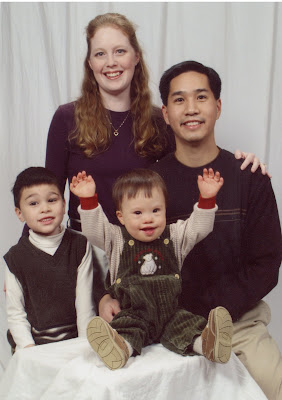
No, this is not a TV show about survivors whose plane crashed into a retail store - it's a post from my wife, Ellen, from our family blog about losing our son Josiah at Target.

-----

We lost Josiah at Target. He was only lost for five or ten minutes (if even that), but it was frightening. Al took Josiah to the bathroom and when they came out Josiah said, "I'll find Mommy!" and ran off. Al found me and we looked around the area we were in for a few minutes without any luck. After what was probably about two minutes, but felt longer, I rushed to the customer service desk while Al kept looking in another part of the store.

I was embarrassed to tell the clerk that we had lost our four-year old, but I reasoned that if someone kidnapped him I would spend the rest of my life wondering why I didn't tell the customer service representative sooner. So they announced a missing child alert over their walky-talkies and I had to tell a security guard what Josiah was wearing. As the guard was in the process of notifying store personnel that a child with a blue Mickey Mouse shirt and black and white shoes that light up was missing, Al walked over holding Josiah.

I was relieved to have found Josiah, but I worried about future incidents. So I tried to tell Josiah what he should do when he is lost. "Don't wander around looking for Mommy or Papa. Stay in one place. Find someone behind a counter or who is wearing a name tag." Josiah listened for a minute and looked at the people behind the counter. Then he said, "Mommy, I have a question," (which is Josiah's way of saying, "Can I talk now?"). "I wasn't lost. You were lost, Mommy. I could not find you!"

Josiah says the same thing each time we talk about being lost. "But Mommy, I wasn't lost. You were lost." It's cute, but it's also very frustrating. I want to make sure he knows what to do if he ever gets lost again, but if he can't even admit or understand that he is lost, will he do the things he knows lost people should do?

I wonder how often I say the same thing to God, "I'm not lost, God. You're lost. I can't find you!" Perhaps God smiles and says, "No, I'm not lost. I know where I am and I even know where you are. But because you cannot admit that you are lost and won't do the things I've taught you, it is hard for you to find me."

I hope we never lose either of our children again, but if we do (and somehow I think it is almost certain that we will), I hope they will admit they are lost and remember what we have taught them to do. Similarly, I hope that when I am feeling lost and alone, that I will remember seek God instead of blaming him. And its possible that the best way to for me to seek God will be to rest in one spot awhile and maybe even look for someone who works for God ("behind the counter") to ask for help.

Monday, June 19, 2006

A theology of Lost, Rent, Les Miz and suburbia

I’m always fascinated by the spiritual and theological themes that emerge from pop culture. Last week Ellen and I finished watching season one of Lost on DVD, and one of the main themes is “Everybody gets a new life on this island.” I think this may partly explain the appeal of the show – it’s a theology of rebirth and redemption. The intrigue is seeing to what extent characters can reinvent themselves. More often than not, much of their present is still shaped and determined by their past. But the hope for the new life remains.

This theme jumped out at me because my theory is that suburbia represents much of the same inherent yearning – the fresh start, the second chance, the new life. This is especially true for people moving into new suburban developments where communities do not yet exist. People move there not for what is, but their hopes of what is yet to be. It fits the narrative of the American frontier, of leaving what is behind and forging new lives, writing new stories.

This also says something about the insufficiency of the “no day but today” perspective of Rent. As my last post mentioned, I like Rent a lot, but I need to critique it even as I appreciate it. One of Rent’s themes is “There is no future / There is no past . . . There’s only us / There’s only this / Forget regret or life is yours to miss.” The worldview of Rent is “There’s only now / There’s only here.” Today is the only day that really matters, because we don’t know what tomorrow will bring; there is no confidence or hope in the future. The “there is no past” belief echoes the yearning for the new life, but it’s patently false – we all have a past, and while the past can be reinterpreted or redeemed, it can’t be denied.

Les Miserables, on the other hand, is a musical of hope. Its conclusion points to a future certainty – “For the wretched of the earth / There is a flame that never dies / Even the darkest night will end and the sun will rise / They will live again in freedom in the garden of the Lord / They will walk behind the plowshare / They will put away the sword / The chain will be broken and all men will have their reward.” Though that last phrase could be interpreted as a universalist statement, more significantly, the overall ethos is one of transcendent hope, where God is at work to redeem and rescue his people. It’s eschatological – there is a future, and theologians like Jurgen Moltmann and Wolfhart Pannenberg have emphasized that God stands at the future and draws history toward himself and his kingdom purposes.

So how does this relate to a theology of suburbia? I’ll synthesize these thoughts this way – suburbia represents opportunities for forging a new life (like Lost) in the here and now (like Rent) but we must also live with vision beyond the present day, anchoring ourselves to the hope of God bringing us to a secure future (like Les Miz). Otherwise, suburbia only has the potential of the blank slate but no guarantee of a redeemed, transformed life. Past, present and future, God is present in suburbia.

Thursday, June 15, 2006

The Suburban Renthead

I’ve always loved musical theatre, and a few weeks ago my wife and I watched the DVD of the movie version of Rent. I’d never seen Rent on stage, but I’d heard a lot of buzz about it back in the 90s. It was mentioned in the book Virtual Faith as a religious experience for many Gen X attendees. I felt that way when I first saw Les MisĂ©rables, so I was curious about seeing Rent.

I was disturbed by it and loved it at the same time. Rent highlights both the worst and the best of human experience, from self-destructive behavior and hedonistic worldviews to real community, relationships and love. I don’t always watch DVD bonus features, but we watched the full two-hour behind-the-scenes documentary. I was haunted by Rent’s anthems and melodies, so I checked out the soundtrack, a memoir by a cast member, the coffee table book/libretto and sheet music from the library. Even just reading the lyrics of the finale continues to move me to tears.

Interestingly, even though the play takes place in the urban setting of New York City’s East Village, the librettist/composer, Jonathan Larson, grew up in middle-class suburbia, in White Plains, thirty-five minutes north of New York City. He first discovered his talent and love for theatre in his junior high and high school plays and musicals. Ironically, Rent, a celebration of bohemian urban artistic experience, is partially indebted to suburban school systems’ championing of theatre and the arts.

It seems that our culture often holds either an urban or a rural ideal, to the exclusion of the suburban, and the theatre world reflects this. There have been musicals in urban settings from West Side Story to Rent, and musicals set in rural small-town settings like Oklahoma! and The Music Man. But suburbia? Nothing comes to mind. Someday, perhaps, a daring, creative playwright will focus his or her talents into a dramatic, Tony-award-winning musical set in the world of suburbia. Somebody should go for it. And more significantly, we who live in suburbia could live as compellingly and intentionally as the characters in these narratives. No day but today!

Tuesday, June 13, 2006

Demographic tools for learning about your neighborhood

I don't remember how I came across this, but if you click on this link, you'll find a neat little tool that combines Google maps and Census Bureau data. You plug in any address, like your home address, and it will not only map your neighborhood, but also tell you who lives within a one-mile, three-mile and five-mile radius of your home. It gives population data with a few demographic breakdowns like age, gender, income, race/ethnicity and housing.

For example, within one mile of my home live 15,056 people in 5309 households, with a median income of $66,508 and median age of 36. The median housing value is $185,219, median cash rent is $647, and each household has an average of 1.80 vehicles available to them. You can also find demographic and population information directly from the Census Bureau, such as this tool here that gives fact sheets on local communities.

These two tools used in conjunction turn up some interesting data. For example, the fact sheet for my suburb of Downers Grove says that 90.1 percent of the residents are white, while 80 percent of people living in my one-mile radius are white, suggesting that my local neighborhood has more racial/ethnic diversity than the suburb as a whole. The median value of single-family homes for the overall suburb is $205,900, meaning that my immediate neighborhood is a little less expensive than the rest of the suburb. I also notice that the average travel time to work is 29.1 minutes for residents of my suburb, so I feel fortunate that my job is only about 15 minutes away in good traffic. Anyway, I find it fascinating and fun to use tools like these and find out actual data about who lives in our communities.

Friday, June 09, 2006

Books on my nightstand

Js on the Myers-Briggs tend to read books one at a time, straight through, while Ps tend to read multiple books simultaneously, flipping back and forth between titles. I’m definitely a P – there are currently over two dozen books on my nightstand (and on the floor), most with a bookmark stuck in it a few chapters in.

Part of this is because I’m participating in a seminar at Calvin College next month on writing as Christian proclamation, and the syllabus has about twenty books on it. Fortunately, I’ve already read more than half the list – Lauren Winner’s Girl Meets God and Real Sex, Kathleen Norris’s The Cloister Walk, Anne Lamott’s Traveling Mercies and Plan B, Brian McLaren’s A New Kind of Christian and A Generous Orthodoxy, Rob Bell’s Velvet Elvis, Donald Miller’s Blue Like Jazz, Debra Rienstra’s So Much More, Patton Dodd’s My Faith So Far and Marilynne Robinson’s Gilead. As you might guess, we’re reviewing many recent books and discussing their significance and effectiveness.

So here are the books that are on the syllabus and on my nightstand that I’m currently reading:

Debra Rienstra’s Great with Child: Reflections on Faith, Fullness, and Becoming a Mother. My wife read this a few years ago and found it very profoundly insightful. Rienstra is an English professor at Calvin, and she’s the one convening this seminar. It’s beautiful writing – a theologically and spiritually sensitive literary memoir.

Donald Miller’s Searching for God Knows What. If you liked Blue Like Jazz, you’ll like this; if you didn’t, you won’t. Miller has a lot of distinctive, fresh takes on the Christian faith, and this is something of a postmodern (un)systematic theology. The particularity of his voice seems to be attractive to many but off-putting to others.

Donna Freitas’s Becoming a Goddess of Inner Poise: Spirituality for the Bridget Jones in All of Us. I am so not the target audience of this book. It’s a chick-lit spirituality, and even though I’ve read some chick lit novels, they don’t speak to me in any spiritually significant way.

Garret Keizer’s The Enigma of Anger: Essays on a Sometimes Deadly Sin. This one is interesting, but again, not a book I’m really resonating with. Partly because anger isn’t generally one of my besetting sins. It’s a helpful exploration, though.

Vinita Hampton Wright’s novels Velma Still Cooks in Leeway and Dwelling Places. I’ve finished Velma, haven’t started Dwelling Places. Loved Velma – really captures small-town life and conservative fundamentalism. (I should also mention that I recently read Vinita’s IVP book The Soul Tells a Story, which is about spirituality and creativity in the writing life. It’s excellent.)

Stephen Prothero’s American Jesus: How the Son of God Became a National Icon. I love this book. It’s a wide-ranging blend of history, cultural analysis, theology, sociology and comparative religion, and it’s absolutely fascinating. Prothero documents the development of various American christologies across the centuries – Jesus as enlightened sage, sweet savior, manly redeemer, superstar and more.

Russell Rathbun’s Post-Rapture Radio: Lost Writings from a Failed Revolution. Just got this in the mail. I’m about fifty pages into it, and I still don’t know what to make of it. It’s something of experimental fiction/essays/sermons/random thoughts, mostly about the state of the evangelical church, but I’m not sure it’s working for me yet. Not that I mind quirky; I love Douglas Coupland’s Gen X novels. But something about this doesn’t quite click, and I’m not sure what it is.

Augustine’s Confessions. I’m embarrassed to say that I’ve never read this all the way through, though I’ve read portions and excerpts over the years. No time like the present to finally get to this.

Also on my nightstand, though not part of the reading for the Calvin seminar, is N. T. Wright’s new book Simply Christian, which is Wright’s attempt at a Mere Christianity kind of book. Only a few chapters into it, but it looks good so far. Also How Postmodernism Serves (My) Faith by Crystal Downing – there’s no shortage of books on postmodernism out there, but this one is quite engaging and helpful. A book I haven’t cracked open yet is The New Woman, Jon Hassler’s newest novel, which my wife gave me for our anniversary. Hassler is my favorite novelist; he’s a Minnesotan and has some of the most illuminating portraits of Midwestern life. And a few books I recently finished reading and returned to the library: Mark Pinsky’s The Gospel According to Disney, Jean Twenge’s Generation Me and Nicole Mazzarella’s award-winning novel This Heavy Silence, which was very impressive.

Okay, okay, I’m a book geek. I admit it. If I’m not engaging my suburban context more, it’s because I’m sitting at home reading all the time. (Or going to second-hand bookstores or the library.) What’s on your nightstand?

Wednesday, June 07, 2006

Books & Culture review

The Suburban Christian was reviewed in the May/June 2006 issue of Books & Culture, alongside Death by Suburb by David Goetz. The review, "God of the Latte," is now available online at their website. Here's an excerpt:

Albert Y. Hsu's The Suburban Christian finds in suburban living a deep spiritual longing. People come to the suburbs, Hsu says, because they are looking for something, a job or affordable housing or good public schools (or, less charitably, mostly white public schools). Like Goetz, Hsu insists that you don't need to live on a farm or in the inner city to live an authentically Christian life. Nevertheless, "the suburban Christian ought not uncritically absorb all the characteristics of the suburban world."

One excellent chapter teases out what follows from suburban reliance on cars. (Did you know that the average commuter spends three weeks a year commuting?) As a consequence of our driving dependence, says Hsu, the elderly who can't drive are marginalized. Policy makers don't prioritize public transportation. Indeed, we often don't build sidewalks; as Bill Bryson has observed, "In many places in America now, it is not actually possible to be a pedestrian, even if you want to be."

See the full review here.

Friday, June 02, 2006

The Suburban Christian, the book - now in print!

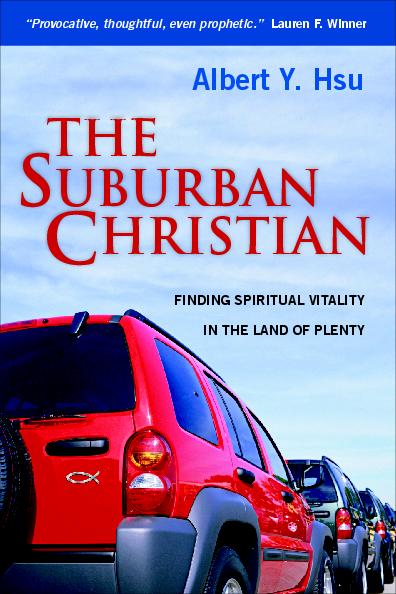
After about two years of research, writing and working through the editorial and publication process, I am pleased to announce that my new book, The Suburban Christian: Finding Spiritual Vitality in the Land of Plenty, is now officially in print! Here's the cover copy:

Suburbia: Paradise or Wasteland?

Suburbia is a place of spiritual yearnings. People come to suburbia looking for a fresh start, the second chance, a new life. It embodies the hopes and longings of its residents, dreams for the future, safety and security for their children, and the search for meaningful community and relationships. Yet much in our suburban world militates against such aspirations, and people find themselves isolated and alienated, trapped by consumerism and materialism. Is there hope for a Christian vision for the suburbs?

Al Hsu unpacks the spiritual significance of suburbia and explores how suburban culture shapes how we live and practice our faith. With broad historical background and sociological analysis, Hsu offers practical insights for living Christianly in a suburban context. Probing such dynamics as commuting and consuming, he offers Christian alternatives for authentic spirituality, genuine community and relevant ministry. And he challenges suburban Christians to look beyond suburbia and marshal their resources toward urban and global justice.

Suburbia may be one of the most significant mission fields of the twenty-first century. Here is guidance and hope for all who would seek the welfare of the suburbs.

"Albert Hsu has written a readable and well-researched treatment of a key issue. I live and work in the exurb, and I am grateful for his wisdom."—John Ortberg, author of If You Want to Walk on Water, You've Got to Get Out of the Boat

"If, like me, you've ever stared at suburbia and wondered how it got this way, if you've ever wondered if there's any hope for radical discipleship here, then this book is for you."—Don Everts, author of Jesus with Dirty Feet and God in the Flesh

"A very important book for all of those who are seeking to faithfully follow Jesus in the suburbs. A candid grappling with both the challenges and the opportunities of suburban living. A great resource for church study groups."—Tom Sine, author of The Mustard Seed Conspiracy and Living on Purpose

"Urban cynics and suburban hermits rejoice--here is a refreshing invitation to find God at work in the margins, the same God who showed up in the unlikely badlands of Nazareth from which the world said nothing good could come."—Shane Claiborne, author of The Irresistible Revolution

"Provocative, thoughtful, even prophetic, The Suburban Christian is a book the church badly needs."—Lauren F. Winner, author of Girl Meets God and Real Sex

The book is available directly from IVP and can be ordered via IVP's website. Available on the book's webpage are free downloadable PDFs of the introduction and chapter 1. The book can also be ordered via online booksellers like Amazon or Christianbook.com. And if you want to support your local bricks-and-mortar bookstore, they should be able to order it for you - the ISBN is 0-8308-3334-X. Hope you enjoy it!

Wednesday, May 31, 2006

Community, geography and affinity

I found myself in a variety of social contexts over the last few days that made me think about the nature of community. Scenario one: This past weekend, after church, about a dozen of us went out to eat. We've come to be friends with two other couples in particular who are about our age and are both expecting their first child. So we naturally talked about baby stuff.

Scenario two: On Memorial Day, we had some friends over from our old church for a cookout. These were fellow Gen Xers, also about the same age as us, a mix of singles and marrieds, some of whom we haven't seen for almost two years since we changed churches. None of the others have any kids, and conversation mostly was about current movies and favorite childhood television shows from the 70s and 80s.

Scenario three: Last night, we were at an annual informal wing-ding of publishing industry professionals and friends, many of whom are in town for the Religious Book Trade Exhibit trade show. The attendees included editors, authors, agents, publicists, booksellers, reviewers, journalists, sales reps and other folks in Christian/religious book and magazine publishing. Sort of the Christian literati. Conversation, as you might expect, was about books and publishing and the like.

What strikes me about all these situations is that they are affinity-based communities. Fifty or a hundred years ago, the word "community" was understood in a geographic sense of local neighborhood. The word has shifted to be understood in terms of affinity groups that are not tied to physical geography - people can be part of the arts community or the Asian American community or the evangelical community or the gay/lesbian community or the Star Trek community without being in close geographic proximity to anybody. I am a valued member of the eBay community (or so they tell me), even though I have never physically met anybody I buy from or sell to. One of my authors, Andy Crouch, talks about how this is a significant departure from most of human history. He says that people in most centuries would be astonished to find out that he has more of a sense of community and affinity with people he sees at a conference once a year a thousand miles from his home than he does with the next-door neighbor who's a complete stranger to him.

So my church friends from scenario one all live in different suburbs from me, as do most of my friends from my former church in scenario two - several have a half hour commute to church and a forty-five minute or more commute to work. The publishing industry folks in scenario three are scattered across the country, but several of them I will see more frequently (at various conferences and trade shows through the year) and talk to more often than the neighbors across the street that moved in last year that I still have not said hi to.

I know that theoretically and theologically, community should be diverse and bring me into relationship with people unlike me. But in practice, most of the communities I belong to tend to be of people of similar age, life stage, demographic, vocational and/or personal interests as myself. There are occasions where proximity and geography put me in community with people I would otherwise never talk to, but this tends to be the exception to the rule.

It seems that in suburban contexts, community tends to be affinity-based and self-selecting. We "shop" for our communities and affinity groups just as we shop for consumer goods. So maybe a good spiritual discipline for suburban Christians would be to intentionally seek out relationships and communities beyond our normal affinity groups. Community is easier when there are life experiences or interests in common, but I forget that I already have something in common with every neighbor I have yet to meet - our common humanity.

Thursday, May 25, 2006

Publishers Weekly review of The Suburban Christian

The book publishing industry trade journal Publishers Weekly just ran a review of my forthcoming book The Suburban Christian. I think citations of their reviews are supposed to be limited to just twenty-five words, so here's an excerpt:

"[P]rovides a thoughtful critique of what living as a Christian in the suburbs should look like. . . . Every suburban pastor should read this book."

The full review is available here. I was quite pleased to see this review because I think it captures the purpose and flavor of the book quite well. And to provide some context, there are about 178,000 books published in the English language every year. Of those, something like 8,000 to 12,000 of those are religion books of some sort. Of those, PW only selects a couple of hundred religion books for review. So I feel quite honored to get a PW review, especially one as positive as this one.

Monday, May 22, 2006

Never Mind the Joneses!

This weekend was a Lost weekend - we got the first season of Lost from the library, but only had it for three days, so we watched three episodes Friday night, three episodes Saturday night and two episodes on Sunday before we returned it. Great show!

Also this weekend we were in various contexts with other people where I found myself inadvertently comparing our family with others. In one case, I was pleased to see that Josiah has better reading skills than a kid older than him, giving me reason to feel smug and superior. In another case, a baby the same age as Elijah is already walking (whereas Elijah isn't yet), and we heard about other kids who have many more activities and extracurriculars than our kids do. So this left me feeling inadequate and inferior. What to do?

As I was processing all of my thoughts and feelings, I was reminded of the book Never Mind the Joneses by Tim Stafford, who talks about how every family has its own distinct family culture. Some families have a sports culture, others have a musical culture, and so on. He describes how his family is a backpacking family, and some years ago during a rainy hike his daughter was having a miserable time and said, "I hate this! I hate it, I hate it, I hate it! And the thing I hate the most is that I know when I grow up I'm going to marry someone just like Dad, and we'll make our kids go backpacking!" Ten years later, while she's not married yet, she has come to love backpacking. It's part of her family's cultural DNA.

Stafford points out that families shouldn't compare themselves to other families' ideals of what a family should look like - they should discern their own particular family culture and seek to live faithfully and Christianly in whatever way God has wired them. So that frees us from comparing ourselves to other families that seem more perfect or more holy or whatnot - we can simply live the lives that we have been given to live, in our own distinct way.

On one level this is helpful to me, especially since suburbia is filled with opportunities to compare ourselves with people more affluent or socially active than us. I can think to myself, "Never mind the Joneses," and just focus on how our family seeks to live and parent and follow God in ways true to us - through frequent trips to the library and evenings on the reading couch (as book publishing professionals, our family culture is a bookish one).

But on the other hand, I'm also tempted to retreat from the world and ignore the Joneses. If hanging out with other families makes me feel envious or arrogant or insecure, then rather than trying to compete with them, I will tend to withdraw and disengage instead. So I end up not being motivated to be in community with others whose very presence or identity makes me feel inadequate. Perhaps this is a spiritual maturity issue on my part, and I just need to get over it. So the challenge is this - how do we "never mind the Joneses" in terms of trying to keep up or copy or compete with others, and yet stay engaged with the Joneses and build community and relationships with the Joneses?

I'd like to think that ideally, in the church, our Christian identity transcends differences in socioeconomic status or demographic differences, but in practice, it's often hard for stay-at-home moms and working moms to not feel threatened or criticized by one another's lifestyles, or for white-collar professionals and blue-collar workers to find common ground. I'm encouraged when I see relationships being built across these kinds of lines, and I'm hopeful that the church can be a place where we don't have to worry about comparing ourselves or competing with each other. But I'm still disturbed to find myself falling into these habits of comparison and competition, which tells me that status is probably still too much of an idolatry in my life.

Friday, May 19, 2006

Quality of community and subverting suburban transience

My friend Helen Lee, coeditor of Growing Healthy Asian American Churches, has a post on her blog describing her experience in suburbia. She notes that when her family moved to one particular suburb, they didn't get to know the neighbors there much at all. They recently moved to another suburb, and in contrast, they found themselves in a community that was very neighborly, rooted and interconnected. This is particularly interesting to me because the latter suburb has a bit of a reputation of being upscale and perhaps snobby/elitist, and if the stereotypes held true, I would have expected Helen to have had a more neighborly experience in the other suburb.

I guess it's a lot like local churches as expressions of larger denominations. Sometimes you think that a particular denomination is liberal or fundamentalist, but the specific local church down the block surprises you by being the opposite, whether evangelically conservative or progressively activist or whatnot. In churches, so much depends on local leadership. And in suburbia, so much depends on the local residents. It's certainly true that some neighborhoods have structural things that either facilitate or inhibit community, but we're called to bloom where we're planted, and a few key people in a neighborhood can make a huge difference in creating a neighborly environment.

Interestingly enough, Helen's post also mentions that she lived in a rural small town for a few years and was quite socially isolated. It's been said that small towns and urban communities have more in common than suburbs, because they maintain a sense of local neighborhood and aren't fragmented by suburban commuter culture and anonymity. On the other hand, it seems like it's often hard for newcomers to feel welcome in small towns, because the existing communities are well-established and transplants can be viewed as a threat to that stability.

This actually makes me wonder if suburban transience is a downside that can be subverted into an opportunity. Many suburbanites are transplants, and that means that communities may be more porous and easier for newcomers to break into, with less of an existing establishment. New residents might actually be more open to new connections and building community, especially in new developments and subdivisions where everybody is in the same boat. Again, to draw a church parallel, sometimes it's easier to start fresh church plants than to renew historic long-term congregations. Not that there aren't challenges either way. At any rate, I'm encouraged by Helen's post, that people are taking initiative and creating community here in suburban Chicagoland.

Wednesday, May 17, 2006

Suburban factoids

Here's a list of factoids I accumulated about suburbia during the research for my forthcoming book.

  • More people live in suburbs than in cities and small towns combined.

  • Americans are more likely to work in a suburb, shop in a suburb, and attend recreational events in a suburb than in central cities or rural towns.

  • Suburbia is not just families with kids: According to the 2000 census, only 27 percent of suburban households were married couples with kids, outnumbered by young singles and the elderly living alone.

  • Suburbia is diverse: The majority of Asian Americans, half of Hispanics and 40 percent of African Americans live in the suburbs. More new immigrants locate in suburbs than in cities.

  • Most suburban commuting is not from suburb to city, but from suburb to suburb.

  • The average suburban household generates thirteen car trips a day.

  • The average American spends 1 hour, 41 minutes in their car each day—a total of more than three weeks a year.

  • Each additional ten minutes in daily commuting time reduces community involvement by ten percent.

  • The more spread out a suburb, the higher the rates of obesity, high-blood pressure and weight-related chronic illnesses, because we drive more and walk less.

  • Big-box stores and national chains return only 13-14% of their dollars to the local community, while locally owned independent stores recirculate 45-58% to the local community.

  • Thirty years ago Americans had friends over to their homes 15 times a year; today the figure is half that—just once every month and a half.

Friday, May 12, 2006

Writing in community, In-N-Out Burger and better fast food

This week I was in Los Angeles, meeting with the Catalyst Leadership Forum and the writing team behind the book Growing Healthy Asian American Churches. There's a romantic myth that imagines that books are written by solitary authors who retreat like a hermit into a cabin in the woods, waiting for the muse to speak until they produce a masterpiece. In contrast, this particular book was truly written out of community. The Catalyst Forum met annually from 2002 to 2004, sharing best practices and insights from healthy Asian American churches, writing up one another's stories into chapter drafts, then critiquing and contributing to each other's chapters.

This week we celebrated the book's publication with a dedication service, praying for the book and commissioning it like a missionary to go places we cannot go personally. And then we all autographed each other's copies, like high school yearbooks. It was particularly meaningful that even forum members who had not written actual chapters also signed, since they were part of the community that contributed to the book's writing. It was the first time I had signed books that I had edited, and I was honored to be part of the book's birthing process.

Anyway, much of our time together involved eating, as Asians always do whenever we gather. We had Brazilian barbecue and fresh seafood, and ate lunch in a restaurant's wine cellar (it felt like we were the apostles in a lower room rather than the upper room). But our last meal together before we all departed was at In-N-Out Burger. The forum members from the West Coast told those from other parts of the country that if they have not yet had In-N-Out Burger, they could not leave California without having In-N-Out Burger. So we made our pilgrimage.

If you've read Fast Food Nation or seen Super Size Me, you know that there are plenty of problems with the fast food industry. Morgan Spurlock's Don't Eat This Book talks about how several Southeast Asian nations have had skyrocketing rates of obesity, high blood pressure and diabetes, which were previously unknown in those regions due to healthy, mostly vegetarian diets. The increased health problems correspond almost exactly with the introduction of McDonald's to those nations. It only took twenty years for McDonald's to wreck the healthy eating habits of societies that had had traditional agrarian diets for hundreds of years.

At any rate, besides pursuing alternatives like organic, natural foods and the Slow Food movement, folks have wondered if there are ways to redeem fast food and make it better. And In-N-Out Burger is often held up as one possible role model. In-N-Out makes all their burgers fresh - their ground beef is never frozen, and they use no additives or preservatives. Their fries are made onsite from whole potatoes, cut just before being cooked. Every burger is made to order; they use no microwaves or heat lamps. They also limit their menu to just four items - burgers, fries, shakes and soft drinks. They just do those few things, and they do them well. And their pricing is competitive - a cheeseburger, fries and shake was $5.01, not much different from a McDonald's value meal, and more satisfying to my palate and my conscience.

Interestingly enough, In-N-Out was founded by Christians, and you can still find Bible verses like Proverbs 3:5 and Revelation 3:20 in small print on the burger wrappers and drink cups. I don't know that all that many people have become Christians because of reading a Scripture reference on a burger wrapper, but I still like the idea of supporting a company that has been intentional about having ethical and sustainable business practices. Those of us from around the country may wish that In-N-Out would expand beyond the West Coast, but on the other hand, I think their distinctiveness and charm might be in part because they have kept themselves local. If they grew too big and expanded too far, they might be tempted to compromise their model. I was glad to give In-N-Out my business and to commend it to others. Now I want to find out what like-minded companies are present in my local community so I can support them as well.

Monday, May 08, 2006

Encouragement for aspiring writers

I just got back from a weekend in Columbia, Maryland, where I led a workshop on book publishing for a group from Bridgeway Community Church. Columbia is a suburban community located between Baltimore and Washington, D.C., that was designed to encourage racial and socioeconomic diversity, and Bridgeway reflects that in its demographics. Something else distinctive about Columbia is that commercial signage is not very visible at all. The roads are lined with trees, not billboards. While that can make it difficult to find a grocery store if you don't quite know where it's located, the relative absence of commercial advertising is quite refreshing.

Anyway, I and a colleague had an enjoyable time with about thirty folks, explaining the process of book writing and publishing. One of the handouts I provided included the following quotes I compiled a few years ago:

“First of all, if you want to write, write. And second, don’t do it. It’s the loneliest, most depressing work you can do.” Walker Percy

“Writing is easy; all you do is sit staring at a blank sheet of paper until the drops of blood form on your forehead.” Gene Fowler

“Writing is so difficult that I often feel that writers, having had their hell on earth, will escape all punishment hereafter.” Jessamyn West

“There’s nothing to writing. All you do is sit down at a typewriter and open a vein.” Red Smith

“It should surprise no one that the life of the writer – such as it is – is colorless to the point of sensory deprivation. Many writers do little else but sit in small rooms recalling the real world. This explains why so many books describe the author’s childhood. A writer’s childhood may well have been the occasion of his only firsthand experience.” Annie Dillard

“In general, very little happens to a writer. Now do you understand why we put so much emphasis on artificial reality? Our actual reality is insufferably dull. A Federal Express delivery is far and away the most dramatic event in my day.” Philip Yancey

“I turn sentences around. That’s my life. I write a sentence and I turn it around. Then I look at it and I turn it around again. Then I have lunch. Then I come back in and write another sentence. Then I have tea and turn the new sentence around. Then I read the two sentences over and turn them both around. Then I lie down on my sofa and think. Then I get up and throw them out and start from the beginning.” Philip Roth

“Every writer I know has trouble writing.” Joseph Heller

“The first draft of anything is [poop].” Ernest Hemingway

“Writing is just having a sheet of paper, a pen and not a shadow of an idea of what you’re going to say.” Francoise Sagan

“Writing is no trouble: you just jot down ideas as they occur to you. The jotting is simplicity itself – it is the occurring which is difficult.” Stephen Leacock

“Writing is a form of therapy. Sometimes I wonder how all those who do not write, compose or paint can manage to escape the madness, the melancholia, the panic fear which is inherent in the human situation.” Graham Greene

“The secret of good writing is to say an old thing a new way or to say a new thing an old way.” Richard Harding Davis

Wednesday, May 03, 2006

The Contented Soul, by Lisa Graham McMinn

I just read The Contented Soul: The Art of Savoring Life, by Lisa Graham McMinn. The book received a starred review from Publishers Weekly, which lauded it as "an excellent guide to spiritual practice . . . this book will especially delight those interested in understanding how inner peace is vitally connected to peace in the exterior world." The book provides substantive content and is elegantly written. McMinn, a sociologist at Wheaton College (and about to depart for George Fox) uses the tools of her discipline to help readers understand why contentment is elusive for many of us and what forces militate against contentment.

She traces how society has shifted us from understanding ourselves as soul (spiritual being in relationship with God) to self (as autonomous, self-determining psyche in pursuit of self-actualization and self-fulfillment) and ultimately to consumer. Along the way contentment shifted from being an internal state dependent on our connection to God to an external state dependent on our consumer purchases and acquisitions.

Of particular interest to me is the fact that she is writing as a suburban Christian in the context of a suburban environment. While she is not offering a study of suburbia per se, her analysis and insights give concrete ways to live Christianly and contentedly in suburbia. While her book is not a self-help book, it is full of examples and illustrations of what the contented Christian (and suburban) life might look like.

For instance, McMinn retrieves an old chair from someone’s curbside and restores it, recovering functional use and aesthetic value while countering consumerism. She hangs clothes on a traditional outdoor clothesline, saving energy and inspiring neighbors to do the same. She grows her own vegetables, buys from local farmers’ markets, commends the Slow Food movement, practices sabbath and voluntary simplicity, promotes economic justice and supports handcraft stores like Ten Thousand Villages that work toward sustainable living for people around the world.

Yet the book is not a prescriptive how-to book about things to do to find contentment. Rather, with a sociologist’s eye, she provides a descriptive portrait of the contented soul and shows us that life is better when we sip and savor life slowly, when we leave a smaller ecological footprint, when we embrace our limits and avoid getting sucked into the lies of consumer culture and western individualism. I came away from the book inspired to be the kind of person who cultivates contentment and experiences God’s goodness and shalom right here in my suburban environment – and also works to extend shalom and contentment to others.

Monday, May 01, 2006

Community theatre and Schoolhouse Rock

Ellen and I are fans of live theatre. We were both in high school theatre – she was the female lead in Brigadoon, and I had thirteen words (that’s words, not lines) in Look Homeward, Angel. One of the reasons we started dating was that we both love musicals, and during our courtship we saw Miss Saigon, Phantom of the Opera, Les MisĂ©rables and the Chicago production of Joseph and the Amazing Technicolor Dreamcoat starring Donny Osmond. It’s harder for us to catch community theatre these days now that we have kids, but we still enjoy live stage when we can. There’s just something about the medium that is so much more immediate and incarnational than what is viewed on a screen. I love the fact that we share the actual space, time and air with the actors, who may well be local residents and neighbors.

Our local community theatre company, Grove Players, is currently doing a production of Schoolhouse Rock Live! based on the Saturday morning children’s TV segments that aired on ABC in the ’70s. I missed the Chicago production that ran about a decade ago, so I was thrilled that the show would be here in my own local suburb. We got tickets for a Sunday afternoon matinee and spent the weekend prepping Josiah for the show by watching our Schoolhouse Rock DVD so he would be familiar with all the classic songs, from “I’m Just a Bill” and “Conjunction Junction” to “Lolly, Lolly, Lolly, Get Your Adverbs Here” and “A Noun Is a Person, Place or Thing.”

The show had a cast of 27 kids, ages eight to fifteen. Part of me was disappointed that it was not cast with Gen Xers like myself who experienced the original Schoolhouse Rock segments. But it was still a joy to watch a new generation encounter and present these songs, many of which are quite lyrically challenging, like “Rufus Xavier Sarsaparilla” about pronouns and “The Preamble” of the Constitution. Josiah and Elijah were very well behaved and sat attentively during the hour and a half show. Afterward I asked Josiah what his favorite song was, and he said, “All of them.”

It was interesting how well the songs held up three decades after their original airing. The music, a mix of folk, jazz and pop rock, is as fun today as it was when I was a kid. Because five of the six main cast members were girls, they changed a few gender references – the man with the boyish face in “Unpack Your Adjectives” became a woman with a girlish face, and the future astronaut in “Interplanet Janet” was also revised as a woman. At the time the song was written, before astronauts Sally Ride and Christa McAuliffe, it might have been assumed that only men could be astronauts. To its credit, Schoolhouse Rock has long championed women’s rights with the disco-hip anthem “Sufferin’ Till Suffrage.” (Josiah said, “That’s a fun one.”)

While the multiplication and grammar songs felt timeless, the history pieces seemed to offer too rosy a view of American history, from its celebration of manifest destiny in “Elbow Room” (with no mention of the impact on Native Americans) and a Eurocentric view of immigration in “The Great American Melting Pot.” The history segments were produced for the bicentennial in 1976, and perhaps the producers were hoping to recapture a more positive vision of America after the recent disillusionments of Vietnam and Watergate. It’s telling that there’s no Schoolhouse Rock song about slavery or the Civil War.

Then again, Schoolhouse Rock may actually offer a particular prophetic word to our local suburban context. I was nostalgically enjoying all the songs and music until “The Great American Melting Pot” came on. That’s when I realized that the entire cast of the show was white. While the original animated segment included Chinese, African, Mexican and other national and ethnic heritages as well as European, there was some cognitive dissonance having an all-white cast celebrating America’s diversity. Downers Grove and its surrounding suburbs are majority white, but not all white. Perhaps this says something not merely about suburban racial and ethnic demographics but also about who tends to have resources and access to arts programs.

The arts reflect our culture and can expose and critique our blind spots. I’m grateful that local community organizations support community theatre. I also hope that suburban arts programs will not merely be mirrors of affluent whites that are the primary patrons of the arts, but will also reflect the breadth and diversity of all of the community’s residents.

At any rate, Josiah went to bed last night singing, "Conjunction Junction - what's your function?" And remember - interjections show excitement or emotion. They’re generally set apart from a sentence by an exclamation point, or by a comma if the feeling’s not as strong.

(Darn! That’s the end.)

Tuesday, April 25, 2006

TV Turnoff Week

This week is TV Turnoff Week, and we're trying to figure out if this applies only to new programming on broadcast TV or if it includes using the TV to watch DVDs and videos. We rarely watch TV as it is, though Josiah will watch educational kids' shows occasionally. (He wrote "PBS Kids" on his MagnaDoodle a few weeks ago. Brand awareness and loyalty sets in early.) The average American watches three or four hours of TV every day, and many households have the TV on each day for seven or more cumulative hours.

I realized a few years ago that the main reason I don't watch much TV is that it's so much more obviously a commercial/consumer medium than things like movies or books. I'm glad that novels aren't interrupted by pages of ads between chapters. Almost twenty minutes of an hour of TV now consists of commercials, which is double the amount that it was a few decades ago. Commercial sponsorship of TV is nothing new, but it just feels increasingly intrusive, as advertisers try to circumvent TiVo with product placement during the actual programming.

I'm also annoyed by the neverending nature of TV programming, especially when teasers for the next show entice Josiah to sit through the next half hour, and the next. We think he's a J on the Myers-Briggs, so he will (sometimes, not always) turn off the TV on his own when the closing credits roll if we have told him ahead of time to do so. But woe to us if we try to get him to leave a show in the middle of the episode! He likes closure.

We've also never been able to follow more than a couple of TV shows at a time; it's like we only have a capacity to build relationships with so many characters and storylines before we max out. We used to watch Friends and ER back in the 90s, and occasionally dipped into The X-Files, but tried to avoid falling into the weekly routine with an indefinite number of shows. The only way we watch TV shows now is via DVD, which allows us linear, sequential completion and the autonomy to watch as much or little as we want when we want (or whenever the discs come in from the library).

We are currently on season 3 of both Alias and Smallville, and Josiah and I recently watched season 2 of the original 80s Transformers cartoons. Part of me is thrilled that Josiah is enjoying the shows that I loved as a kid, but I'm also a bit conflicted over the fact that they're essentially half-hour long commercials for the toys. Thus far Josiah has just played with my old Transformers (and broken several) and not clamored to buy new ones, but I know I need to beware of the synergy between television and consumption. We already own way more Blue's Clues items than I ever thought imaginable.

But at least Josiah seems to understand the concept behind TV Turnoff Week. This morning he said, "It's a TV-off day?" That's right, no TV today. "Okay. No TV." Whew.

Monday, April 24, 2006

Wal-Mart: The High Cost of Low Price

As I mentioned in my previous post, these days we get basically all our movies and DVDs from the library. One that just came our way via interlibrary loan that we watched last night was the documentary Wal-Mart: The High Cost of Low Price. This film surveys the economic and environmental impact of Wal-Mart on local communities, the lived realities of Wal-Mart's employees and factory workers, and much more. It reinforced my understanding of Wal-Mart as perhaps the ultimate expression of the law of unintended consequences - initially good principles of thrift and cost-saving, taken to global extremes, results in exploitation and harm to workers.

One segment featured a coalition of local community residents and activists that worked together to keep Wal-Mart from building in their area. Interestingly enough, this had the most directly Christian critique of Wal-Mart. Local pastors and church leaders studied Wal-Mart's impact on communities and concluded that for them as Christians, social justice and care for the poor meant lobbying against Wal-Mart. They saw Christian responsibility not in terms of free market capitalism or economic bargain-hunting, but in terms of protecting the least of these by opposing Wal-Mart.

After reading an article in Christianity Today a while back about Wal-Mart, I've mitigated my position somewhat from a knee-jerk "Wal-Mart is evil" stance to more of a "Wal-Mart is a fallen institution." There is certainly much about Wal-Mart that is well-intentioned, but ultimately, the effects of their business practices seem beyond redemption. And I'm sure it's not just Wal-Mart - virtually every discount retailer probably has some business practices that profiteer on low-wage employees and factory workers. But Wal-Mart's sheer size and legendary ruthlessness makes them far more damaging in their impact than basically all other discount retailers combined.

Anyway, all this to say - see this movie. Like Super Size Me or The Corporation, it's a documentary that has the potential to change how you participate in consumer culture. (And the spoof commercials are hilarious!)

Monday, April 17, 2006

In praise of public libraries

I’m an editor/author/former church librarian/all-around book geek, so one of the most gratifying things for me as a parent is when my four-year-old son says, “Let’s go to the library. We can check out lots of books.” We typically go to the library at least once a week, and we always come home with stacks of stuff. Right now Josiah is in a Curious George phase, and his bedtime routine last night included ten Curious George books.

Our local public library has been ranked one of the top ten public libraries in the nation for its size. A few years ago, we decided to move just two blocks from our old house not only because we wanted to stay in the local community, but also because we wanted to keep the same home library.

Why do I love our library? Let me count the ways. Online catalog access, which lets us check due dates, reserve books and renew items. Interlibrary loan, through which we can get nearly any book or DVD available in the state of Illinois at no cost. A fantastic children’s department that includes a train table and all sorts of educational toys. Computers where kids can play educational games, with adjacent computers for parents so I can check the status of eBay auctions while Josiah is playing Bob the Builder. A large collection of DVDs, CDs, periodicals and comic books/graphic novels. We can even check out LeapPad books and cartridges.

Libraries are kind of a mind-boggling concept, if you think about it – I can’t think of any other industry or category of items that has library equivalents. It’s not like you can go somewhere and borrow dress shirts or khakis, or check out a set of dishes or silverware for a few weeks. Just about everything else in our economy is based on commodity exchange, the buying and selling of goods and products. Libraries stand alone in sharing resources with a community. A library’s books and resources are the communally owned property of the community around it. That’s a countercultural concept in our privatistic consumer culture that says that all of us need to buy everything individually for ourselves.

The library helps hold my consumerism in check. Whereas my default setting was to buy every book that ever caught my fancy, in recent years I’ve learned that I do not need to personally own everything I want to read. Nor do I necessarily need to have everything right away. Our library essentially works like Netflix for free; a book or DVD might arrive months after I reserve it, and that’s okay. We haven’t rented a movie in years.

In addition, the library is one of the few civic meeting spaces where the local community gathers and interacts. Besides hosting numerous reading groups, workshops, seminars and toddler story times, the library is also a meeting place for community issues. Our suburb, like many in the area, has had increasing numbers of housing teardowns in recent years, and the library hosted forums where people could hear the pros and cons of teardowns and their impact on our community. The library is one of the few remaining noncommercial public square “third places” where people can connect and build social capital.

I am a beneficiary of a suburban community that has had a history of strong support for the local library. I overheard someone saying that a resident donated $25,000 to jumpstart the library’s DVD holdings. In a recent local election, an item on the ballot would have changed how the village makes its budgetary decisions, and one of the main reasons it was voted down was that it might have significantly reduced funding for the library. We love our library. It’s a matter of civic pride.

But I know that not every community has a library like ours. Libraries have varying amounts of resources available to them, depending on local population and funding and whatnot. Many municipalities have needed to cut library budgets to provide for schools and other public priorities. As a result, bookstores like Borders and Barnes & Noble have in many ways become library alternatives, often intentionally replicating and replacing some of the civic functions that libraries used to provide.

As a book publishing professional, I’m happy to have people encounter books anywhere, whether in the commercial environment of a bookstore or in the public space of a library. Indeed, our public library is adjacent to a local bookshop, and they even share the same parking lot. Even as I encourage people to support their local bookstore, I also encourage them to support their local library. If you haven’t stopped by your library for a while, drop in and browse. Pick up a book by an author you’ve never heard of before, or a genre that you rarely read. Look at the community notices on the bulletin boards. And thank a librarian on your way out. Not only do they help individuals think and grow, they provide civic health to the whole community.

Wednesday, April 12, 2006

Suburban Q & A (Part 2)

Here's the second part of the interview about my forthcoming book. (Yes, I broke it up into two posts not only because it was long but also so I could have an easy thing to post in case I couldn't think of anything else this week.)

Is it selfish for Christians to live in suburbia?

Hsu: Well, God needs Christians in suburbia just like he needs Christians everywhere. There's a difference between a self-centered suburbanism that gets sucked into all the materialism and consumerism, and an other-centered Christian suburbanism that focuses on how to herald the kingdom of God in the suburbs. Christians shouldn't abandon the suburbs; they should redeem them and make them better places to live.

Does ministry to suburbs mean that we don't care about cities?

Hsu: Some people pit the suburbs against the cities, but I don't think it's an either/or. It's a both-and. Suburban Christians need to see their suburb as part of a metropolitan whole. In Jeremiah, God calls us to seek the welfare of the city we live in. That means not just caring for our local suburbs but also the larger urban metropolis. Care for the suburbs means care for the city, and vice versa.

How can suburban Christians seek the welfare of the city?

Hsu: I think suburban Christians and churches need to have three spheres of ministry focus--suburban, urban and global. Start with your local suburban community and meet needs there. But also look to the larger urban metropolis that your suburb is a part of and partner with ministries to the larger city. And then you have international, global missions. A lot of suburban churches do the local and the global but skip the urban in between; they might support missionaries in Africa or Asia but not ministries in Chicago or Toronto. A balanced church ministers to all three--suburban, urban and global.

How can suburban churches minister to their communities?

Hsu: Sociologists have said that America needs a "third place," outside of the first two places of home and work. We've lost the civic gathering places and public squares where people used to meet and connect. That's why coffeehouses like Starbucks did so well in the 90s--they filled that vacuum with places for people to meet. But really, the third place should be the church! Suburban churches can be civic places that are open to their communities. You don't have to have a food court or espresso bar to do this. Any church with Sunday school classrooms can open themselves to other organizations to meet in their buildings, Girl Scouts, Al-Anon, whatever.

What does it mean to be a suburban Christian?

Hsu: Being a suburban Christian means that even though suburbia can be an anonymous, materialistic, consumerist environment, we intentionally live in ways that promote community, generosity, simplicity and civic good. It means that we look for ways to love our suburban neighbor as ourselves. It's the same thing that Christians are called to do wherever they live, and that we see suburbia as a place where we can exhibit God's grace and mercy to all who live here.

Friday, April 07, 2006

Suburban community - for a price

Someone gave me a copy of the article "Backlash in the Burbs," by Sarah Elizabeth Richards, from the September/October 2005 issue of Psychology Today. It's a profile of Ladera Ranch, a new suburban development in Orange County, California, that's an intelligently designed mixed-use suburban community based on the principles of the Congress for New Urbanism. The physical geography of the community is designed to maximize neighborly interaction and civic involvement. Houses are close to each other and have porches in front and garages in the back. Interconnected streets and broad sidewalks are designed to be walkable and facilitate use of parks and green space.

Six salaried event planners organize community functions - holiday parties and decorating contests, movies in the park, block parties and barbecues. A community services organization provides "event in a box" resources to help residents plan activities. Lareda has over 75 resident-organized clubs and activities, from book clubs and scrapbooking to groups for computer junkies or divorced moms. Residents describe their experience like living on a stationary cruise ship, or college dorm life - "Leisure World for thirtysomethings," says one resident. Neighbors go on walks together and invite each other over to dinner, even if they just met at the park. There's always something going on.

Sounds great! What's the catch? Well, a four-bedroom colonial house in Lareda starts at nearly $1 million. It only goes up from there. Essentially, if you can pay, you can play. Suburbia is a commercial environment, and all the more so when you are paying for the amenities of a cruise-ship-like community. Southern California is different from much of the country in terms of housing costs, but even so, the financial investment needed to live in this kind of community is prohibitive for many.

Of course, there are plenty of people who spend that much money for suburban housing but live their lives in privacy and seclusion from their neighbors. Despite the price tag, Ladera's vision of a socially connective suburban community is commendable in that it encourages people to look beyond themselves and their own nuclear families. I suspect the next step, then, would be to extend that vision beyond their subdivision's boundaries. I would hope that residents would not only make their community a happy enclave for those who can afford to live there, but turn their focus outward as well. Not just community for themselves, but community service and development for others.

Richards's article also points out that by no means is fun civic housing a cure-all for personal issues. One researcher says that people are drawn to new developments because they are marketed as a way to start fresh. "They move to solve their problems but that doesn't happen." Richards writes, "Marriages don't automatically get better, and isolated people may still feel lonely. Disillusionment sets in when residents slowly realize that 'a development is in fact just a collection of houses and not a magic salve.'" In other words, a friendly civic environment can facilitate community interaction and social neighborliness, but it won't necessarily fix you. Christians living in affluent communities like Ladera have the opportunity to minister to neighbors with deep spiritual needs unfulfilled by activities and events.

While only a small percentage of the population can afford to live in New Urbanist communities like Ladera, all of us can work toward community involvement and social interaction wherever we live. Certainly it's not just communities that can afford event planners that can have interactive community spirit. The larger challenge, I think, is for Christians in ordinary suburban communities to find ways to foster community and social interaction in their neighborhoods. It could be that my neighborhood's geography or infrastructure hinders me from getting to know my neighbors. Or I might just need to get off my duff and attend our neighborhood association meetings.

Wednesday, April 05, 2006

Suburban Q & A (Part 1 - commuter culture, etc.)

An interview with me about my forthcoming book has now been posted on IVP's website. It's a little long, so here's half of it:

Why a book on suburbia?

Albert Hsu: Over half the population lives in suburbia. Our country used to be half urban and half rural, but suburbia has expanded so much that just about a quarter still live in big cities and less than that in small towns. Suburbia may be one of the most significant mission fields of the twenty-first century.

You say that the suburban life is a spiritual quest. What do you mean by this?

Hsu: When people describe suburbia, they always say that it's a good place to have kids and raise a family. In other words, it's the place of their hopes and dreams for their futures. These are spiritual longings. People come to suburbia looking for a fresh start, for new jobs or relationships or communities. Even if they're in suburbia for the wrong reasons, like materialism or fear of racial diversity, these still point to spiritual needs.

So is suburbia a good thing or a bad thing?

Hsu: It's both. Back during the industrial revolution, people lived in overcrowded urban slums in the shadow of factory smokestacks, and it was dangerous. It was a public health hazard. People were at risk at home and at work. When suburbs were developed, people were able to live away from industrial areas and have better living conditions. But an unintended consequence of suburban living is that people no longer lived in the same area that they worked in. It created a commuter culture.

You write that suburbia shapes us for good and for bad. Can you give an example?

Hsu: Suburbs are designed with cars in mind. That's how the geographic land-use patterns are designed. You can't really get anywhere in suburbia by walking--things are spread too far out. Many areas don't even have sidewalks. This suburban commuter culture fragments us--we live in one suburb and work half an hour away in a different suburb and go to church in yet another suburb. So our lives are fragmented into different communities that don't overlap.

What can we do to counter commuter culture?

Hsu: Besides walking more and biking more, we can recover a parish concept. People used to think in terms of neighborhood parishes, with work, school, church, the corner store all within walking distance, and you'd see the same people in the same community. It's harder to do that now in suburbia, but try to focus on a five-mile radius of your house. Try to work near your home and go to a church near your home. Consolidate your life so you live, work, shop and worship all in the same area. You'll spend less time commuting and have more opportunities to invest in the local community.