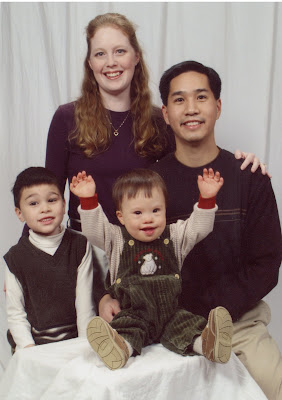
A question from Dan: "On page 63 there is reference to the commute that Christian people may have to their places of worship. What positive ways, if any, have you seen the megachurch respond to the idea of the "recovering a parish mindset" that you talk about on p. 67?"
Later on in the book I talk about the multisite church movement, and this is something that has been bubbling up in recent years. Instead of churches building bigger and bigger facilities and people commuting in from farther and farther away, churches are decentralizing and focusing on individual neighborhoods and local communities. They're setting up local campuses and neighborhood home groups that are still connected to the regional "mother ship," but focus on a particular local area or suburb. It's a retooling away from the commuter model toward the parish concept.
It's encouraging that megachurches like Willow Creek have been shifting away from an affinity-based ministry approach to a more geographic-locality-based ministry approach. (A few years ago they hired Randy Frazee, author of The Connecting Church, to help them focus on local multisite campuses.) So instead of affinity-based ministries segmented out for twentysomethings and thirtysomethings and divorcees and singles and recovery groups, now Willow is focusing on local campuses like their DuPage County campus, or McHenry County or North Shore or downtown Chicago. Even those attending the main Willow campus in South Barrington now organize themselves so they sit with people from their local community. Lake Zurich area here, Mundelein, Schaumburg. If you go to Willow’s website and click on the Neighborhood Life link, you’ll find ways to connect with others in various local suburbs. Much of it is organized by school district. That way people can connect with people from their local area and build community together (and spend less time commuting all over the Chicagoland region).
The shift from affinity-based ministry to geography-based ministry is one of the major paradigm shifts of the last five years or so. I affirm both approaches, since different churches and contexts usually require different things, but I applaud the geographic shift in emphasis. And it’s often a both/and. A megachurch like Willow is big enough to have plenty of people within the geographic groups to also have affinity groups within the geography groups. For smaller churches, there are certainly times to have affinity groups for singles or college-age or retirees or whatever. But there’s a big benefit to having local, community-based intergenerational life together that crosses affinity group categories.
Another megachurch example of parish localism happened at Rick Warren's church, Saddleback Church in Orange County, a totally suburban environment. After 9/11, Saddleback provided lawn signs to their church members. The signs said "Pray for Peace" or something like that. Folks went home and put the lawn signs on their lawns. As it turned out, people saw these lawn signs pop up all over their neighborhoods, down the block, across the street. They discovered that all these other Saddleback Christians lived in the same area. They had no idea that these neighbors were Christians, let alone went to the same church! And out of that a lot of local small groups were developed, and people became intentional about creating community in their local suburban neighborhoods. Not only did this help them connect with Christian friends that were nearby, these groups had better evangelistic witness and ministry impact in their neighborhoods.
Thursday, September 18, 2008


George Fox Q&A: "missionary impulse" and "critical mass"
Another question from a George Fox student, Elizabeth: "My experience with suburbia is that there are few Christians in suburbia who have any kind of "missionary impulse" (pg. 30) and if a "critical mass" (pg. 52) were reached in a neighborhood it would result in a Christian clique forming rather than an embodied witness of the body of Christ to the neighbors. How do you define "critical mass" and can you offer any suggestions on how to inspire a "missionary impulse" in such a group?"
Elizabeth - alas, yes, there are too few suburban Christians that are truly missional about their suburbs! Most suburban churches are concerned about evangelism and outreach, but that's somewhat different than seeing your suburb missiologically and actually exegeting/exploring one's suburban culture for the purpose of living and ministering there incarnationally.
A "critical mass" of Christian presence in a neighborhood naturally would look different in different situations, so I don't think I have a specific guideline or concrete number of how many or what percentage. I agree, there's certainly a danger of Christian cliquishness (which is true of any church or Christian community). But the alternative is usually that there's no visible Christian presence or witness at all. So better to build a Christian community and to guard against it becoming ingrown and cliquish.
How to inspire a "missionary impulse"? Here's one practical idea. I love what Todd Hiestand's church, The Well, in suburban Philadelphia did this past summer - they had a short-term mission trip to their own suburb. Think of how much anticipation and preparation the average church does for an overseas short-term trip. People raise money, write prayer letters, learn basic language phrases, watch videos, try making indigenous food, get acquainted with culture, music, clothing, etc. Well, imagine if a suburban church invested a similar amount of time and energy preparing for a mission trip to their own suburb! I think people would start to view their suburban context very differently if they went through the exercise of preparing to be short-term missionaries to their suburban area.
Elizabeth - alas, yes, there are too few suburban Christians that are truly missional about their suburbs! Most suburban churches are concerned about evangelism and outreach, but that's somewhat different than seeing your suburb missiologically and actually exegeting/exploring one's suburban culture for the purpose of living and ministering there incarnationally.
A "critical mass" of Christian presence in a neighborhood naturally would look different in different situations, so I don't think I have a specific guideline or concrete number of how many or what percentage. I agree, there's certainly a danger of Christian cliquishness (which is true of any church or Christian community). But the alternative is usually that there's no visible Christian presence or witness at all. So better to build a Christian community and to guard against it becoming ingrown and cliquish.
How to inspire a "missionary impulse"? Here's one practical idea. I love what Todd Hiestand's church, The Well, in suburban Philadelphia did this past summer - they had a short-term mission trip to their own suburb. Think of how much anticipation and preparation the average church does for an overseas short-term trip. People raise money, write prayer letters, learn basic language phrases, watch videos, try making indigenous food, get acquainted with culture, music, clothing, etc. Well, imagine if a suburban church invested a similar amount of time and energy preparing for a mission trip to their own suburb! I think people would start to view their suburban context very differently if they went through the exercise of preparing to be short-term missionaries to their suburban area.
Wednesday, September 17, 2008
The limitations of voting
As all of the conversations around the water cooler and on Facebook indicate, we are in the thick of the political frenzy season. I'm already feeling political fatigue and am ready for this whole election thing to be done with. So just for the heck of it, here's a post that has the potential to annoy everybody on all sides.
The campaign process wades through long months of complex debate on innumerable topics and issues but then drills down to one ultimate question: How will you vote? I think one of the limitations of the American two-party political system is that it necessarily forces us to make imperfect voting decisions as if we are giving full endorsement to one or another position. There is no way to vote with reservations, to say, "I want to vote for candidate A's health care policy but candidate B's foreign policy" or "I'm only voting for this part of the candidate's platform but not that part." Every party and every candidate is a mixed bag, and I wish we could offer partial votes.
This election cycle, I'm hearing more people say that there's much they agree with and disagree with on both candidates, and neither one fully encapsulates the "ideal" candidate or ticket. I was interested to discover in 2004 that respected Christian historian Mark Noll had publicly stated that for several elections he could not bring himself to fully support either major candidate, so he has chosen not to vote.
A new book just came out a few months ago called Electing Not to Vote: Christian Reflections on Reasons for Not Voting, edited by Ted Lewis, which argues in favor of Noll's position. It argues that not voting could and should be a legitimate option for Christians. I've not read all the way through the book yet, but it has provided a number of very interesting perspectives that seem to resonate with the many Christians who feel that they can't fully support either ticket.
Contributors suggest that voting reinforces the idolatry of the nation-state, and they discuss how voting has been co-opted by the party system, how voting is necessarily an overly simplistic response to very complicated issues, and how historically some of the most significant social changes have happened outside of the actual voting process. For example, the civil rights movement was accomplished in many ways by people who were shut out of the traditional voting process. Social change can and does happen apart from voting; voting is one avenue of public engagement, but certainly not the only one.
One interesting observation is that Christians might actually wield more influence prior to voting than afterward - once your vote is cast, you can be taken for granted. So to withhold your vote might actually be an act not merely of protest but of active political engagement. The contributors argue against an easy checking out of the system and say that if you don't vote, you actually need to be more involved in the political process in different, alternative ways.
If a voter has studied all the issues and candidates and still could not support a candidate, it could be legitimate to not vote as an act of protest. If we cannot vote with a clear conscience, then we should not vote. If the system is broken, then it may be an act of futility to participate in the system. Our electoral process is a tremendously flawed, imperfect system that unfortunately happens to be better than any other alternatives. Of course, this is not to say that we should abandon government. Those who are gifted with political savvy and governmental access can work for reform; others of us not so called may well sit out.
Some have argued that voting is a right, a privilege, an obligation and a duty for us as American citizens. They say that we are derelict in our responsibility if we do not vote. But I am quite skeptical of language about the "duty" or "obligation" to vote. During the primaries, one of my colleagues exhorted everybody to vote. I responded that the right to vote also means the right not to vote. I think using the language of "duty" or "obligation" to vote might actually weaken the principle of participatory democracy. If we are not free to NOT vote, we are not truly free to vote.
Anyway, I'm not necessarily convinced by all of this book's arguments, but I thought it raised a number of good points and it gives voice to a lot of the ambivalence and conflictedness that I'm sensing this year. I haven't decided yet how I will vote, or even if I will vote. But these are my thoughts at this point of the season.
Okay, I've said my piece. Open fire . . .
The campaign process wades through long months of complex debate on innumerable topics and issues but then drills down to one ultimate question: How will you vote? I think one of the limitations of the American two-party political system is that it necessarily forces us to make imperfect voting decisions as if we are giving full endorsement to one or another position. There is no way to vote with reservations, to say, "I want to vote for candidate A's health care policy but candidate B's foreign policy" or "I'm only voting for this part of the candidate's platform but not that part." Every party and every candidate is a mixed bag, and I wish we could offer partial votes.
This election cycle, I'm hearing more people say that there's much they agree with and disagree with on both candidates, and neither one fully encapsulates the "ideal" candidate or ticket. I was interested to discover in 2004 that respected Christian historian Mark Noll had publicly stated that for several elections he could not bring himself to fully support either major candidate, so he has chosen not to vote.
A new book just came out a few months ago called Electing Not to Vote: Christian Reflections on Reasons for Not Voting, edited by Ted Lewis, which argues in favor of Noll's position. It argues that not voting could and should be a legitimate option for Christians. I've not read all the way through the book yet, but it has provided a number of very interesting perspectives that seem to resonate with the many Christians who feel that they can't fully support either ticket.
Contributors suggest that voting reinforces the idolatry of the nation-state, and they discuss how voting has been co-opted by the party system, how voting is necessarily an overly simplistic response to very complicated issues, and how historically some of the most significant social changes have happened outside of the actual voting process. For example, the civil rights movement was accomplished in many ways by people who were shut out of the traditional voting process. Social change can and does happen apart from voting; voting is one avenue of public engagement, but certainly not the only one.
One interesting observation is that Christians might actually wield more influence prior to voting than afterward - once your vote is cast, you can be taken for granted. So to withhold your vote might actually be an act not merely of protest but of active political engagement. The contributors argue against an easy checking out of the system and say that if you don't vote, you actually need to be more involved in the political process in different, alternative ways.
If a voter has studied all the issues and candidates and still could not support a candidate, it could be legitimate to not vote as an act of protest. If we cannot vote with a clear conscience, then we should not vote. If the system is broken, then it may be an act of futility to participate in the system. Our electoral process is a tremendously flawed, imperfect system that unfortunately happens to be better than any other alternatives. Of course, this is not to say that we should abandon government. Those who are gifted with political savvy and governmental access can work for reform; others of us not so called may well sit out.
Some have argued that voting is a right, a privilege, an obligation and a duty for us as American citizens. They say that we are derelict in our responsibility if we do not vote. But I am quite skeptical of language about the "duty" or "obligation" to vote. During the primaries, one of my colleagues exhorted everybody to vote. I responded that the right to vote also means the right not to vote. I think using the language of "duty" or "obligation" to vote might actually weaken the principle of participatory democracy. If we are not free to NOT vote, we are not truly free to vote.
Anyway, I'm not necessarily convinced by all of this book's arguments, but I thought it raised a number of good points and it gives voice to a lot of the ambivalence and conflictedness that I'm sensing this year. I haven't decided yet how I will vote, or even if I will vote. But these are my thoughts at this point of the season.
Okay, I've said my piece. Open fire . . .
Monday, September 15, 2008
George Fox class Q&A: Intentional communities
Jason Clark is teaching a course on Missional Ecclesiology at George Fox Evangelical Seminary, and one of his textbooks is The Suburban Christian. His students are reading the book this week and next, and Jason asked me if I'd be willing to interact with them via this blog. I said sure, I'm game.
So here's the first question, from Tom B.: "On page 51, you discuss intentional community and the idea of a sixplex with individual living quarters and a communal kitchen, dining area and common area. This idea is intriguing. Are you aware of any such dwellings here in America? Is there any information about how this concept actually works in practice?"
I first heard this idea from Tom Sine of Mustard Seed Associates some years ago, and he described it as an alternative to typical suburban single-family housing, which tends to isolate us from one another and also saddles us with heavy individual mortgages. The sixplex model was designed by one of Sine's friends, and he referenced the sixplex idea in his books Cease Fire and Mustard Seed vs. McWorld. Here's a little more detail on the concept:
I'd love to hear suburban examples of intentional community in whatever kind of housing configuration. Stories?
So here's the first question, from Tom B.: "On page 51, you discuss intentional community and the idea of a sixplex with individual living quarters and a communal kitchen, dining area and common area. This idea is intriguing. Are you aware of any such dwellings here in America? Is there any information about how this concept actually works in practice?"
I first heard this idea from Tom Sine of Mustard Seed Associates some years ago, and he described it as an alternative to typical suburban single-family housing, which tends to isolate us from one another and also saddles us with heavy individual mortgages. The sixplex model was designed by one of Sine's friends, and he referenced the sixplex idea in his books Cease Fire and Mustard Seed vs. McWorld. Here's a little more detail on the concept:
Sine suggested beginning "cooperative communities" as an alternative to suburban living. A starter home in Seattle, he said, costs an average of $150,000. Financed over 30 years, the accumulated cost is $500,000, he observed. By contrast, homes can be built in a "six-plex" with common activity areas for about $60,000, financed over five years. Eventually, a husband and wife living there could afford to cut back to 20 hours of work per week, freeing up more time to spend with children and for ministry. "We're going to have to think that radically," he said. "The single-family detached lifestyle is the most expensive way to live," Sine said. "If we don't create a community where people start to care for one another, we don't have a future."I'm afraid I don't know to what extent this has been lived out; you could probably contact Sine and find out. Of course, the new monasticism has been saying a lot about intentional communities in recent years, and it seems that they can take form in any number of kinds of living spaces, whether traditional single-family houses, rehabbed storefront or warehouse space, apartment complexes or old churches or school buildings. With the ongoing mortgage crisis, some are speculating that today's suburban McMansions will become new multi-family housing for the suburban poor. It's possible that suburban new monastic groups could get a big foreclosed house on the cheap at an auction and turn it into a new way of doing intentional community in the suburbs.
I'd love to hear suburban examples of intentional community in whatever kind of housing configuration. Stories?
Thursday, September 11, 2008
A corrective to parents' lives revolving around their children
My wife, Ellen, just got back from a trip to Hong Kong and South Korea. The boys and I picked her up from the airport last night, and we're all thrilled to have her home. And this morning I realized that it's the 7th anniversary of 9/11. Just heard a piece on NPR about a passenger of Flight 93 that had been a standby passenger. So sad. So I'm not taking Ellen's safe return for granted, and I'm remembering the victims of that day.
In honor of Ellen's safe return, I'm reposting an entry from her blog that I thought was quite insightful. While researching my suburban book, one suburban pastor told me that one of the biggest issues for his church and community is "the idolatry of children." Ellen's post seems to me a healthy corrective to some common pitfalls about parenting and kids.
-----------
A Confession
I have a confession to make. Not everything I do is for the enrichment of my children. Sometimes I do things just because it's something I enjoy.
At a recent event I attended one young mother mentioned how her sisters' lives seem to revolve around their children and the various activities they are enrolled in. One mom mentioned that it would be good for our kids to have one night a week where they can't participate in outside activities because it is mom's night to do something. Another mom mentioned that her friend tells her children that date night with her husband is "to make sure you are happy."
As I drove home from the event I thought about the idea of explaining date night to our kids as something we do to keep them happy. Explaining alone time with my spouse in this way, I realized, would actually reinforce the idea the world revolves around our kids. While it may be true that maintaining a happy marriage will help my children remain happy, the main reason I spend time alone with my spouse is that I really like him. I enjoy having uninterrupted conversations with him that allow us to connect at deeper levels than "When was the last time we changed Elijah's diaper?" or "Have you seen Josiah's backpack?"
The same is true of other activities that take me away from home. I enjoy taking sign language classes, leading worship and having coffee with friends. I could explain to our kids that I am a better mom when I am able to pursue activities I enjoy, but I think it may be better to simply tell them, "I am doing this because it is something I enjoy."
I can't do everything that I enjoy all the time. Sometimes I decide not to do something because I would rather spend time with my family or because my kids need me to be with them. I enjoy being with my kids and I want them to feel loved and to know that they are important to me. And I am intentional about making sure that I am frequently home with my kids. At the same time, I want them to know that I am more than just their mom. God has given me gifts to serve both my family and the world around me. Having children may require modifying my activities, but it doesn't mean that I have to hit the pause button on my life indefinitely.
Having a child with special needs can sometimes exacerbate this issue. Children with special needs often require more of our time and energy. We may become so wrapped up in helping and advocating for our children, that we allow their diagnosis to become a primary part of our identity. If mothers of typical children are tempted to believe that their kids can't survive even one evening a week without them, imagine how mothers of children with special needs often feel, especially when our children require special medical care.
But when we lose our own identities to our children we are not the only ones who lose something. Our churches and communities lose out too. They may lose out because we are not using our gifts to serve, but they may also lose the opportunity of using their gifts to serve us. And, if we are so worried about our children that we do not allow them to spend time in someone else's care, they may lose out on the opportunity to learn about our kids and how to love and serve people with special needs.
I just signed up for a second class in sign language this fall. I'll be out of the house on Wednesday evenings from late October through early December and the kids will be spending a little more time with Al or, in some cases, with a babysitter. But that's okay. I enjoy learning sign language. The kids will survive without me for one night a week.
Posted by Ellen at 12:23 PM
In honor of Ellen's safe return, I'm reposting an entry from her blog that I thought was quite insightful. While researching my suburban book, one suburban pastor told me that one of the biggest issues for his church and community is "the idolatry of children." Ellen's post seems to me a healthy corrective to some common pitfalls about parenting and kids.
-----------
A Confession
I have a confession to make. Not everything I do is for the enrichment of my children. Sometimes I do things just because it's something I enjoy.
At a recent event I attended one young mother mentioned how her sisters' lives seem to revolve around their children and the various activities they are enrolled in. One mom mentioned that it would be good for our kids to have one night a week where they can't participate in outside activities because it is mom's night to do something. Another mom mentioned that her friend tells her children that date night with her husband is "to make sure you are happy."
As I drove home from the event I thought about the idea of explaining date night to our kids as something we do to keep them happy. Explaining alone time with my spouse in this way, I realized, would actually reinforce the idea the world revolves around our kids. While it may be true that maintaining a happy marriage will help my children remain happy, the main reason I spend time alone with my spouse is that I really like him. I enjoy having uninterrupted conversations with him that allow us to connect at deeper levels than "When was the last time we changed Elijah's diaper?" or "Have you seen Josiah's backpack?"
The same is true of other activities that take me away from home. I enjoy taking sign language classes, leading worship and having coffee with friends. I could explain to our kids that I am a better mom when I am able to pursue activities I enjoy, but I think it may be better to simply tell them, "I am doing this because it is something I enjoy."
I can't do everything that I enjoy all the time. Sometimes I decide not to do something because I would rather spend time with my family or because my kids need me to be with them. I enjoy being with my kids and I want them to feel loved and to know that they are important to me. And I am intentional about making sure that I am frequently home with my kids. At the same time, I want them to know that I am more than just their mom. God has given me gifts to serve both my family and the world around me. Having children may require modifying my activities, but it doesn't mean that I have to hit the pause button on my life indefinitely.
Having a child with special needs can sometimes exacerbate this issue. Children with special needs often require more of our time and energy. We may become so wrapped up in helping and advocating for our children, that we allow their diagnosis to become a primary part of our identity. If mothers of typical children are tempted to believe that their kids can't survive even one evening a week without them, imagine how mothers of children with special needs often feel, especially when our children require special medical care.
But when we lose our own identities to our children we are not the only ones who lose something. Our churches and communities lose out too. They may lose out because we are not using our gifts to serve, but they may also lose the opportunity of using their gifts to serve us. And, if we are so worried about our children that we do not allow them to spend time in someone else's care, they may lose out on the opportunity to learn about our kids and how to love and serve people with special needs.
I just signed up for a second class in sign language this fall. I'll be out of the house on Wednesday evenings from late October through early December and the kids will be spending a little more time with Al or, in some cases, with a babysitter. But that's okay. I enjoy learning sign language. The kids will survive without me for one night a week.
Posted by Ellen at 12:23 PM
Monday, September 08, 2008
The age of Obama and Palin: The generational significance of the 2008 election
Something that has been emphasized throughout this campaign is Barack Obama's youth, and likewise Sarah Palin has been described repeatedly as "young." Obama is 47, Palin is 44. The fact that they are identified as "young" is heartening to me, now that I'm closer to 40 than 30. Heck, I'm not getting old - I'm still just a kid compared to them!
All this talk of the candidates' youth reminds me of when the baby boomers first emerged as presidential candidates. The baby boom generation is usually defined as birthyears from 1946 to 1964. In 1988 Dan Quayle (b. 1947) was the first baby boomer to be elected vice president, and in 1992 Bill Clinton (b. 1946) became the first boomer president. In the 1992 election, Clinton was tagged as very young for the presidency, and his candidacy contrasted sharply with his much older opponent, the WWII-generation George H. W. Bush (b. 1924). In 1996 Bob Dole (b. 1923) was the last of the WWII generation candidates. Since then, the major candidates have mostly been boomers or slightly older: George W. Bush (b. 1946), Dick Cheney (b. 1941), Al Gore (b. 1948), Joe Lieberman (b. 1942), John Kerry (b. 1943), John Edwards (b. 1953), Hillary Clinton (b. 1947), Rudy Giuliani (b. 1944), Mitt Romney (b. 1947), Bill Richardson (b. 1947), Mike Huckabee (b. 1955). John McCain (b. 1936) and Joe Biden (b. 1942) are part of the "silent generation" born between 1925 and 1945, and will likely be the last major candidates from that era.
We've had sixteen years now of boomer presidencies, and it looks like this election may well mark the tail end of that era. Obama was born in 1961. Palin was born in 1964. Both were born in those early '60s years where the baby boom was ending and the baby bust was beginning. In fact, some demographers define Generation X as birthyears from 1961 to 1981. So by this definition, Obama could be our first Gen X president, or Palin could be our first Gen X vice president.
It seems to me that Obama and Palin's historic candidacies have much to do with the generational shifts that have led up to this cultural moment. America had already moved past the height of the civil rights era by the time Obama came of age. He had more opportunities than African Americans of earlier generations, and his biracial/multiethnic identity transcends older black/white divides. Likewise, Palin grew up as the beneficiary of earlier women's movements. While she probably still faced glass ceilings, they likely were different than the ones that women of Hillary's age encountered. It has become far more normal that women like Palin could be in positions of leadership and prominence.
I am encouraged that Gen X, maligned for so long as a bunch of cynical slackers, may well be the historic generation that finally puts an African American or a woman in the White House!
What's even weirder - if the next president serves for two terms, then it's entirely possible that the candidates for the 2016 election will be Xers who were born in the '70s, like me. Yikes. What will America look like when it is governed by those of us who came of age in the '80s? The principal in The Breakfast Club said something like, "Someday these kids are gonna be running the country. This is the thought that wakes me up every night."
When I turned 35, I officially declared my non-candidacy on my Facebook status. But I'm not ruling out my run for 2016 just yet. In fact, I'll go ahead and work on my stump speech:
All this talk of the candidates' youth reminds me of when the baby boomers first emerged as presidential candidates. The baby boom generation is usually defined as birthyears from 1946 to 1964. In 1988 Dan Quayle (b. 1947) was the first baby boomer to be elected vice president, and in 1992 Bill Clinton (b. 1946) became the first boomer president. In the 1992 election, Clinton was tagged as very young for the presidency, and his candidacy contrasted sharply with his much older opponent, the WWII-generation George H. W. Bush (b. 1924). In 1996 Bob Dole (b. 1923) was the last of the WWII generation candidates. Since then, the major candidates have mostly been boomers or slightly older: George W. Bush (b. 1946), Dick Cheney (b. 1941), Al Gore (b. 1948), Joe Lieberman (b. 1942), John Kerry (b. 1943), John Edwards (b. 1953), Hillary Clinton (b. 1947), Rudy Giuliani (b. 1944), Mitt Romney (b. 1947), Bill Richardson (b. 1947), Mike Huckabee (b. 1955). John McCain (b. 1936) and Joe Biden (b. 1942) are part of the "silent generation" born between 1925 and 1945, and will likely be the last major candidates from that era.
We've had sixteen years now of boomer presidencies, and it looks like this election may well mark the tail end of that era. Obama was born in 1961. Palin was born in 1964. Both were born in those early '60s years where the baby boom was ending and the baby bust was beginning. In fact, some demographers define Generation X as birthyears from 1961 to 1981. So by this definition, Obama could be our first Gen X president, or Palin could be our first Gen X vice president.
It seems to me that Obama and Palin's historic candidacies have much to do with the generational shifts that have led up to this cultural moment. America had already moved past the height of the civil rights era by the time Obama came of age. He had more opportunities than African Americans of earlier generations, and his biracial/multiethnic identity transcends older black/white divides. Likewise, Palin grew up as the beneficiary of earlier women's movements. While she probably still faced glass ceilings, they likely were different than the ones that women of Hillary's age encountered. It has become far more normal that women like Palin could be in positions of leadership and prominence.
I am encouraged that Gen X, maligned for so long as a bunch of cynical slackers, may well be the historic generation that finally puts an African American or a woman in the White House!
What's even weirder - if the next president serves for two terms, then it's entirely possible that the candidates for the 2016 election will be Xers who were born in the '70s, like me. Yikes. What will America look like when it is governed by those of us who came of age in the '80s? The principal in The Breakfast Club said something like, "Someday these kids are gonna be running the country. This is the thought that wakes me up every night."
When I turned 35, I officially declared my non-candidacy on my Facebook status. But I'm not ruling out my run for 2016 just yet. In fact, I'll go ahead and work on my stump speech:
My fellow Americans, it's a long, long way to the capital city. Previous generations of civic leaders were inspired by the likes of Washington, Lincoln, Roosevelt or Kennedy. But my inspiration to public service was the classic anthem "I'm Just a Bill." Thanks to Saturday morning Schoolhouse Rock cartoons, I know the preamble of the Constitution inside and out. Join me in singing: "We the people, in order to form a more perfect union, establish justice, insure domestic tranquility-eee-ee . . ."
I grew up in the era of big hair, so I know how to deal with big problems. I learned to solve the Rubik's cube in 3rd grade. Balancing the federal budget should be a snap in comparison. I am a member of that pioneering first generation to grow up on Atari and Nintendo, and our minds were trained to make quick decisions. You can trust that my foreign policy has been well-honed by countless scenarios of Missile Command and Contra.
I am guided by those great philosophers who told us that there's always more than meets the eye, and that knowing is half the battle. Our country's problems may look huge, but remember, size matters not.
We have had some growing pains. But I will strengthen our family ties. I know this economy is tough. Your job's a joke, you're broke, your love life's DOA. But I'll be there for you, when the rain starts to pour.
I pledge to you that I will build bipartisan and multilateral coalitions at home and abroad. After all, if an athlete, a brain, a princess, a criminal and a basketcase can find common ground in just one day of detention, surely we can overcome our differences. We are, truly, the world.
My fellow Americans, this is not a time for fear. Fear is the path to the dark side. Instead, look back to the future. Always in motion is the future. Because life moves pretty fast. If you don't stop and look around once in a while, you could miss it.
So this election, seize the day. When you're in that voting booth, don't you forget about me. Don't, don't, don't, don't you. Forget about me. God bless you, and God bless America.
Thursday, September 04, 2008
Sarah Palin, Down syndrome and special needs
My younger son, Elijah, has Down syndrome, so naturally I was very interested to hear about Sarah Palin's candidacy. Her experience of getting a prenatal diagnosis of Down syndrome halfway through the pregnancy parallels our own experience. Our doctor told us, "Based on this diagnosis, you can choose to terminate the pregnancy." (We later learned that about 90% of babies prenatally diagnosed with Down syndrome are terminated.) Like the Palins, we chose to have our baby, and now we can't imagine life without Elijah. (My column for the forthcoming October issue of Christianity Today is going to be about Down syndrome and disability, because October happens to be Down syndrome awareness month. I had already written and sent in my column a month ago, long before Palin's candidacy had been announced. Kind of wild.)
After the announcement of Palin as the VP pick, at first I didn't know who she was. Then I realized I had read articles about her last spring when Trig was born, when she said, "Trig is beautiful and already adored by us. We knew through early testing he would face special challenges, and we feel privileged that God would entrust us with this gift and allow us unspeakable joy as he entered our lives."
I thought about blogging about Palin earlier, but Andy Crouch beat me to the punch. He notes that when he was a teenager back in the '80s, he remembers seeing numerous kids his age with Down syndrome. But he doesn't see as many today, because so many have been aborted. On the Palins' decision to have Trig, Andy observes,
After Palin's speech, Mostert posted this blog entry saying, "She faced the camera squarely and said what no other politician on either side of the aisle has, so far, been willing or able to say: That all people with disabilities matter, that they will no longer be ignored. That they have a rightful and unmistakable place at the table of civic life. That they are, before anything else, Americans."
Not only are they Americans, more significantly, they bear the image of God and thus have inestimable value and worth. Jesus loves the little children, all the children of the world, regardless of chromosome count or disabilities. Children with Down syndrome, like Trig Palin and Elijah Hsu, are people deeply loved not only by their families, but by God. And our society is richer for their presence.
This blog post should not be taken as an endorsement of Palin or the GOP ticket. But whatever one thinks of Palin or her politics, I think some of the most significant aspects of last night's speech were the camera shots of little Trig, alive and well. This boy's very existence has brought disability awareness, special needs and prolife issues to the forefront of a national discussion. I am hopeful that regardless of what happens this election, our country will become a better place for and with people with disabilities.
After the announcement of Palin as the VP pick, at first I didn't know who she was. Then I realized I had read articles about her last spring when Trig was born, when she said, "Trig is beautiful and already adored by us. We knew through early testing he would face special challenges, and we feel privileged that God would entrust us with this gift and allow us unspeakable joy as he entered our lives."
I thought about blogging about Palin earlier, but Andy Crouch beat me to the punch. He notes that when he was a teenager back in the '80s, he remembers seeing numerous kids his age with Down syndrome. But he doesn't see as many today, because so many have been aborted. On the Palins' decision to have Trig, Andy observes,
I also saw a letter to the editor in the Chicago Tribune by Mark Mostert, codirector of Regent University’s Institute for the Study of Disability and Bioethics. He wrote:I cannot think of any other public figures in my adult life, at least of the prominence they are about to enjoy or endure, who have made this decision. They will cause many, many families to reconsider the horizons of the possible. Their public example could very well lead to a cultural sea change—a dramatic shift in the “horizons of the possible.” That phrase from my book is no metaphor. Those horizons are so real that, for a future generation of children and their parents, they are quite literally a matter of life and death. For this reason, which utterly transcends politics and this year’s election, the sudden prominence of the Palins is, in the deepest sense, an extraordinary act of public service.
For years advocates fought to have people with Down syndrome brought from the shadows of institutionalization to their rightful place in our communities and lives. Lately, though, there are fewer and fewer of them around.Last night, Palin introduced Trig alongside her other children, saying, "We were so blessed in April; Todd and I welcomed our littlest one into the world, a perfectly beautiful baby boy named Trig." Then she said, "Children with special needs inspire a special love. To the families of special-needs children all across this country, I have a message for you. For years, you sought to make America a more welcoming place for your sons and daughters. I pledge to you that if we are elected, you will have a friend and advocate in the White House."
Why? Because the vast majority of in-utero Down syndrome diagnoses result in abortion. The numbers don't lie: When it comes to people with Down syndrome, they're considered defective. The message is clear: We'd rather just not have them around.
Good for Palin for standing up to the pressure from the medical community, which almost always recommends termination of the pregnancy.
Good for Palin for making the statement that needs to be made much more often: Genetic discrimination against people with Down syndrome must stop. Now. No excuses.
After Palin's speech, Mostert posted this blog entry saying, "She faced the camera squarely and said what no other politician on either side of the aisle has, so far, been willing or able to say: That all people with disabilities matter, that they will no longer be ignored. That they have a rightful and unmistakable place at the table of civic life. That they are, before anything else, Americans."
Not only are they Americans, more significantly, they bear the image of God and thus have inestimable value and worth. Jesus loves the little children, all the children of the world, regardless of chromosome count or disabilities. Children with Down syndrome, like Trig Palin and Elijah Hsu, are people deeply loved not only by their families, but by God. And our society is richer for their presence.
This blog post should not be taken as an endorsement of Palin or the GOP ticket. But whatever one thinks of Palin or her politics, I think some of the most significant aspects of last night's speech were the camera shots of little Trig, alive and well. This boy's very existence has brought disability awareness, special needs and prolife issues to the forefront of a national discussion. I am hopeful that regardless of what happens this election, our country will become a better place for and with people with disabilities.
Wednesday, September 03, 2008
Publishers Weekly on what's emerging/emergent and what's not
I was interviewed by Publishers Weekly for an article, "Emergent and Beyond: Books for the broader conversation of faith," which has just been published in print and online. A few snippets:
Other forms of alternative Christianity are often mistaken for emerging/emergent, but are not. One cause for confusion, says Al Hsu, associate editor at InterVarsity Press, is that many books that are not theologically emergent still resonate with emergent readers, such as IVP's The Circle of Seasons (Nov.), a title about the liturgical year from Presbyterian writer Kimberlee Conway Ireton.Tony Jones blogged about the article here and responded to the article's claim that he/Emergent promote an "unorthodox" interpretation of Scripture. As the commenters point out (and article writer Marcia Ford admits), the article probably would have been more precise (and less theologically loaded) by using the word "unconventional." Brian McLaren also comments on the article here.
And then there's the mistaken assumption that to be young and edgy is to be emergent. “A traditionalist in a younger body is not emergent,” Hsu says, pointing to Shane Claiborne as an author who is frequently referred to as emergent but is not. Claiborne, who with Jonathan Wilson-Hartgrove coauthored Becoming the Answer to Our Prayers (IVP, Oct.), lives in an intentional community in inner-city Philadelphia.
What everyone seems to agree on is that no matter what you call it, the category is changing. “Emerging church books are evolving to be not just topic driven but perspective driven,” Hsu says. “Before, we saw a lot of books on the nature of church or theology in general. Now, we're seeing books on a particular topic from a certain perspective.” One example for IVP is Julie Clawson's Everyday Justice, which releases next year (see sidebar).
“Emergent is coming to a time when it is ripe for critique, and not just knee-jerk reactions” from both critics and defenders of the conversation, IVP's Hsu points out.
Tuesday, September 02, 2008
If school milk tastes different, here's why
Josiah is in first grade now, and he brings his own lunches to school. But we also signed up for him to get milk provided by the school. He didn't take it the first few days. We asked him why, and he said, "It tastes different." I'm guessing that he's getting 2% milk at school, and he's used to skim milk at home. (He seems okay with school milk now.)
Well, at church this past weekend, one mom told me that her daughter, Isabel, also did not like the milk at her school. Here's the reconstructed conversation:
Isabel: Mommy, I don't like the milk at school.
Mom: Why not?
Isabel: It's goat's milk.
Mom: What? [This is not some fancy school district with locally grown organic meals or anything.] It's not goat's milk. It's just cow's milk.
Isabel: No, it's goat's milk.
Mom: What makes you think it's goat's milk?
Isabel [annoyed]: I can read, Mom. It says goat milk. G-O-T M-I-L-K.
Well, at church this past weekend, one mom told me that her daughter, Isabel, also did not like the milk at her school. Here's the reconstructed conversation:
Isabel: Mommy, I don't like the milk at school.
Mom: Why not?
Isabel: It's goat's milk.
Mom: What? [This is not some fancy school district with locally grown organic meals or anything.] It's not goat's milk. It's just cow's milk.
Isabel: No, it's goat's milk.
Mom: What makes you think it's goat's milk?
Isabel [annoyed]: I can read, Mom. It says goat milk. G-O-T M-I-L-K.
Friday, August 29, 2008
Upcoming Invite08 Soul Care for Leaders retreat/conference
Yesterday I caught up with Mindy Caliguire, founder of Soul Care, a spiritual formation ministry serving church leaders. She's the author of IVP's series of Soul Care Resources, including two new volumes, Simplicity and Soul Searching, that just came out this summer.
I'm a workshop leader at Soul Care's upcoming Invite08: Soul Care for Leaders one-day retreat/conference to be held at Willow Creek this October. I'll be doing a workshop on spiritual formation in the suburbs. Here's the description:
Suburbia can be a challenging environment for a healthy spiritual life. How does the geography and sociology of the suburban landscape affect our relationships with God and others? This workshop will explore the cultural forces at work in suburbia and how Christian spirituality and practices can counteract suburban tendencies. The workshop will also help church leaders contextualize their ministries to connect with suburban seekers.
IVP's publisher, Bob Fryling, is also doing a workshop on "spiritual coherence and leaders," which will be a preview of his forthcoming book on spirituality and leadership. The event should be especially helpful for pastors and ministry leaders (whether church staff or volunteers) who find themselves responsible for people's spiritual health but may feel like their own souls lack spiritual vitality. If you're in the Chicagoland area (or close enough in the Midwest to drive in for the weekend), I invite you to Invite08!
Here's the info:
Invite08: Soul Care for Leaders
Saturday, October 25, 2008
As church leaders, we need to listen to and care for our souls. Most of us are responsible for the care of others, too. Do you truly know how it’s done? Are you making time for it? Join us as we seek God to learn what it means to work whole-heartedly for His purpose.
Gather with others in our area to enjoy worship, retreat, conversations, reflection and learning.
WHEN: Saturday, October 25, 2008 9am – 4pm
WHERE: Room 100 at Willow Creek Community Church, 67 E. Algonquin Road, South Barrington, IL 60102
COST: $35 until Oct 1, $45 after that. Cost includes casual pizza lunch
Anticipating a blessed day with you,
Invite08 Leadership Team
Mindy Caliguire, Soul Care
Dan Lovaglia, Willow Creek
Doug & Marilyn Stewart, InterVarsity Christian Fellowship
I'm a workshop leader at Soul Care's upcoming Invite08: Soul Care for Leaders one-day retreat/conference to be held at Willow Creek this October. I'll be doing a workshop on spiritual formation in the suburbs. Here's the description:
Suburbia can be a challenging environment for a healthy spiritual life. How does the geography and sociology of the suburban landscape affect our relationships with God and others? This workshop will explore the cultural forces at work in suburbia and how Christian spirituality and practices can counteract suburban tendencies. The workshop will also help church leaders contextualize their ministries to connect with suburban seekers.
IVP's publisher, Bob Fryling, is also doing a workshop on "spiritual coherence and leaders," which will be a preview of his forthcoming book on spirituality and leadership. The event should be especially helpful for pastors and ministry leaders (whether church staff or volunteers) who find themselves responsible for people's spiritual health but may feel like their own souls lack spiritual vitality. If you're in the Chicagoland area (or close enough in the Midwest to drive in for the weekend), I invite you to Invite08!
Here's the info:
Invite08: Soul Care for Leaders
Saturday, October 25, 2008
As church leaders, we need to listen to and care for our souls. Most of us are responsible for the care of others, too. Do you truly know how it’s done? Are you making time for it? Join us as we seek God to learn what it means to work whole-heartedly for His purpose.
Gather with others in our area to enjoy worship, retreat, conversations, reflection and learning.
WHEN: Saturday, October 25, 2008 9am – 4pm
WHERE: Room 100 at Willow Creek Community Church, 67 E. Algonquin Road, South Barrington, IL 60102
COST: $35 until Oct 1, $45 after that. Cost includes casual pizza lunch
Anticipating a blessed day with you,
Invite08 Leadership Team
Mindy Caliguire, Soul Care
Dan Lovaglia, Willow Creek
Doug & Marilyn Stewart, InterVarsity Christian Fellowship
Tuesday, August 26, 2008
Back to school
Well, it's official. This past weekend I went through registration and orientation, and I now have a campus mailbox, ID card, syllabi and a stack of textbooks. I'm now a PhD student in educational studies at Trinity Evangelical Divinity School.
It's been twelve years since I finished my master's in communications at Wheaton Grad School, so I'm a little daunted about getting back into the system. I had considered doing doctoral work immediately after my master's, but I had been in school for so long (K-12 plus four years of college and two years for the MA - a total of 19 years!) that I felt like I really needed to get out in the real world and work. My dad was a PhD (in electrical engineering), my uncle was a PhD (in economics), so part of me figured I'd get a PhD eventually, but I didn't know in what or when. I didn't want to enter into a PhD program just for the sake of getting a PhD or for the wrong reasons, so I basically relinquished the idea. I didn't know if I would ever get back to school, because things have been rolling along pretty well career-wise this past decade or so, and it's hard to shift gears mid-stream.
But then a few years ago I was in an Asian American leadership development program through InterVarsity, and my mentor was Peter Cha, professor of practical theology and sociology of religion at Trinity. And one of the first things he asked me as we met was, "So when are you going to do doctoral work?" I resisted the idea at first just because life was busy enough as is. Decided against it, at one point. But the topic kept coming up over the next year or so.
So last year I decided to start formally explore all the various options (so much easier now than for college or my MA, before schools had websites!). The main challenge was that there's no such thing as a PhD in publishing. I considered PhD programs in communications and looked for programs in religious media studies or media and theology. I'm not qualified for programs in sociology of religion, but I wanted to explore sociology of religion and theology of culture if possible. I wondered if I could adapt a DMin program to a parachurch context. Explored some distance possibilities, some interdisciplinary PhD programs. I even looked into MFAs and MBAs. I considered a particular PhD program with connections between a seminary and a university (I thought it would be interesting to do theology at the seminary and communication studies at the university), but I got a speeding ticket on my way to the campus visit, and the lunch they provided had a chicken salad sandwich that gave me food poisoning and knocked me out for the weekend. I took that as a sign from God not to apply to that school.
So ultimately, I came back around to Trinity Evangelical Divinity School's PhD in educational studies. This particular program specifically seeks out people who have been working professionals and can bring real-life experience to bear on the program, so it's not merely theoretical but anchored in practical realities. The classes are modular, so it's more doable for people with full-time jobs. The school and faculty align pretty well with my broadly evangelical identity. My mentor Peter Cha teaches several sociology courses in the program. I can contextualize the program to bring educational theory and pedagogy into dialogue with Christian publishing praxis. The program is interdisciplinary (my texts cover a range of fields from history, philosophy and epistemology to anthropology, psychology and sociology). And it's local here in the Chicagoland area, so I don't have to uproot my family or leave my job. Seemed like a good convergence of all the various factors and criteria.
So I applied, and I got in. I'm still a little daunted, but at orientation yesterday the dean welcomed us and told us that we don't have to feel like we have to prove ourselves to be here. He said that they accepted us into the program because they wanted us to be part of this community and were confident that we could contribute and do scholarship at this level. And one minor thing that's pretty cool is that during library orientation yesterday, they showed us a little feature that imports bibliographic reference info and automatically formats it in whatever style guide you need - Chicago, Turabian, APA, whatever. Wow! They didn't have that when I was in grad school twelve years ago. I'll be gosh darned by all this new-fangled technology.
All this to say that I probably won't have time to blog as much these next few years. We'll see how things go. I'm a little worried that blogging has wrecked my ability to write academic papers. I've gotten used to brief blog posts without extensive lit review or note referencing. But at any rate, I'm finally underway on this doctoral journey. Pray for me!
It's been twelve years since I finished my master's in communications at Wheaton Grad School, so I'm a little daunted about getting back into the system. I had considered doing doctoral work immediately after my master's, but I had been in school for so long (K-12 plus four years of college and two years for the MA - a total of 19 years!) that I felt like I really needed to get out in the real world and work. My dad was a PhD (in electrical engineering), my uncle was a PhD (in economics), so part of me figured I'd get a PhD eventually, but I didn't know in what or when. I didn't want to enter into a PhD program just for the sake of getting a PhD or for the wrong reasons, so I basically relinquished the idea. I didn't know if I would ever get back to school, because things have been rolling along pretty well career-wise this past decade or so, and it's hard to shift gears mid-stream.
But then a few years ago I was in an Asian American leadership development program through InterVarsity, and my mentor was Peter Cha, professor of practical theology and sociology of religion at Trinity. And one of the first things he asked me as we met was, "So when are you going to do doctoral work?" I resisted the idea at first just because life was busy enough as is. Decided against it, at one point. But the topic kept coming up over the next year or so.
So last year I decided to start formally explore all the various options (so much easier now than for college or my MA, before schools had websites!). The main challenge was that there's no such thing as a PhD in publishing. I considered PhD programs in communications and looked for programs in religious media studies or media and theology. I'm not qualified for programs in sociology of religion, but I wanted to explore sociology of religion and theology of culture if possible. I wondered if I could adapt a DMin program to a parachurch context. Explored some distance possibilities, some interdisciplinary PhD programs. I even looked into MFAs and MBAs. I considered a particular PhD program with connections between a seminary and a university (I thought it would be interesting to do theology at the seminary and communication studies at the university), but I got a speeding ticket on my way to the campus visit, and the lunch they provided had a chicken salad sandwich that gave me food poisoning and knocked me out for the weekend. I took that as a sign from God not to apply to that school.
So ultimately, I came back around to Trinity Evangelical Divinity School's PhD in educational studies. This particular program specifically seeks out people who have been working professionals and can bring real-life experience to bear on the program, so it's not merely theoretical but anchored in practical realities. The classes are modular, so it's more doable for people with full-time jobs. The school and faculty align pretty well with my broadly evangelical identity. My mentor Peter Cha teaches several sociology courses in the program. I can contextualize the program to bring educational theory and pedagogy into dialogue with Christian publishing praxis. The program is interdisciplinary (my texts cover a range of fields from history, philosophy and epistemology to anthropology, psychology and sociology). And it's local here in the Chicagoland area, so I don't have to uproot my family or leave my job. Seemed like a good convergence of all the various factors and criteria.
So I applied, and I got in. I'm still a little daunted, but at orientation yesterday the dean welcomed us and told us that we don't have to feel like we have to prove ourselves to be here. He said that they accepted us into the program because they wanted us to be part of this community and were confident that we could contribute and do scholarship at this level. And one minor thing that's pretty cool is that during library orientation yesterday, they showed us a little feature that imports bibliographic reference info and automatically formats it in whatever style guide you need - Chicago, Turabian, APA, whatever. Wow! They didn't have that when I was in grad school twelve years ago. I'll be gosh darned by all this new-fangled technology.
All this to say that I probably won't have time to blog as much these next few years. We'll see how things go. I'm a little worried that blogging has wrecked my ability to write academic papers. I've gotten used to brief blog posts without extensive lit review or note referencing. But at any rate, I'm finally underway on this doctoral journey. Pray for me!
Friday, August 22, 2008
The Shack: Theology, narrative and the cultural moment
Yesterday several of my colleagues and I had a lunchtime discussion of William Young's The Shack, the self-published book that has become a bestselling phenomenon with two million copies in print. I read it a few months ago after hearing some of the initial buzz about it and wanted to know what all the fuss was about. (And I have to say that the title of the book always makes me think, "Love shack, baby, love shack!")
As Christian publishing industry professionals, my colleagues and I had a good time bantering about The Shack's merits and demerits, assessing its theology, discussing its narrative efficacy, unpacking the cultural dynamics and publicity. (If the following is slightly vague regarding plot specifics, it's to avoid spoilers for those who have not yet read it.)
One of the most interesting points of our discussion was The Shack's portrayal of the Trinity. That's easily one of the most distinctive things about the book. Most Christians focus on just God or Jesus, but The Shack personified the Holy Spirit as well. And seeing the three of them converse, interact and relate to each other is striking, so much so that one of my colleagues said that she'd happily use the book as an introductory textbook for teaching theology.
All of us in the room were curious to hear what one of our editors had to say, as he has a PhD in theology and has specialized in Trinitarian thought, especially of Karl Barth and T. F. Torrance. And he actually was quite positive about The Shack's take on the Trinity. He said that even if the language and notions could have been articulated better, he didn't see anything that was a gross misappropriation of the Christian tradition, that basically various orthodox Trinitarian theologians throughout the ages have said many of these things. Not all in one person, perhaps, but The Shack is a bit of an amalgam of various portraits of social trinitarianism.
One particular critique of The Shack's theology is that it confuses the persons of the Father and the Son, especially in the suffering of the Son (leading to charges of the heresy of patripassianism). My colleague didn't agree. Instead he pointed out that these detractors more often too rigidly separate the persons of the Trinity so that they seem like three separate Gods, as if the experience of the Son is not at all experienced by the Father. Indeed, some theologies place great (over?)emphasis on the Father's action against/upon the Son, which necessitates a sharp distinction between them. The Shack should be seen as a corrective against this overemphasis, to remind us that the three persons of the Trinity truly are one God.
Another key theme in The Shack is the problem of evil and suffering. Here we also generally affirmed The Shack's take on theodicy. Rather than overly spiritualize bad things as somehow happening by God's secret design or plan, The Shack says that evil truly is evil, and not God's plan or intention. The approach correlates well with Tom Wright's book Evil and the Justice of God - God is not the author of evil, and less important than the "why" of why bad things happen is the "what" of what God is doing about evil.
This relates to the cultural context and why perhaps The Shack has caught on so much. I think The Shack in many ways is doing for this generation what Philip Yancey's books Disappointment with God and Where Is God When It Hurts? did two decades ago - it gives voice to people's questions and heartcries about their own suffering and doubts about God's goodness. It used to be that apologetic questions were about "Is the Bible true?" or "Is Christianity the right religion?" Now the more fundamental questions are "Is Christianity good?" or "Can God be trusted?" If there is a God, is he really a good God? And The Shack goes a long way toward tapping into this cultural moment and answering (positively) that despite a world of pain and suffering, we can still believe in God, because he is still good, even if we haven't always recognized this as such.
The downside to The Shack's approach, perhaps, is that more traditional perspectives of God and church are the necessary foil to this message. So the book naturally appeals to the many who have had bad experiences with the church, Christians or God. (Which of course is another aspect of this cultural moment.) There's an implicit anti-authority and anti-institutional approach to this book (which is made more explicit in another Windblown Media book, So You Don't Want to Go to Church Anymore).
Another downside of The Shack is its "preachiness." The didactic sections of the book are a little heavy-handed, and the fictional narrative is mostly a delivery device for the author's message. The story is engaging, but does not rise to the heights of the best Christian fiction. Nor does it really parallel the fictional-yet-didactic narratives of books like C. S. Lewis's The Screwtape Letters or The Great Divorce. If anything, the tugging-at-the-heartstrings approach of the book is somewhat manipulative. My wife commented that she was in tears at various points of the book, because of the emotional nature of the plot developments, and that seemed to be a manipulative way for the author to get you to respond to and affirm his theology.
We recognized that while most of us in the room were interested in discussing the theological aspects of the book ("Wow! A popular book for a mass audience that actually has Trinitarian theology!"), we recognized that most people reading the book are likely not looking for the theology. They're primarily looking for an interesting read. But they're finding something compelling in both the format and the content. It surprises, and that causes buzz. It's not a self-help book, and it's not really an "inspirational" book. But it's grappling with real issues about suffering and evil, whether God can be trusted and is God really real and good. Somehow the book connects with human doubts and points to the character of God. And that's a good thing.
We also talked about the book's publicity and word-of-mouth buzz. The sense was that for many of us, Eugene Peterson's endorsement (that it's this generation's Pilgrim's Progress) was enough to validate the book to make us check it out and see what all the hype was about. Many of us are jaded publishing professionals who have seen plenty of shallow bestsellers come and go. I'm still dubious about the overall value of endorsements, but this is one of the rare cases that an endorsement made us take a second look at this self-published book.
Of course, as publishing folks, we're wondering what we can learn from The Shack and whether it has any implications for our own publishing. IVP's kind of publishing is quite different; we're more likely to publish Tom Wright's straightforward exposition about evil than a fictional narrative about the topic. But we're not completely averse to fictional narrative approaches. In the last year three of my own projects have been narrative: Don Everts's One Guy's Head series (one volume of which, The Dirty Beggar Living in My Head, is all about questions of evil, suffering, hell and justice), James Choung's True Story and Robert Velarde's Conversations with C. S. Lewis. And it occurred to me during our discussion that Conversations with C. S. Lewis has uncanny similarities with The Shack, including a fictional narrative about a suffering, grieving protagonist who has lost a loved one and meets guides that give him new perspectives on loss and God. (Yeah, I have to slip in the obligatory "If you liked The Shack, you'll love Conversations with C. S. Lewis!" plug here.)
At the end of the day, our discussion was surprisingly positive about The Shack. Does it say everything it could or should? Of course not. But far better for millions of people to be reading The Shack than The Da Vinci Code or Eckhart Tolle. Overall, our sense was that the book, though imperfect, was helping readers encounter God - not just a generic fuzzy god, but the distinctly Trinitarian God of Father, Son, Holy Spirit. And we can rejoice and be glad.
As Christian publishing industry professionals, my colleagues and I had a good time bantering about The Shack's merits and demerits, assessing its theology, discussing its narrative efficacy, unpacking the cultural dynamics and publicity. (If the following is slightly vague regarding plot specifics, it's to avoid spoilers for those who have not yet read it.)
One of the most interesting points of our discussion was The Shack's portrayal of the Trinity. That's easily one of the most distinctive things about the book. Most Christians focus on just God or Jesus, but The Shack personified the Holy Spirit as well. And seeing the three of them converse, interact and relate to each other is striking, so much so that one of my colleagues said that she'd happily use the book as an introductory textbook for teaching theology.
All of us in the room were curious to hear what one of our editors had to say, as he has a PhD in theology and has specialized in Trinitarian thought, especially of Karl Barth and T. F. Torrance. And he actually was quite positive about The Shack's take on the Trinity. He said that even if the language and notions could have been articulated better, he didn't see anything that was a gross misappropriation of the Christian tradition, that basically various orthodox Trinitarian theologians throughout the ages have said many of these things. Not all in one person, perhaps, but The Shack is a bit of an amalgam of various portraits of social trinitarianism.
One particular critique of The Shack's theology is that it confuses the persons of the Father and the Son, especially in the suffering of the Son (leading to charges of the heresy of patripassianism). My colleague didn't agree. Instead he pointed out that these detractors more often too rigidly separate the persons of the Trinity so that they seem like three separate Gods, as if the experience of the Son is not at all experienced by the Father. Indeed, some theologies place great (over?)emphasis on the Father's action against/upon the Son, which necessitates a sharp distinction between them. The Shack should be seen as a corrective against this overemphasis, to remind us that the three persons of the Trinity truly are one God.
Another key theme in The Shack is the problem of evil and suffering. Here we also generally affirmed The Shack's take on theodicy. Rather than overly spiritualize bad things as somehow happening by God's secret design or plan, The Shack says that evil truly is evil, and not God's plan or intention. The approach correlates well with Tom Wright's book Evil and the Justice of God - God is not the author of evil, and less important than the "why" of why bad things happen is the "what" of what God is doing about evil.
This relates to the cultural context and why perhaps The Shack has caught on so much. I think The Shack in many ways is doing for this generation what Philip Yancey's books Disappointment with God and Where Is God When It Hurts? did two decades ago - it gives voice to people's questions and heartcries about their own suffering and doubts about God's goodness. It used to be that apologetic questions were about "Is the Bible true?" or "Is Christianity the right religion?" Now the more fundamental questions are "Is Christianity good?" or "Can God be trusted?" If there is a God, is he really a good God? And The Shack goes a long way toward tapping into this cultural moment and answering (positively) that despite a world of pain and suffering, we can still believe in God, because he is still good, even if we haven't always recognized this as such.
The downside to The Shack's approach, perhaps, is that more traditional perspectives of God and church are the necessary foil to this message. So the book naturally appeals to the many who have had bad experiences with the church, Christians or God. (Which of course is another aspect of this cultural moment.) There's an implicit anti-authority and anti-institutional approach to this book (which is made more explicit in another Windblown Media book, So You Don't Want to Go to Church Anymore).
Another downside of The Shack is its "preachiness." The didactic sections of the book are a little heavy-handed, and the fictional narrative is mostly a delivery device for the author's message. The story is engaging, but does not rise to the heights of the best Christian fiction. Nor does it really parallel the fictional-yet-didactic narratives of books like C. S. Lewis's The Screwtape Letters or The Great Divorce. If anything, the tugging-at-the-heartstrings approach of the book is somewhat manipulative. My wife commented that she was in tears at various points of the book, because of the emotional nature of the plot developments, and that seemed to be a manipulative way for the author to get you to respond to and affirm his theology.
We recognized that while most of us in the room were interested in discussing the theological aspects of the book ("Wow! A popular book for a mass audience that actually has Trinitarian theology!"), we recognized that most people reading the book are likely not looking for the theology. They're primarily looking for an interesting read. But they're finding something compelling in both the format and the content. It surprises, and that causes buzz. It's not a self-help book, and it's not really an "inspirational" book. But it's grappling with real issues about suffering and evil, whether God can be trusted and is God really real and good. Somehow the book connects with human doubts and points to the character of God. And that's a good thing.
We also talked about the book's publicity and word-of-mouth buzz. The sense was that for many of us, Eugene Peterson's endorsement (that it's this generation's Pilgrim's Progress) was enough to validate the book to make us check it out and see what all the hype was about. Many of us are jaded publishing professionals who have seen plenty of shallow bestsellers come and go. I'm still dubious about the overall value of endorsements, but this is one of the rare cases that an endorsement made us take a second look at this self-published book.
Of course, as publishing folks, we're wondering what we can learn from The Shack and whether it has any implications for our own publishing. IVP's kind of publishing is quite different; we're more likely to publish Tom Wright's straightforward exposition about evil than a fictional narrative about the topic. But we're not completely averse to fictional narrative approaches. In the last year three of my own projects have been narrative: Don Everts's One Guy's Head series (one volume of which, The Dirty Beggar Living in My Head, is all about questions of evil, suffering, hell and justice), James Choung's True Story and Robert Velarde's Conversations with C. S. Lewis. And it occurred to me during our discussion that Conversations with C. S. Lewis has uncanny similarities with The Shack, including a fictional narrative about a suffering, grieving protagonist who has lost a loved one and meets guides that give him new perspectives on loss and God. (Yeah, I have to slip in the obligatory "If you liked The Shack, you'll love Conversations with C. S. Lewis!" plug here.)
At the end of the day, our discussion was surprisingly positive about The Shack. Does it say everything it could or should? Of course not. But far better for millions of people to be reading The Shack than The Da Vinci Code or Eckhart Tolle. Overall, our sense was that the book, though imperfect, was helping readers encounter God - not just a generic fuzzy god, but the distinctly Trinitarian God of Father, Son, Holy Spirit. And we can rejoice and be glad.
Tuesday, August 19, 2008
Free new Nooma samples on Facebook
A few years ago I was at a Calvin seminar on Christian writing, and during one segment we discussed Rob Bell, his book Velvet Elvis, and his Nooma videos. A few of us watched several of them together. The end of one of them, "Luggage," came as such a surprise that one of my fellow seminar participants blurted out, "Damn!" We discussed Bell's rhetoric and communication style, and our sense was that in many ways, Bell was accomplishing for this generation what Billy Graham had done for the post-WWII generation, using current technology to contextualize and communicate the gospel in fresh, new ways.
I've watched maybe seven or eight of the Nooma videos, and for the most part I've appreciated what I've seen. They provide engaging ways of entering into various topics, and they seem to be good for sparking discussion. Some have critiqued Noomas for not being wholly comprehensive in their teaching, depending on your theological perspective. But if people have misgivings, they can certainly augment them with further discussion. I don't know that they are intended to be the whole enchilada all in themselves anyway.
At any rate, I've not seen more of them mostly because they're not the kind of things I tend to buy. So this morning I was pleased to stumble across some free samples and previews of Noomas available on Facebook. One of the ones available in its entirety is "Rich," which I saw at a trade show a while back. This one is particularly relevant to our consumer culture, as it puts our consumerism in global perspective and calls us to better stewardship and generosity.
Right now the newest Nooma, "She," is also available, and this one looks at the experience of motherhood as a window into God's character. Riffing off of Isaiah, Bell observes that if you've ever seen a mother comfort her child, you've seen a glimpse of who God is. A mother's labor and giving birth is a picture of God's grace - we did nothing on our part to be born, but somebody else's suffering, labor, blood, sweat and tears is what gave us life. The film is quite moving, and it's a great tribute to moms everywhere. I'll bet this one gets plenty of use next Mother's Day.
I've watched maybe seven or eight of the Nooma videos, and for the most part I've appreciated what I've seen. They provide engaging ways of entering into various topics, and they seem to be good for sparking discussion. Some have critiqued Noomas for not being wholly comprehensive in their teaching, depending on your theological perspective. But if people have misgivings, they can certainly augment them with further discussion. I don't know that they are intended to be the whole enchilada all in themselves anyway.
At any rate, I've not seen more of them mostly because they're not the kind of things I tend to buy. So this morning I was pleased to stumble across some free samples and previews of Noomas available on Facebook. One of the ones available in its entirety is "Rich," which I saw at a trade show a while back. This one is particularly relevant to our consumer culture, as it puts our consumerism in global perspective and calls us to better stewardship and generosity.
Right now the newest Nooma, "She," is also available, and this one looks at the experience of motherhood as a window into God's character. Riffing off of Isaiah, Bell observes that if you've ever seen a mother comfort her child, you've seen a glimpse of who God is. A mother's labor and giving birth is a picture of God's grace - we did nothing on our part to be born, but somebody else's suffering, labor, blood, sweat and tears is what gave us life. The film is quite moving, and it's a great tribute to moms everywhere. I'll bet this one gets plenty of use next Mother's Day.
Thursday, August 14, 2008
The Point Radio: Olympic Lessons
Prison Fellowship's The Point ran a one-minute radio spot referencing my CT column "Olympic Snapshot." You can listen to the spot here. Here's the text:
"What can the Olympics teach us about heaven? Hi, I'm Mark Earley and this is The Point. With China's record of human rights abuse, the Beijing Olympics have been shrouded in controversy. But that can overshadow a lesson that the Olympics may hold for us. As Al Hsu recently pointed out in Christianity Today, the Olympic Games give us a snapshot, that for some of us is the closest we may come to seeing the international, multiethnic nature of the kingdom of God. One day people from every tribe and tongue and nation will worship Jesus Christ. Even today, our own churches should be shaped by this rich diversity.
"So as you watch the Games, let the reminder of the many flags and faces of people from all across the world stimulate your imagination. Because one day, nations will come not to compete for the gold, but to lay crowns at the feet of the true victor, Jesus Christ. I'm Mark Earley, and that's The Point. For more, visit us at thepoint.breakpoint.org."
And what thrills me most about this spot is that they pronounced my last name correctly! Thanks, BreakPoint. I appreciate it.
"What can the Olympics teach us about heaven? Hi, I'm Mark Earley and this is The Point. With China's record of human rights abuse, the Beijing Olympics have been shrouded in controversy. But that can overshadow a lesson that the Olympics may hold for us. As Al Hsu recently pointed out in Christianity Today, the Olympic Games give us a snapshot, that for some of us is the closest we may come to seeing the international, multiethnic nature of the kingdom of God. One day people from every tribe and tongue and nation will worship Jesus Christ. Even today, our own churches should be shaped by this rich diversity.
"So as you watch the Games, let the reminder of the many flags and faces of people from all across the world stimulate your imagination. Because one day, nations will come not to compete for the gold, but to lay crowns at the feet of the true victor, Jesus Christ. I'm Mark Earley, and that's The Point. For more, visit us at thepoint.breakpoint.org."
And what thrills me most about this spot is that they pronounced my last name correctly! Thanks, BreakPoint. I appreciate it.
Tuesday, August 12, 2008
Missional in Suburbia seminar, and questions for the suburban context
This past weekend I was in the suburbs of Philadelphia to do a seminar on being Missional in Suburbia. It was hosted by The Well, a church that has taken its suburban context seriously, thanks to its copastors Todd Hiestand and Gary Alloway. They recently hosted a forum on suburban poverty and went on a mission trip to their own suburb.
We had some great interaction, and they've posted audio from the seminar online. I have not listened to them (I hate hearing myself talk) so I'm not sure what all was captured, but you can find links for downloading the audio here. There are also some blog posts and comments from folks who attended here and here.
Thanks also to the Ecclesia Network and Biblical Seminary's C4ML (Catalyst for Missional Leadership) for cosponsoring the event. John Franke, professor of theology at Biblical Seminary, was on the closing panel, and he validated the importance of thinking missionally about the suburban context. It was great to interact with him and others on this topic; he pressed us all to think theologically about suburbia, especially the nature of the gospel and God's mission in suburbia. We talked about how the gospel cannot be overly individualized (as has often been the case in evangelicalism); the gospel must be good news not only for individuals, but also for communities and places. It's not merely a vehicle for self-improvement to make your suburban life a better suburban life; the gospel must challenge suburban assumptions and point to a different kind of life.
To facilitate processing and contextual application, I had people break up into smaller groups (organized by geography) and discuss the following questions. I'm posting them here so anybody can use them to diagnose their own suburban context and think about their church's role in suburban mission. Feel free to adapt and share them with your local churches and communities.
-------
We had some great interaction, and they've posted audio from the seminar online. I have not listened to them (I hate hearing myself talk) so I'm not sure what all was captured, but you can find links for downloading the audio here. There are also some blog posts and comments from folks who attended here and here.
Thanks also to the Ecclesia Network and Biblical Seminary's C4ML (Catalyst for Missional Leadership) for cosponsoring the event. John Franke, professor of theology at Biblical Seminary, was on the closing panel, and he validated the importance of thinking missionally about the suburban context. It was great to interact with him and others on this topic; he pressed us all to think theologically about suburbia, especially the nature of the gospel and God's mission in suburbia. We talked about how the gospel cannot be overly individualized (as has often been the case in evangelicalism); the gospel must be good news not only for individuals, but also for communities and places. It's not merely a vehicle for self-improvement to make your suburban life a better suburban life; the gospel must challenge suburban assumptions and point to a different kind of life.
To facilitate processing and contextual application, I had people break up into smaller groups (organized by geography) and discuss the following questions. I'm posting them here so anybody can use them to diagnose their own suburban context and think about their church's role in suburban mission. Feel free to adapt and share them with your local churches and communities.
-------
Part 1: Exploring Your Suburban Context
Describe your suburban context, where you live/work/worship/minister. How did you come to live here? What brought you to the area?
What would you say is distinctive about your particular location? Consider these cultural cues:
· What institutions are important in your suburban area? Commercial, governmental, nonprofit, educational, entertainment, etc.?
· What major employers are based in your area?
· What kinds of local festivals or community events are held in your area?
· What different kinds of residents live in your area? Where do they live?
· Why do people move to your local suburb rather than others?
· How is your particular suburb different from others nearby?
What are the needs of your suburban area? Assess the “as is.” Consider physical, economic, social, emotional, relational, spiritual dimensions.
What would your suburb look like if the kingdom of God became more manifest there? What problems might be alleviated? How would your suburb be different?
What is your vision for your suburb, your neighborhood, your community? Describe the “could be.”
Part 2: Identifying Your Church’s Role
Why do people come to your church? (If you don’t know, call some ordinary church members right now and ask them, “Out of all the churches in the area, why did you decide to visit our church? What made you stay?”)
Why do people leave your church?
What’s your church’s distinctive DNA? How is it different from other churches in your area?
What does your church do that other churches don’t do? What can your church do that other churches can’t do?
What do you wish your church could do? Is that hope anchored in reality?
Consider the “as is” and “could be” discussed in part 1. What is your church’s role in contributing toward this “could be”?
How can your church partner with other churches in moving toward this “could be”?
Friday, August 08, 2008
Kingdom Sightings: Olympic Snapshot
In conjunction with the opening of the Beijing Olympics, Christianity Today has posted online my August column:
Olympic Snapshot
Imagine swords turned into plowshares, and soldiers into soccer players.
Al Hsu posted 8/08/2008 07:26AM
I love the Olympics. My grandfather attended the 1984 Summer Games in Los Angeles and brought back an Olympic keychain that I used for two decades before the clasp broke. I have pins from every Olympiad since my birth. I'd love to take a class at Regent College in the winter of 2010 just so I can be in town for the Vancouver Winter Games. I'm hoping Chicago gets to host the 2016 Olympics so I can volunteer.
Every Olympiad, both summer and winter, I spend two weeks engrossed in obscure events and medal counts. I find myself caught up in the competitions and the stories of the individual athletes, as well as in the global community the Games foster.
But I've been conflicted about the 2008 Games ever since they were awarded to Beijing. As many have noted, China's human-rights record is tainted with abuses. The international community has rightly been concerned about China's relationships with Tibet and Sudan.
In addition, I am a second-generation Taiwanese American, and Taiwan and China have been at odds for decades. Part of me feels kinship with Chinese culture and history, while another part carries a fierce sense of Taiwanese independence.
A few years ago, I visited mainland China, and I had an uneasy feeling at the Beijing airport. It was akin to how an American might have felt visiting the Soviet Union during the Cold War.
The closing ceremonies of the 2004 Olympics marked the transition from Athens to Beijing with a cultural display of Chinese dance and music. I realized that I can honor China's 5,000-year history, which far transcends China's modern-day Communist rule. I can affirm my Chinese ethnic heritage even if I find myself protesting certain aspects of the present Chinese government. I can also celebrate the redemptive possibilities of the current Olympics.
Christian Vision Project editor Andy Crouch writes in his new book, Culture Making, that the cultural treasures of this world will be redeemed and incorporated into the kingdom of God as "the furniture of the new Jerusalem." Like athletes entering a stadium, the kings of the earth bring their splendor (Rev. 21:24). Far from being destroyed on the Last Day, cultural goods will be purified, renewed, and received into the kingdom as tribute to the one true God.
Thus, the Olympics as a cultural artifact can be seen as a sign of the kingdom. The Olympics are one of the rare occasions when the world comes together in peace and unity, with a minimum of political division or acrimony. The "Olympic spirit" or "Olympic ideal" harks back to ancient Greece, when city-states would declare a truce while the Olympic Games were taking place. Imagine if fighting ceased worldwide during these 17 days in August. Imagine not just swords made into plowshares, but soldiers turned into soccer players.
Of course, the Olympic spirit is not the Spirit of God. But the Holy Spirit can certainly work through the Olympic Games to call the church to global mission. Christians watching the Olympics can see both a snapshot of the "next Christendom" of the majority-world church, as well as windows into people groups that lack a viable witness to the gospel. (Prayer trigger idea: Pray for Christian witness in each country as they are featured during the Games, and keep a copy of Operation World handy so you can look up specific missional issues.)
The Games likewise give us a snapshot of the future world. In Surprised by Hope, N. T. Wright notes that Revelation 4 and 5 do not merely provide a vision of the future consummated kingdom. He argues that they also provide a picture of the present global church as "the heavenly dimension of our present life." The international, multiethnic nature of the church is a prophetic sign of the kingdom of God in today's world.
At InterVarsity's triennial Urbana mission conventions, college students encounter God's call to global mission in the midst of a transnational, multilingual, and multiethnic array of worship and speakers. For many delegates, this is the first time they have worshiped with people and in ways outside their own cultural tradition. They often exclaim, "This must be what heaven is like!"
Well, yes. But it's not just a preview of heaven. It's also a picture of what earth should be like.
Jesus taught us to pray: "Thy kingdom come, thy will be done, on earth as it is in heaven." My prayer is that this global, crosscultural kingdom vision will be glimpsed not just at Urbana every three years or at the Olympics every four years, but also every day in churches both at home and around the world.
Copyright © 2008 Christianity Today. This article first appeared in the August 2008 issue of Christianity Today. Used by permission of Christianity Today International, Carol Stream, IL 60188. Click for reprint information.
Olympic Snapshot
Imagine swords turned into plowshares, and soldiers into soccer players.
Al Hsu posted 8/08/2008 07:26AM
I love the Olympics. My grandfather attended the 1984 Summer Games in Los Angeles and brought back an Olympic keychain that I used for two decades before the clasp broke. I have pins from every Olympiad since my birth. I'd love to take a class at Regent College in the winter of 2010 just so I can be in town for the Vancouver Winter Games. I'm hoping Chicago gets to host the 2016 Olympics so I can volunteer.
Every Olympiad, both summer and winter, I spend two weeks engrossed in obscure events and medal counts. I find myself caught up in the competitions and the stories of the individual athletes, as well as in the global community the Games foster.
But I've been conflicted about the 2008 Games ever since they were awarded to Beijing. As many have noted, China's human-rights record is tainted with abuses. The international community has rightly been concerned about China's relationships with Tibet and Sudan.
In addition, I am a second-generation Taiwanese American, and Taiwan and China have been at odds for decades. Part of me feels kinship with Chinese culture and history, while another part carries a fierce sense of Taiwanese independence.
A few years ago, I visited mainland China, and I had an uneasy feeling at the Beijing airport. It was akin to how an American might have felt visiting the Soviet Union during the Cold War.
The closing ceremonies of the 2004 Olympics marked the transition from Athens to Beijing with a cultural display of Chinese dance and music. I realized that I can honor China's 5,000-year history, which far transcends China's modern-day Communist rule. I can affirm my Chinese ethnic heritage even if I find myself protesting certain aspects of the present Chinese government. I can also celebrate the redemptive possibilities of the current Olympics.
Christian Vision Project editor Andy Crouch writes in his new book, Culture Making, that the cultural treasures of this world will be redeemed and incorporated into the kingdom of God as "the furniture of the new Jerusalem." Like athletes entering a stadium, the kings of the earth bring their splendor (Rev. 21:24). Far from being destroyed on the Last Day, cultural goods will be purified, renewed, and received into the kingdom as tribute to the one true God.
Thus, the Olympics as a cultural artifact can be seen as a sign of the kingdom. The Olympics are one of the rare occasions when the world comes together in peace and unity, with a minimum of political division or acrimony. The "Olympic spirit" or "Olympic ideal" harks back to ancient Greece, when city-states would declare a truce while the Olympic Games were taking place. Imagine if fighting ceased worldwide during these 17 days in August. Imagine not just swords made into plowshares, but soldiers turned into soccer players.
Of course, the Olympic spirit is not the Spirit of God. But the Holy Spirit can certainly work through the Olympic Games to call the church to global mission. Christians watching the Olympics can see both a snapshot of the "next Christendom" of the majority-world church, as well as windows into people groups that lack a viable witness to the gospel. (Prayer trigger idea: Pray for Christian witness in each country as they are featured during the Games, and keep a copy of Operation World handy so you can look up specific missional issues.)
The Games likewise give us a snapshot of the future world. In Surprised by Hope, N. T. Wright notes that Revelation 4 and 5 do not merely provide a vision of the future consummated kingdom. He argues that they also provide a picture of the present global church as "the heavenly dimension of our present life." The international, multiethnic nature of the church is a prophetic sign of the kingdom of God in today's world.
At InterVarsity's triennial Urbana mission conventions, college students encounter God's call to global mission in the midst of a transnational, multilingual, and multiethnic array of worship and speakers. For many delegates, this is the first time they have worshiped with people and in ways outside their own cultural tradition. They often exclaim, "This must be what heaven is like!"
Well, yes. But it's not just a preview of heaven. It's also a picture of what earth should be like.
Jesus taught us to pray: "Thy kingdom come, thy will be done, on earth as it is in heaven." My prayer is that this global, crosscultural kingdom vision will be glimpsed not just at Urbana every three years or at the Olympics every four years, but also every day in churches both at home and around the world.
Copyright © 2008 Christianity Today. This article first appeared in the August 2008 issue of Christianity Today. Used by permission of Christianity Today International, Carol Stream, IL 60188. Click for reprint information.
Wednesday, August 06, 2008
sub•text interview on the church and suburbia
The new site sub•text, which provides commentary, links and resources on being missional in suburbia, posted the following interview with me about my take on suburbia.
--------------
--------------
Al Hsu is an editor at InterVarsity Press. He is the author of three books, including The Suburban Christian: Finding Spiritual Vitality in the Land of Plenty. He blogs at thesuburbanchristian.blogspot.com and is also a columnist for Christianity Today magazine. He and his wife, Ellen, serve as worship leaders at their Anglican church plant, and they live in the western suburbs of Chicago with their two boys. In November Al will be speaking at a sub•text forum in suburban Chicago.
—–
1. Tell us about your experience in American suburbia. (Where do you live? What’s it like? Do you like it? Etc)
I grew up in the suburbs of Minneapolis, Minnesota, in Bloomington, home of the Mall of America, just south of Edina, home of Southdale, the first indoor enclosed shopping center. Mall culture grew up in Minnesota partly because of the frigid winters! My hometown experience very much reflected the suburbs of the ’70s and ’80s, hanging out at the mall, watching reruns of The Brady Bunch. It wasn’t until college and later that I realized that suburbia was not necessarily a normative experience.
I now live in the western suburbs of Chicago; I came here about 14 years ago for grad school and stayed because of employment in the area. So the majority of my life has been spent in suburban contexts. A few years ago, I started to wonder how the suburban landscape and culture affected me, for good and for bad. So I started researching the history and geography of suburbia and explored the sociological dynamics of how suburbia works. I came away with a greater appreciation for suburbia on its own terms, even as I resist some of the challenges of suburban culture. Like any place, suburbia is something of a mixed bag. But we as Christians are called to live here incarnationally and missionally, exegeting the culture and finding prophetic, countercultural ways to herald the gospel in suburbia.
2. How are churches doing in reaching suburbanites? Successful? Not? Why?
Some of the most “successful” (in terms of numbers) churches are suburban churches. Part of this is simple demographics - churches like Willow Creek and Saddleback were in the right places at the right times to connect with a growing suburban population. But they’ve also been very intentional and savvy about seeing suburbia as their mission field and connecting with suburban people in suburban ways. This too has been a mixed bag, as sometimes suburban ministry efforts have focused more on contextualization and have not been countercultural enough.
For the average local church, however, it seems that many churches struggle to find a clear sense of their particular ministry calling within their suburban context. They can no longer rely on denominational loyalty to bring them new members. They can’t compete with the megachurches; they can’t be all things to all people. But they can be some things to some people. And the challenge for them is to discern what specific kinds of ministries their particular congregation is called to.
Also, this is probably a vast overgeneralization, but my guess is that most suburban churches are better at transfer growth than actual conversion growth. There’s regional variation, of course - some areas of the country that are more post-Christian might lend themselves to more radical efforts to reach the unchurched. And the biggest challenge today may be the de-churched, the formerly churched who are simply no longer interested in traditional congregations. But this may be an opportunity for the non- traditional church plant, or the alternate Christian gathering that might come up with different ways of being a Christian community in suburbia.
3. How should churches approach ministry to people in suburbia?
The gospel must be translated into suburban culture and contexts, but also must challenge suburban assumptions and expectations. So suburban church ministry should be both contextual and countercultural, and that balance can be tricky to discern.
I love the example of the church that gives free car washes. One person going through said, “Oh, I get it. Back in Jesus’ day, people walked around, so he washed their feet. Today, we drive, so you wash cars.” Duh! Suburbia is a commuter culture where we have to drive to get anywhere. We can challenge the dependence of car-based culture and encourage people to live more locally and think in terms of neighborhood parishes. But we also need to meet people where they’re at and offer transportation ministries to help people navigate suburban commuter culture, with things like providing free oil changes for single moms.
I also think a major opportunity for local churches is to reframe their ministries in terms of “being good neighbors.” It’s not just a matter of individual evangelization; it’s also a matter of churches seeking the welfare of their suburbs. I like a phrase that Scot McKnight used to describe one particular church; he called it “a gift to the community.” One fellow I met at a conference told me that his church has gotten involved with community institutions like the park district, fire department and local school districts to see if there are ways that their church can be of help and assistance. This kind of local involvement and investment has helped their church build relationships with people in the community, and has been more effective in helping people find God than traditional efforts in individual evangelism.
4. You’ve written The Suburban Christian. What is the contribution you want this book to make?
I wrote The Suburban Christian in part because I saw a number of books about missional ministry to urban centers, but comparatively little was being said about missional ministry to the suburbs. In terms of sheer numbers, there are roughly twice as many people inhabiting the suburbs than city centers, so it seemed like this was a significant oversight. And certain circles of the church seemed to write off the suburbs as shallow, vapid and a place of “selling out” rather than a place just as much in need of the gospel as anywhere else. I wanted to help the church realize that suburbia is a mission field, perhaps one of the most strategic mission fields of the early 21st century.
I’m encouraged that there are now a growing number of “new suburbanists” that are taking suburban mission seriously. Blogs and sites like this one, sub•text, are great resources for the suburban church and helping people see suburbia as a legitimate and strategic mission field.
One of my friends mentioned to me that their suburban church, which had been meeting in a rented location, just got their own property. And now their church members are talking about the possibility of moving into the local community, to be able to minister and invest in the immediate neighborhood and area. I’m encouraged to hear about more suburban churches thinking in these kinds of missional terms these days.
5. What do you see as the future for the suburbs and suburban mission considering the difficulties of the housing market, high gas prices, etc?
There’s no doubt that suburbia is changing, but projections about the impending death of suburbia are probably premature. We’re seeing a maturation and aging of suburbia, which includes increases in suburban poverty, the weakening of suburban infrastructure, the urbanization of suburbia, the diversification of suburbia. As new suburbs become new cities, old suburbs become old cities, with all the same challenges and problems.
But suburbs are still home to the majority of residents and jobs, and it’s unlikely that there will be any mass exodus from the suburbs to either cities or small towns. The demographic population trends all point to continued suburbanization, though those suburbs are changing. The mortgage crisis has shown that suburban development has limits, and that there’s an increasing need for more affordable housing. High gas prices are affecting suburban commuting patterns, but it seems more likely that people will switch to smaller, more fuel-efficient cars rather than relocate to urban centers. I think it would be a healthy shift for suburban residents to recover the notion of the local parish, and to live, work, shop and worship all in the same geographic area. But because of the uncertainty of the economy right now, folks are hesitant about making big changes unless they really have to.
In short, suburbia is not going away anytime soon. It will certainly change as the economy changes and as the culture changes. McMansions may be retrofitted into multi-family housing. Big-box churches may give way to smaller, more nimble multi-site communities. Whatever happens, the new suburban landscape will require a new generation of suburban Christians and churches that take suburban mission seriously and herald the gospel to suburbia.
–sub•text–
Monday, August 04, 2008
Al Hsu is thinking about Facebook statuses
I’ve been noticing that Facebook statuses are changing how I live. I often find out about news from people’s Facebook statuses. I first heard about the death of Steven Curtis Chapman’s daughter through a Christianity Today editor’s Facebook status, and likewise several people posted about the passing of theologian T. F. Torrance a few months back. I saw a status today with "RIP Solzhenitsyn." I’ll see prayer requests, job postings, engagements and new babies announced on Facebook statuses. I learn all sorts of things about old friends and new acquaintances in terms of their hobbies, travel, relationships, anniversaries, birthdays, everything.
It seems that there are quite a few different kinds of Facebook statuses:
The announcement. “Joel is leaving IVP.” “Ted is looking for a new news editor for CT.” “Kurt and Taryn's baby is a mischievous rascal who won't let anyone know its gender.”
The travel update. “Amanda is leaving for Ramallah tomorrow.” “Heather thought she was going to Maine but ended up in Venice!”
The media review. “Kylene just saw a really great musical – The Jersey Boys!” “Deacon just saw Swing Vote and has decided to vote.” “Christa thinks that sequels to Hellboy and Sisterhood of the Traveling Pants might qualify as crimes against humanity.”
The cultural reference. “Rebecca thinks that tomorrow night will be a Dark Knight.” “Al is defying gravity.”
The spiritual status. “Ann is awestruck by God’s kindness.” “Joshua is distressed but trusting in God’s faithfulness.”
The commentary. “Laura thinks ill of Hasbro.”
The school status. “Karissa keeps falling asleep while trying to memorize Hebrew vocabulary.”
The parenting status. “Christina is deeply understanding what is terrible about two.”
The just-for-fun status. “Kevin is trying fried things on sticks at the state fair.”
The status that says that there’s more to the story. “David made it halfway through VBS with only one visit from the cops.” “Adrianna may have saved a man’s life.” “Al hopes he got all of the poop off of the TV.”
The enigmatic status. “Agnieszka is opening the red vein of pathos and the blue vein of analysis.” Andy is singing, "When I think of dexamethasone and all it's done for me, I could dance, dance, dance all night."
The status on the status. “Warren is sitting here trying to figure out what to write in this box.”
It also occurs to me that statuses can be occasion for temptation. Sometimes it’s hard to know if a status is self-aggrandizing or boastful. I wonder if I should post a status like “Al just got his official membership certificate from the Triple Nine Society for scoring at the 99.9th percentile on a standardized intelligence/aptitude test.” I want to post it, but is that bragging? Sigh.
Facebook statuses are kind of like author bios (which are usually provided by the author). A Publishers Weekly article by Elisha Cooper commented that “Ms. Bigtime Author divides her time between New York and London” also means “…and you don’t.” Cooper says that it might be more honest to have something like: “Mr. Midlist Author worries a lot. He lives in New Jersey. He’s hoping his new novel is better than his last one.”
I also realized recently that the fewer friends your friends have, the more impact your Facebook status will have. If your friends have a thousand friends, your Facebook status will barely register on their screen – blink and you miss it. But if your friends only have a few hundred friends or less, there’s more chance that they’ll actually see your status.
Anyway, what other Facebook statuses are there? The health status, the job status, the work status, the snarky status, etc.? I thought of the “too much information” status, but didn’t want to give any examples. And I have yet to see someone announce a breakup or divorce through a Facebook status. What other kinds of statuses do you see?
It seems that there are quite a few different kinds of Facebook statuses:
The announcement. “Joel is leaving IVP.” “Ted is looking for a new news editor for CT.” “Kurt and Taryn's baby is a mischievous rascal who won't let anyone know its gender.”
The travel update. “Amanda is leaving for Ramallah tomorrow.” “Heather thought she was going to Maine but ended up in Venice!”
The media review. “Kylene just saw a really great musical – The Jersey Boys!” “Deacon just saw Swing Vote and has decided to vote.” “Christa thinks that sequels to Hellboy and Sisterhood of the Traveling Pants might qualify as crimes against humanity.”
The cultural reference. “Rebecca thinks that tomorrow night will be a Dark Knight.” “Al is defying gravity.”
The spiritual status. “Ann is awestruck by God’s kindness.” “Joshua is distressed but trusting in God’s faithfulness.”
The commentary. “Laura thinks ill of Hasbro.”
The school status. “Karissa keeps falling asleep while trying to memorize Hebrew vocabulary.”
The parenting status. “Christina is deeply understanding what is terrible about two.”
The just-for-fun status. “Kevin is trying fried things on sticks at the state fair.”
The status that says that there’s more to the story. “David made it halfway through VBS with only one visit from the cops.” “Adrianna may have saved a man’s life.” “Al hopes he got all of the poop off of the TV.”
The enigmatic status. “Agnieszka is opening the red vein of pathos and the blue vein of analysis.” Andy is singing, "When I think of dexamethasone and all it's done for me, I could dance, dance, dance all night."
The status on the status. “Warren is sitting here trying to figure out what to write in this box.”
It also occurs to me that statuses can be occasion for temptation. Sometimes it’s hard to know if a status is self-aggrandizing or boastful. I wonder if I should post a status like “Al just got his official membership certificate from the Triple Nine Society for scoring at the 99.9th percentile on a standardized intelligence/aptitude test.” I want to post it, but is that bragging? Sigh.
Facebook statuses are kind of like author bios (which are usually provided by the author). A Publishers Weekly article by Elisha Cooper commented that “Ms. Bigtime Author divides her time between New York and London” also means “…and you don’t.” Cooper says that it might be more honest to have something like: “Mr. Midlist Author worries a lot. He lives in New Jersey. He’s hoping his new novel is better than his last one.”
I also realized recently that the fewer friends your friends have, the more impact your Facebook status will have. If your friends have a thousand friends, your Facebook status will barely register on their screen – blink and you miss it. But if your friends only have a few hundred friends or less, there’s more chance that they’ll actually see your status.
Anyway, what other Facebook statuses are there? The health status, the job status, the work status, the snarky status, etc.? I thought of the “too much information” status, but didn’t want to give any examples. And I have yet to see someone announce a breakup or divorce through a Facebook status. What other kinds of statuses do you see?
Wednesday, July 30, 2008
Suburbia and the rise and fall of megachurches
I just finished reading Christine Wicker's The Fall of the Evangelical Nation, which chronicles the tenuous state of American evangelicalism. She's a former religion reporter (and former evangelical) who argues that evangelical Christians are far less numerous or influential than often assumed in the popular media. Rather than 1 in 4 Americans being evangelicals, the real numbers are probably more like 1 in 14. Not insignificant, but not quite as dominant as usually touted. Southern Baptists claim about 16 million in membership, but actual church attendance suggests that the truly committed are more like 4 million. A few years ago the Southern Baptists aimed for one million new converts, but actually had just a third of that, less than previous years. And denominations across the board are losing members. Overall, the evangelical church may well be losing a thousand people every day.
Something that jumped out at me were some of her comments relating to megachurches and their suburban context.
Of course, with every death comes the possibility of rebirth. Many newer suburban churches today meet in buildings that were once discount stores or strip malls that failed when the economy changed. Historic mainline churches that died off are now homes for thriving new immigrant and ethnic-specific congregations. If megachurches become unsustainable and begin to fail, it will be interesting to see what new things happen with their old buildings and facilities. If foreclosed suburban McMansions become the new multi-family housing for the suburban poor, perhaps consortiums of five or ten smaller churches could join together to share an old megachurch building. Who knows? Suburbia has always been a place of new possibilities, so there could be new life yet for the declining megachurch.
Something that jumped out at me were some of her comments relating to megachurches and their suburban context.
A large reason megachurches grow is because of where they usually locate--in burgeoning suburbs. Young families, attracted to the suburbs' less-expensive housing, want religion for their children. They're energetic, and they have rising incomes. Megachurches have enormous overhead and a huge need for volunteers. Burned-out megachurch staff members sometimes complain that they spend more time "feeding the beast" than feeding the flock. Feeding the beast requires a constant hunt for "good" families. To the dismay of the more idealistic, good families don't mean those who need God the most but those who are committed, able, energetic, and prosperous. (pp. 105-06)So are the suburban megachurch's days numbered? Perhaps. One of the dirty little secrets in church growth circles is that many prominent megachurches are plateaued and or declining in attendance. I suspect that the multi-site church movement is one way that traditional megachurches are already retooling themselves to adjust to changing demographic and geographic realities. Instead of maintaining bigger facilities with more people commuting in from farther away, out of necessity churches are rediscovering the need to go local. Instead of focusing all of the church's programming and activities at a central hub, churches need to decentralize and distribute their ministry activity into local communities and neighborhoods.
... trouble may soon hit megachurches too. The suburbs that gave megachurches their growth are filling up and growing older just as suburbs closer to cities did. These giant churches may find themselves in the same situation as the inner-city churches, saddled with million-dollar facilities that they can't merely jettison for a move to greener pastures. (p. 107)
[Megachurches are] top heavy on services for members, which means they must have huge budgets to keep the pace. Their building programs, their missions, their children's programs, their worship services--all have to be top-rate, which requires top-rate staff and plenty of volunteers. At Willow Creek the children's programming alone requires a thousand volunteers a week. As quickly as megachurches burn out one family, they need to replace it. Add to their troubles the fact that their growth has been supported by location. They started in rapidly growing, young communities. As young families are priced out of communities served by megachurches, they'll move farther out, and the megachurches, pinned down by big-box facilities, won't be able to follow. (p. 114)
Of course, with every death comes the possibility of rebirth. Many newer suburban churches today meet in buildings that were once discount stores or strip malls that failed when the economy changed. Historic mainline churches that died off are now homes for thriving new immigrant and ethnic-specific congregations. If megachurches become unsustainable and begin to fail, it will be interesting to see what new things happen with their old buildings and facilities. If foreclosed suburban McMansions become the new multi-family housing for the suburban poor, perhaps consortiums of five or ten smaller churches could join together to share an old megachurch building. Who knows? Suburbia has always been a place of new possibilities, so there could be new life yet for the declining megachurch.
Monday, July 28, 2008
More free excerpts from Andy Crouch's Culture Making
A quick post just to say that three more chapters of Andy Crouch's book Culture Making are now available for free online. In addition to the intro and chs. 1-2 posted earlier, together that's the first third of the book, about a hundred pages. Free!
Also, Andy's full-blown site for Culture Making has been launched. It's all about "celebrating and informing those who cultivate and create." Not only does it now host the archive of all of Andy's past articles, it's also his blog and commentary pointing folks to culturally creative and significant goings-on from all corners. Andy is one of the smartest cultural observers and thinkers in the Christian world today, so this site gives you something of a current newsfeed of the things that Andy's reading and reflecting on.
It's exciting for me as Andy's editor to see Culture Making get launched into the world. The editor's role is something of a midwife or delivery doctor, and we celebrate new books as we do new babies. At IVP's author dinner at ICRS, Andy confessed his struggles in the writing of the book, that for the first year he basically failed to write much of anything. My rejoinder after his comments was that I'm glad he took four years to write the book rather than crash it out in nine months, because the end result is a far better book, with greater maturity of thought and depth of insight.
And I'm pleased to see initial buzz about the book. David Neff, editor-in-chief of Christianity Today, just preached (and posted) a sermon that references Andy's book. Helen Lee also just blogged about the book. And those two items are just what popped up in my Facebook newsfeed this morning. A quick Google blog search turns up more items, including this two-part interview with Andy now available online and a bunch of other things I don't have time to look at right now.
Just to make a quick connection to suburban stuff - as I mention in my book, suburbia tends to be a consumer culture. It's a vast overgeneralization, but historically rural areas tended to be primarily agricultural and urban areas tended to be primarily industrial, but suburbia has been primarily commercial. We are consumers, not producers. And I quoted Andy's ideas in my book because he points to the significance of cultural creativity as a way to counteract consumer culture. We do not change culture by consuming it or critiquing it. We change culture by creating more culture. So if suburban Christians want to seek the welfare of their suburbs, one of the best things we can do is to practice cultural creativity and make culture. (It's no surprise to me that the items listed in Jeremiah 29 about seeking the welfare of the city are things like building houses and planting gardens. In other words, being culturally generative and creative.) Suburban churches can create alternate countercultures that show suburbia another way to live.
At any rate, I'm thrilled that folks like Tim Keller are calling Culture Making one of the most-anticipated books of the year. If you've not read it yet, check out the free preview samples and order your copy now. It's a must-read book that Christians will be talking about this year.
Also, Andy's full-blown site for Culture Making has been launched. It's all about "celebrating and informing those who cultivate and create." Not only does it now host the archive of all of Andy's past articles, it's also his blog and commentary pointing folks to culturally creative and significant goings-on from all corners. Andy is one of the smartest cultural observers and thinkers in the Christian world today, so this site gives you something of a current newsfeed of the things that Andy's reading and reflecting on.
It's exciting for me as Andy's editor to see Culture Making get launched into the world. The editor's role is something of a midwife or delivery doctor, and we celebrate new books as we do new babies. At IVP's author dinner at ICRS, Andy confessed his struggles in the writing of the book, that for the first year he basically failed to write much of anything. My rejoinder after his comments was that I'm glad he took four years to write the book rather than crash it out in nine months, because the end result is a far better book, with greater maturity of thought and depth of insight.
And I'm pleased to see initial buzz about the book. David Neff, editor-in-chief of Christianity Today, just preached (and posted) a sermon that references Andy's book. Helen Lee also just blogged about the book. And those two items are just what popped up in my Facebook newsfeed this morning. A quick Google blog search turns up more items, including this two-part interview with Andy now available online and a bunch of other things I don't have time to look at right now.
Just to make a quick connection to suburban stuff - as I mention in my book, suburbia tends to be a consumer culture. It's a vast overgeneralization, but historically rural areas tended to be primarily agricultural and urban areas tended to be primarily industrial, but suburbia has been primarily commercial. We are consumers, not producers. And I quoted Andy's ideas in my book because he points to the significance of cultural creativity as a way to counteract consumer culture. We do not change culture by consuming it or critiquing it. We change culture by creating more culture. So if suburban Christians want to seek the welfare of their suburbs, one of the best things we can do is to practice cultural creativity and make culture. (It's no surprise to me that the items listed in Jeremiah 29 about seeking the welfare of the city are things like building houses and planting gardens. In other words, being culturally generative and creative.) Suburban churches can create alternate countercultures that show suburbia another way to live.
At any rate, I'm thrilled that folks like Tim Keller are calling Culture Making one of the most-anticipated books of the year. If you've not read it yet, check out the free preview samples and order your copy now. It's a must-read book that Christians will be talking about this year.
Subscribe to:
Posts (Atom)